Why Stainless Steel Braided PTFE Brake Hoses Are Used in High-Performance Brake Systems
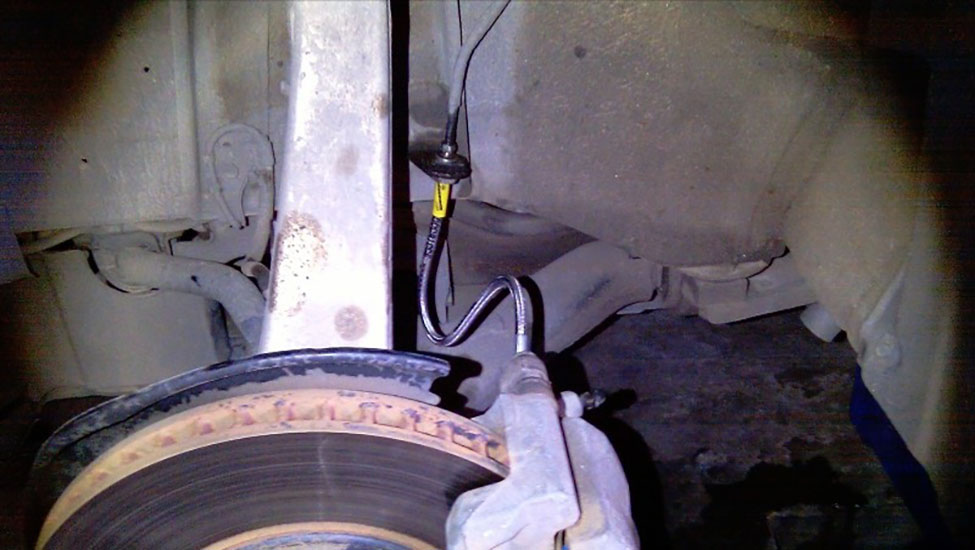
Modern brake systems are expected to deliver predictable hydraulic response under repeated braking, high temperatures and different road conditions. This is one reason stainless steel braided PTFE brake hoses are widely used in motorcycle modifications, performance vehicles and aftermarket brake systems.
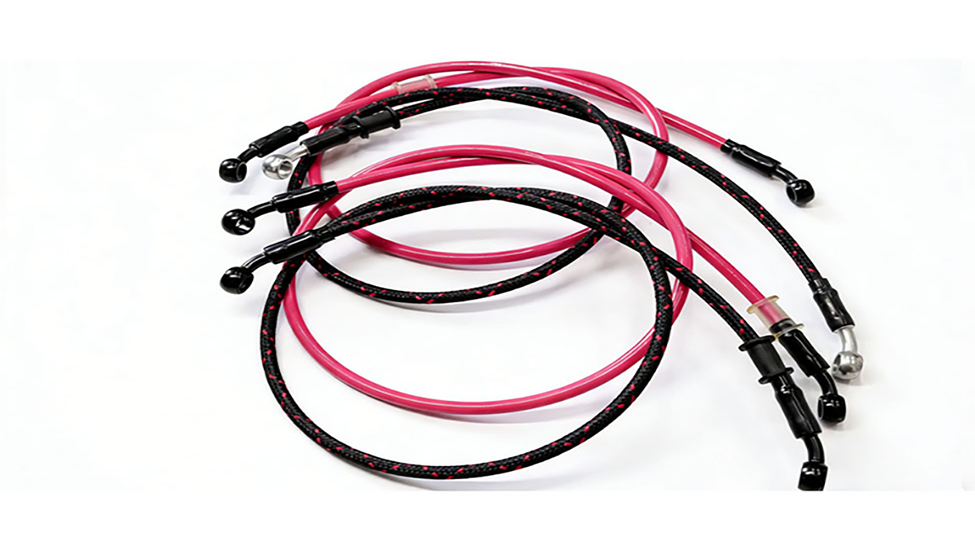
The main idea behind this construction is straightforward: PTFE provides the inner fluid passage, while stainless steel braid provides mechanical reinforcement. The result is a brake hose designed for applications where pressure control, chemical resistance and configuration flexibility are important.
Understanding the Construction of a PTFE Braided Brake Hose
PTFE Inner Tube
The inner PTFE tube is in direct contact with brake fluid. PTFE is selected for its chemical resistance and temperature stability, making it suitable for many demanding hydraulic applications when correctly specified.
Stainless Steel Wire Braid
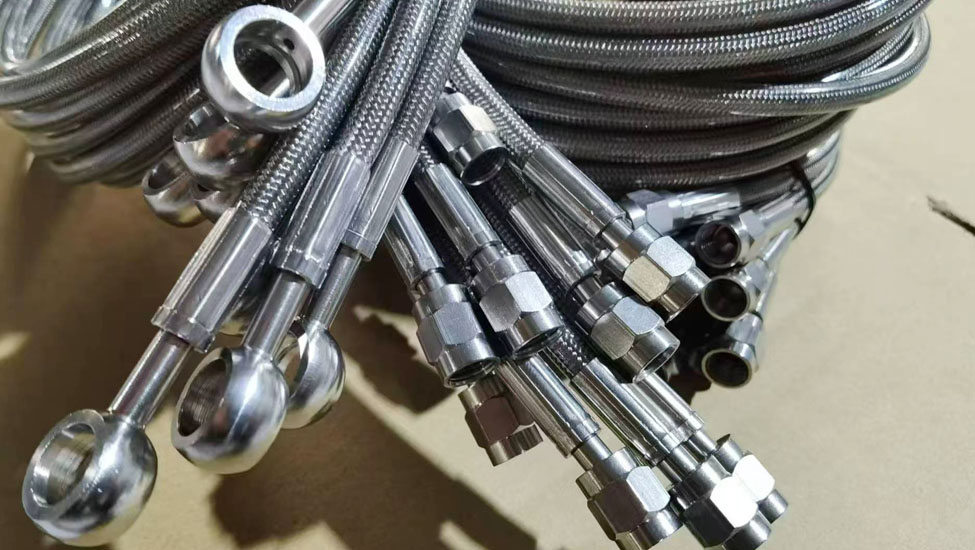
The stainless steel braid surrounds the PTFE tube and provides reinforcement. Its function is not simply cosmetic. The reinforcement helps control radial expansion when hydraulic pressure changes.
Fittings and Crimped Connections
A brake hose is only as reliable as its complete assembly. Fitting design, crimping quality, thread specification and sealing method are all important. A high-quality PTFE tube cannot compensate for an incorrectly selected or poorly assembled fitting.
Stainless Braided PTFE vs Conventional Rubber Brake Hose
Rubber brake hoses are still widely used because they offer good flexibility and are suitable for many standard vehicle applications. However, modified and performance-oriented brake systems may have different requirements.
A stainless braided PTFE construction is often considered when the customer wants greater reinforcement, a PTFE fluid passage and a more customized brake hose configuration.
For standard applications, our Rubber Brake Line Assembly provides a conventional solution for customers who prioritize flexibility and OEM-style construction.
For PTFE-based applications, the PTFE Brake Line Assembly can be supplied as a finished assembly with specified hose length and fittings.
Benefits of Stainless Steel Braided PTFE Brake Lines
More Controlled Hose Expansion
Hydraulic pressure can cause a flexible hose to expand. Reinforcement helps limit this expansion and can contribute to a more consistent brake control response.
Strong Chemical Resistance
PTFE is well known for its resistance to many chemicals and fluids. This makes it a useful material for brake hose inner tubes when the material is correctly matched to the application.
Good Performance in Demanding Environments
Motorcycles and performance vehicles can experience repeated braking, heat cycles, vibration and exposure to water, dust and road contaminants. A properly specified reinforced hose can be suitable for these conditions.
Wide Customization Possibilities
Aftermarket customers often require specific lengths, fitting orientations, banjo angles and thread types. Custom brake hose manufacturing allows these parameters to be defined according to the application.
How to Choose a Stainless Braided PTFE Brake Hose
1. Confirm the Inner Tube Material
Do not select a brake hose only from its external appearance. Confirm whether the inner tube is PTFE, nylon, rubber or another material and verify compatibility with the intended brake fluid.
2. Check the Fittings
Thread specification, pitch, banjo size, fitting angle and sealing method should be confirmed before ordering. Even a small difference in fitting specification can make an assembly unsuitable for a particular brake component.
3. Measure the Required Length
Measure the original hose or provide a drawing showing the connection points. The finished hose should allow full steering and suspension movement without stretching or excessive slack.
4. Consider the Installation Environment
For motorcycles, the hose may pass around the fork, steering head and frame. For cars, routing around suspension components and moving parts should also be considered.
5. Confirm Production Requirements
For distributors and aftermarket brands, it is useful to confirm annual quantity, packaging, labeling, fitting combinations and sample approval procedures before mass production.
Related Brake Hose Products
Different projects require different hose materials. We supply several constructions so customers can select the most suitable solution for their application.
Teflon Brake Line
Our Teflon Brake Line is designed for applications requiring a PTFE-based inner tube. It can be used for motorcycle brake modifications, aftermarket brake kits and customized hydraulic hose projects.
Nylon Brake Line
For applications requiring a nylon-based hose construction, our Nylon Brake Line provides another material option. Selection should be based on the actual pressure, temperature, fluid and routing requirements.
Nylon Brake Line Assembly
The Nylon Brake Line Assembly is suitable for customers who need finished hose assemblies rather than loose tubing. Length and fitting configuration can be discussed according to the project requirements.
What Do International Buyers Care About?
For overseas buyers, product quality is only one part of the purchasing decision. They also need reliable communication and repeatable production.
- Consistent hose dimensions between batches
- Correct fitting specifications and angles
- Stable crimping and assembly quality
- Customized lengths and configurations
- Sample approval before bulk production
- Clear product specifications and packaging
- OEM and aftermarket customization capability
- Reliable lead times for repeat orders
For distributors and brake component brands, these factors can be more important than simply comparing the lowest unit price.
Daily Inspection and Maintenance
Check the Outer Surface
Inspect the hose for abrasion, severe bending, corrosion, damaged braid or contact with sharp edges.
Check the Fittings
Look for leakage, damaged threads, loose connections or abnormal movement around the fitting area.
Check Hose Routing
Turn the handlebars through the complete steering range on motorcycles and confirm that the hose does not become stretched, twisted or trapped.
Replace Damaged Hoses
A brake hose showing serious damage, leakage, deformation or other signs of failure should be replaced rather than repaired with an improvised solution.
FAQ: Stainless Steel Braided PTFE Brake Hoses
How long does a PTFE braided brake hose last?
There is no single service life that applies to every application. Hose life depends on material, operating temperature, brake fluid, installation, mechanical movement, environmental exposure and maintenance. Regular inspection is more useful than relying on a fixed replacement period.
Will a braided brake hose make braking power stronger?
A reinforced hose does not increase caliper force by itself. Its main contribution is controlling hose expansion and maintaining hydraulic response. Overall braking performance depends on the complete brake system.
Are stainless braided PTFE brake hoses suitable for motorcycles?
Yes, they are commonly used in motorcycle aftermarket and performance applications. However, the hose must be correctly matched to the motorcycle's fitting specification, length, routing, brake fluid and brake system requirements.
Can you manufacture hoses according to our drawing?
Yes. Drawings, samples, dimensions and photographs can be used as references for customized brake hose development.
Our Main Product Range
- Teflon Brake Line
- Nylon Brake Line
- PTFE Brake Line Assembly
- Nylon Brake Line Assembly
- Rubber Brake Line Assembly
- Stainlesssteelbraided Hose
- Braided Brake lines
Need a Customized Brake Hose?
If you are a distributor, motorcycle parts importer, aftermarket brand or brake component buyer, send us your drawing, sample or product specifications. We can evaluate the hose construction, fittings, length and assembly requirements before production.