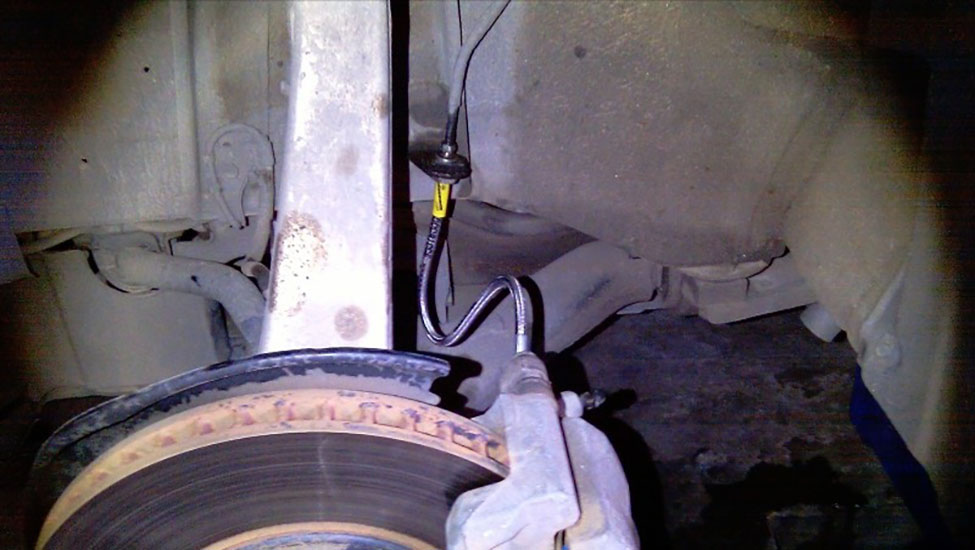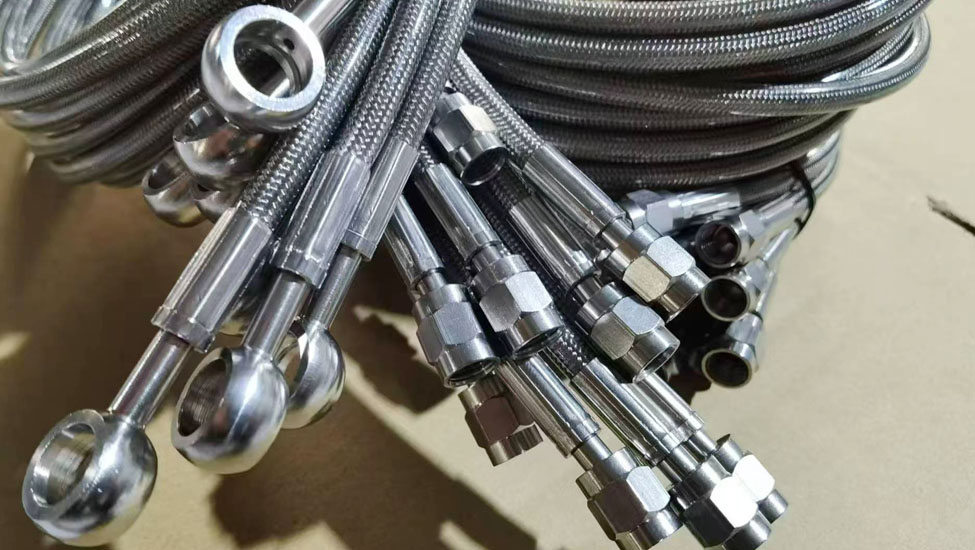
Braided brake hoses (typically a stainless steel braided outer layer and a PTFE inner core) generally offer superior performance, durability, and safety compared to original rubber brake hoses, making them the mainstream choice in the aftermarket. Here are the key differences, presented in the most intuitive way:
1. Lower Expansion Rate
- Original rubber brake hoses experience slight expansion under high-pressure braking, resulting in a softer pedal and delayed braking.
- Braided hoses have almost zero expansion, providing more direct braking pressure and a firmer pedal feel.
2. Shorter Braking Distance
- Reduced expansion leads to faster braking system response, with actual measurements showing a reduction in braking distance of approximately 10**–20** (depending on vehicle model and road conditions).
3. Enhanced High-Temperature Resistance
- Rubber ages and expands more rapidly at high temperatures.
- Braided hoses can withstand higher temperatures, making them suitable for aggressive driving, racing, and heavy-duty applications.
4. Higher Durability
- The stainless steel braided layer is wear-resistant and corrosion-resistant, making it less prone to damage from gravel and mud.
- Service life is typically 2–3 times that of rubber hoses.
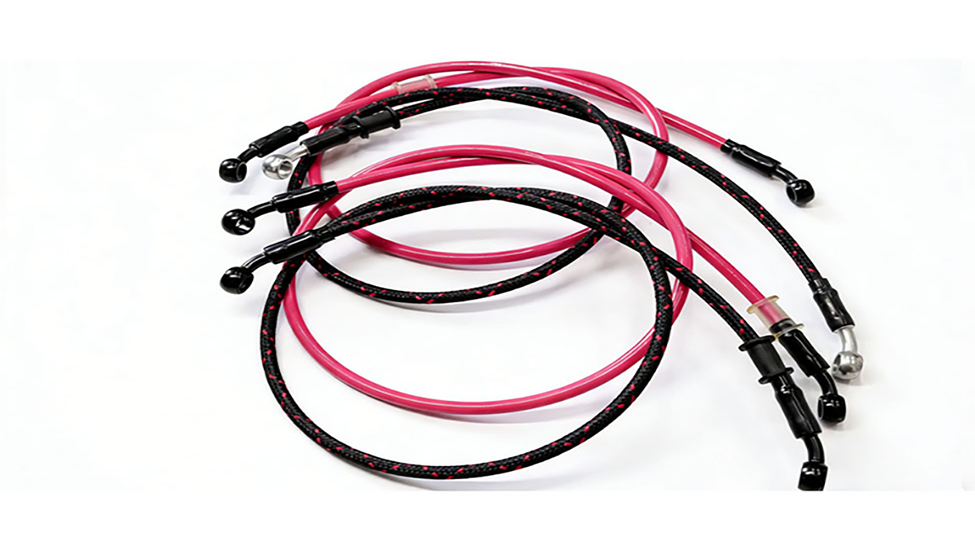
5. Sportier Appearance
Available in a variety of colors (such as red, blue, and black) to suit users seeking personalization.
6. Enhanced Safety and Reliability
All standard braided hoses undergo rigorous pressure testing, ensuring greater reliability under extreme conditions.