Why Do Motorcycle Brake Lines Expand Under Pressure? Causes, Effects, and Solutions
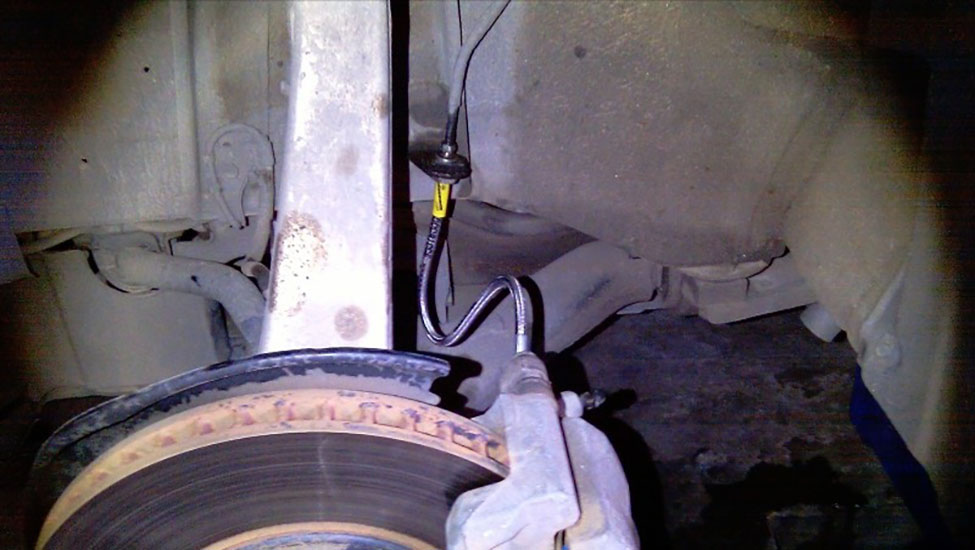
Motorcycle brake line expansion is an important factor to consider when evaluating hydraulic braking performance. When a rider applies the brake lever, hydraulic pressure travels through the brake hose to activate the caliper. If the hose expands excessively under pressure, some of the lever movement may be used to accommodate that expansion rather than being transmitted directly through the hydraulic system.
For motorcycle manufacturers, aftermarket brands, repair workshops, and brake hose distributors, understanding hose expansion helps with product selection, quality evaluation, and application-specific design. Material selection, reinforcement structure, fitting quality, and manufacturing consistency all influence the behavior of a complete brake line assembly.
1. What Causes Motorcycle Brake Lines to Expand?
Hose Material and Wall Construction
Brake hoses are designed to contain hydraulic fluid under pressure, but different materials and constructions respond differently to internal loads. The inner tube must retain the brake fluid, while the reinforcement structure helps the complete hose withstand pressure and maintain its dimensions.
Rubber brake hoses, PTFE-based brake lines, and other purpose-designed hydraulic hose constructions can have different expansion characteristics. However, material names alone do not determine performance. The complete hose design, reinforcement, manufacturing quality, and validated operating specifications must be considered together.
Reinforcement Structure and Braid Design
Reinforcement helps control the change in hose dimensions when hydraulic pressure increases. Depending on the product design, reinforcement may use textile fibers, metal braiding, or other engineered structures.
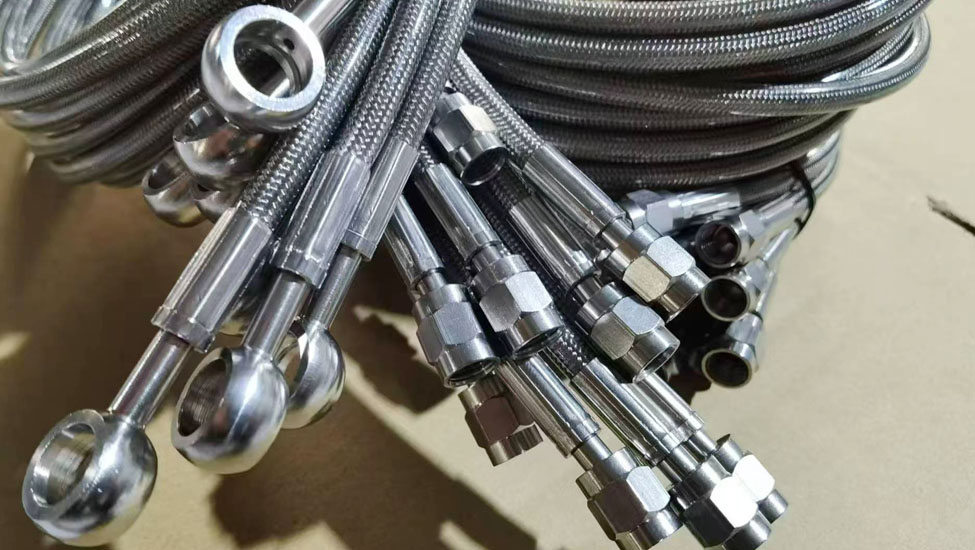
A stainless steel braided hose uses a metal braid to reinforce the hose assembly. When properly designed and manufactured, this construction can help limit expansion under pressure. Actual performance depends on braid geometry, inner tube properties, hose dimensions, and assembly quality.
Age, Wear, and External Damage
Brake hoses may deteriorate through aging, abrasion, heat exposure, unsuitable chemicals, or repeated movement. A damaged or deteriorated hose may no longer perform according to its original specifications.
Visible swelling, cracking, fluid leakage, exposed reinforcement, or other structural damage should be treated as a warning sign. A qualified technician should inspect a suspect hose and replace it when required.
2. How Does Brake Hose Expansion Affect Brake Lever Feel?
Changes in Lever Travel
When a hydraulic brake hose expands under pressure, the additional hose volume can influence how much fluid displacement is required to build pressure in the system. Excessive or unexpected expansion may contribute to increased lever travel or a less direct lever feel.
However, a soft or spongy brake lever does not automatically mean the hose is expanding excessively. Air in the hydraulic system, unsuitable or deteriorated brake fluid, worn components, leaks, and master cylinder or caliper problems can produce similar symptoms.
Consistency During Repeated Braking
Predictable brake response depends on the complete hydraulic system operating within its intended specifications. Hose construction is one consideration alongside the master cylinder, caliper, brake pads, disc, fluid condition, and correct installation.
For this reason, replacing a brake hose should not be presented as a guaranteed way to shorten stopping distance. Overall braking performance depends on multiple mechanical, environmental, and rider-related factors.
3. Comparing Brake Line Constructions and Their Applications
Rubber Brake Line Assembly
A Rubber Brake Line Assembly is commonly used in original-equipment motorcycle braking systems. Properly specified rubber hoses offer the flexibility required for normal steering and suspension movement.
When evaluating rubber brake lines, buyers should consider the hose formulation, reinforcement, pressure rating, temperature range, fluid compatibility, and environmental resistance. Different rubber hose products can have substantially different technical characteristics.
Teflon Brake Line and PTFE Brake Line Assembly
PTFE, commonly known as Teflon, is used as an inner tube material in certain brake hose designs. Its chemical resistance and temperature capability can make it suitable for specialized applications when the complete assembly is engineered for hydraulic braking.
A Teflon Brake Line or PTFE Brake Line Assembly should be evaluated according to its specified operating pressure, temperature limits, reinforcement structure, fitting compatibility, and test results.
What Buyers Should Verify
- Suitability for the intended hydraulic brake system.
- Compatibility with the specified brake fluid.
- Pressure and temperature ratings for the complete assembly.
- Correct fitting design and assembly specifications.
- Relevant validation and quality inspection records.
Stainless Steel Braided Hose and Braided Brake Lines
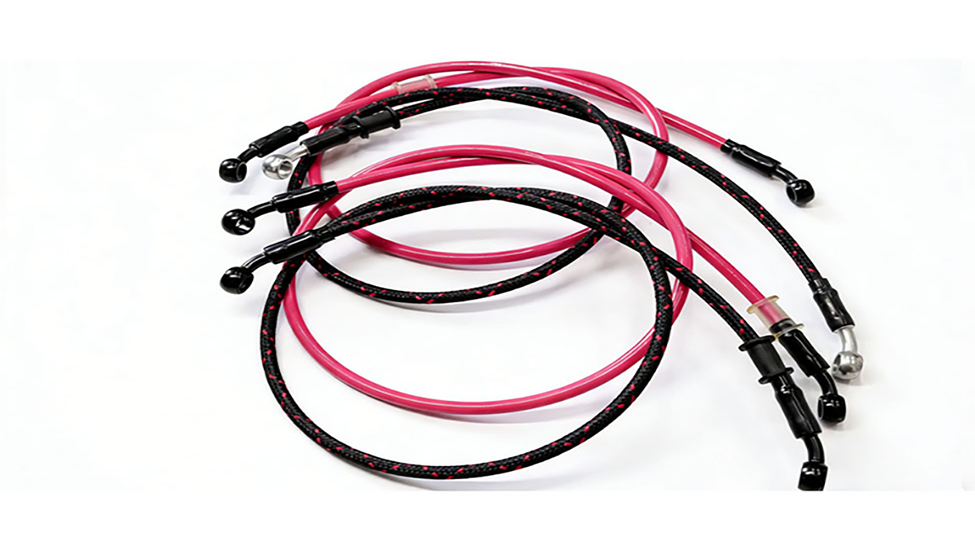
Braided brake lines are widely used in motorcycle aftermarket applications where a reinforced hose construction is required. A stainless steel braid can help control hose expansion when the hose is properly designed and manufactured for the intended pressure range.
For distributors and aftermarket brands, a Stainlesssteelbraided Hose may also be available with different lengths, fitting configurations, protective outer coverings, and appearance options. These customization choices should not override the technical requirements of the brake system.
When comparing Braided Brake Lines, buyers should request relevant performance data instead of assuming that every braided product offers the same expansion characteristics or service life.
Nylon Brake Line and Nylon Brake Line Assembly
Nylon tubing is used in various automotive and industrial fluid-transfer applications. However, ordinary nylon tubing is not automatically suitable for hydraulic motorcycle brakes.
A Nylon Brake Line or Nylon Brake Line Assembly must be specifically designed, rated, and validated for the intended braking application. Its pressure capability, fluid compatibility, operating temperature, and complete assembly construction must be verified before use.
4. How Can Manufacturers Help Control Brake Hose Expansion?
Choose Materials According to Application Requirements
Material selection should begin with the operating conditions and technical requirements of the target vehicle. The inner tube, reinforcement, outer cover, and end fittings must function as a compatible system.
Manufacturers should avoid selecting materials solely on the basis of appearance or price. Product specifications should be established according to pressure requirements, temperature exposure, brake fluid compatibility, routing conditions, and applicable safety standards.
Maintain Consistent Braiding and Assembly Processes
For reinforced brake hoses, consistency in reinforcement coverage, hose dimensions, fitting preparation, and crimping is important. Variations in production can affect the reliability and performance of the finished assembly.
A structured quality control process should include appropriate material verification, dimensional inspection, assembly checks, and pressure testing or other validation procedures required by the product specification.
Verify Finished Product Performance
Testing should be appropriate to the intended application and applicable requirements. Depending on the product design, verification may include pressure resistance, leakage checks, dimensional consistency, temperature performance, and other specified durability tests.
For B2B buyers, requesting technical documentation and understanding the manufacturer's quality procedures can help reduce uncertainty when evaluating suppliers.
5. Signs That a Motorcycle Brake Hose Needs Inspection
Visible Swelling or Deformation
Unusual bulging, deformation, or changes in the hose surface may indicate damage or deterioration. Do not continue using a suspect hose without appropriate inspection.
Fluid Leakage Around Fittings
Brake fluid around a connection or crimped section may indicate a sealing problem or component damage. A hydraulic brake leak requires immediate attention, and the motorcycle should not be ridden until the fault has been repaired and the system verified.
Cracks, Abrasion, or Exposed Reinforcement
External damage can weaken the hose structure and increase the risk of failure. Inspect the routing areas where the hose may contact the frame, fork, wheel, or other moving components.
Unexpected Changes in Brake Response
Increased lever travel, a spongy feel, or inconsistent braking requires professional inspection. The cause may involve the hose or another part of the hydraulic braking system, so diagnosis should cover all relevant components.
6. What Should B2B Buyers Consider When Sourcing Brake Lines?
Application and Compatibility
Importers, wholesalers, and motorcycle parts brands should provide accurate vehicle information, hose length, fitting type, connection dimensions, and the intended brake system when requesting quotations.
A hose that fits physically is not necessarily suitable for a specific braking application. Buyers should confirm that the complete assembly meets the required technical specifications.
OEM and Private-Label Production
OEM and private-label projects may require different hose lengths, fitting angles, outer coverings, colors, labels, and packaging. These options can help brands develop products for different customer groups and vehicle configurations.
Before mass production, buyers should confirm approved samples, drawings, inspection criteria, production lead times, and available test documentation. Any change to materials, fittings, or assembly processes should be evaluated for its effect on product performance.
Serving Different Export Markets
Motorcycle brake line buyers serving Southeast Asia, the Middle East, Japan, and South Korea may handle a wide range of motorcycle models and riding environments. Product specifications should reflect the intended vehicles and relevant market requirements rather than relying on a single universal design.
For manufacturers, clear communication about application, quantity, technical requirements, and customization can support more efficient quotation and production planning.
7. Frequently Asked Questions About Motorcycle Brake Line Expansion
Do stainless steel braided brake lines expand under pressure?
All hose assemblies respond to pressure to some extent. A properly engineered stainless steel braid can help limit expansion, but the actual result depends on the complete hose design, manufacturing quality, and specified operating conditions.
Will a braided brake line always provide a firmer brake lever?
Not necessarily. Brake lever feel depends on the entire hydraulic system, including hose construction, fluid condition, air in the system, master cylinder, and caliper. A braided hose cannot correct every cause of poor braking response.
Can ordinary PTFE or nylon tubing replace a motorcycle brake hose?
No. General-purpose tubing should not be used as a brake hose unless the complete product is specifically designed, rated, and validated for the intended hydraulic braking application.
What information should I request from a brake hose supplier?
Request product specifications, compatible applications, pressure and temperature ratings, material details, fitting information, quality control procedures, and relevant test documentation for the finished assembly.
Conclusion
Motorcycle brake line expansion depends on hose materials, reinforcement design, manufacturing consistency, operating pressure, and the condition of the complete assembly. Understanding these factors helps manufacturers and buyers evaluate brake hose products more accurately.
Whether sourcing a Teflon Brake Line, Nylon Brake Line, PTFE Brake Line Assembly, Nylon Brake Line Assembly, Rubber Brake Line Assembly, Stainlesssteelbraided Hose, or Braided Brake Lines, always prioritize application compatibility, verified technical performance, and appropriate quality control.
For motorcycle aftermarket brands, wholesalers, and OEM buyers, working with a qualified manufacturer and confirming specifications before production can help support consistent product quality across different markets.