Warning Signs of Corrosion on Motorcycle Brake Components
Corrosion is one of the common problems that can affect motorcycle brake components, especially on motorcycles regularly exposed to rain, humidity, road salt, dust, mud, or coastal environments. Corrosion can develop on brake fittings, hose ferrules, brake lines, calipers, banjo bolts, and other metal components.
For motorcycle owners, workshops, distributors, and aftermarket parts buyers, identifying corrosion early is important. A small amount of surface discoloration may not mean that a component has failed, but advanced corrosion can weaken components, affect sealing, or contribute to brake system problems.
This guide explains the main warning signs of corrosion on motorcycle brake components, which parts should be inspected, and when replacing an old brake hose with a properly specified other brake line assembly may be appropriate.
Why Does Corrosion Develop on Motorcycle Brake Components?
Motorcycle brake components are exposed to many environmental conditions during normal use. Water, humidity, road contaminants, temperature changes, and prolonged exposure to outdoor conditions can contribute to corrosion of metal components.
Common Environmental Causes
- High humidity
- Frequent rain exposure
- Road salt and salty coastal air
- Mud and road dirt
- Water trapped around fittings
- Long-term outdoor storage
- Improper cleaning or maintenance
- Contact with corrosive chemicals
These conditions can be particularly relevant for motorcycles operating in tropical and coastal regions, including parts of Southeast Asia and other high-humidity markets.
Which Motorcycle Brake Components Are Most Important to Inspect?
Corrosion should not be checked only on the visible brake hose. The complete hydraulic braking system should be inspected.
Brake Hose Fittings and Ferrules
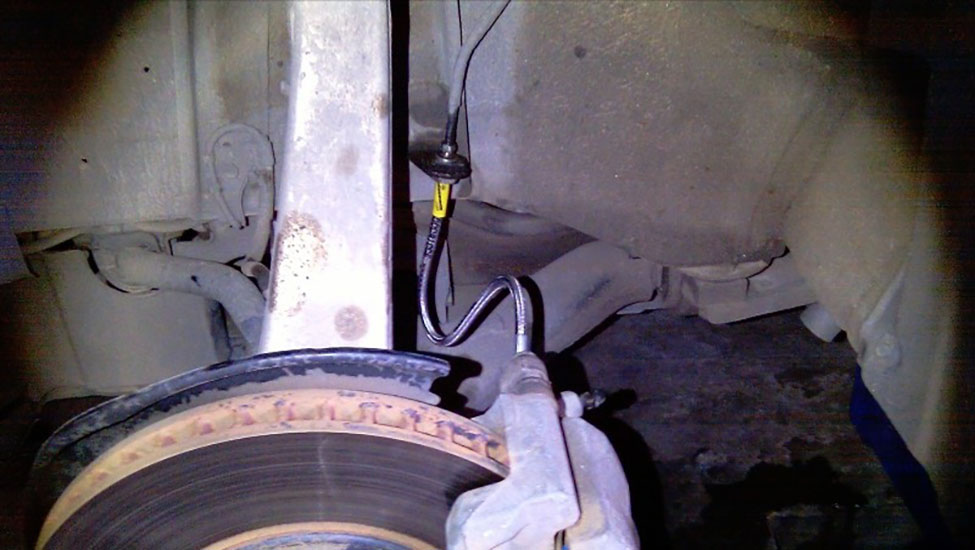
The metal fittings and ferrules at the ends of a flexible brake hose can be exposed to moisture and road contaminants. Severe corrosion in these areas can affect the integrity of the connection.
Banjo Bolts and Connections
Banjo connections should be checked for corrosion, contamination, leakage, and damage. The connection also needs to maintain the correct sealing condition.
Rigid Brake Lines
Metal brake lines can develop corrosion over time, particularly when their protective coating has been damaged or the motorcycle operates in a corrosive environment.
For applications requiring rigid metal brake line solutions, can be specified according to the required application and system configuration.
Brake Calipers
Brake calipers should also be inspected for corrosion, leakage, damaged surfaces, and other signs of deterioration.
7 Warning Signs of Corrosion on Motorcycle Brake Components
1. Visible Rust or Corrosion Deposits
The most obvious warning sign is visible rust or corrosion on metal brake components.
Surface discoloration does not always mean that a component has reached the end of its service life. However, heavy corrosion, flaking material, pitting, or significant material loss requires closer inspection.
Do not judge the condition of a safety-critical component only by its appearance. If corrosion appears severe, the component should be assessed by a qualified technician.
2. Corrosion Around Brake Hose Ferrules
The ferrule is an important part of many brake hose assemblies because it helps secure the hose and fitting together.
Excessive corrosion around the ferrule should not be ignored. Motorcycle inspection guidance specifically identifies excessively corroded brake hose ferrules as a defect that can become serious when the component is at risk of failure.
If the ferrule is heavily corroded or the assembly shows signs of deterioration, replacing the complete brake hose assembly may be more appropriate than attempting an improvised repair.
3. Pitting or Flaking Metal
Advanced corrosion can create pits or cause material to flake from the surface.
Pitting is different from simple surface discoloration because corrosion has started to affect the metal surface itself.
When pitting is found on brake fittings, bolts, rigid brake lines, calipers, or other critical components, the part should be inspected carefully before continued use.
4. Brake Fluid Leakage Around a Corroded Connection
Brake fluid leakage around a fitting or connection is a serious warning sign.
Corrosion may not be the only cause of leakage, but corrosion around a connection can indicate deterioration of the component or sealing area.
Any suspected hydraulic brake fluid leak should be investigated before the motorcycle is returned to normal riding.
5. Damaged or Corroded Brake Hose Fittings
A brake hose can appear acceptable while the metal fitting at either end has developed corrosion.
When inspecting a motorcycle brake hose, check both ends of the assembly rather than looking only at the flexible hose section.
For aftermarket and modified motorcycles, the fitting material, coating, hose construction, and installation environment should all be considered when selecting a replacement assembly.
6. Corrosion Combined With Chafing or Mechanical Damage
Corrosion becomes more concerning when it appears together with mechanical damage.
A brake hose that is simultaneously corroded, chafed, twisted, stretched, or rubbing against another motorcycle component should receive immediate attention.
Incorrect routing can cause continuous contact between the hose and the fork, frame, wheel, suspension components, or other parts.
7. Corrosion That Continues to Return After Cleaning
If corrosion repeatedly appears around the same brake component after cleaning, the underlying environmental or mechanical cause should be investigated.
Water may be accumulating around the fitting, protective coating may be damaged, or the component may be exposed to continuous contamination.
Simply cleaning the visible corrosion does not necessarily solve the underlying problem.
How Can You Inspect a Motorcycle Brake Hose for Corrosion?
A basic visual inspection can help identify obvious problems before they become more serious.
Step 1: Inspect the Complete Hose
Follow the brake hose from the master cylinder to the caliper. Check the entire length rather than inspecting only the easiest-to-see section.
Step 2: Inspect Both Ends
Pay particular attention to the fittings, ferrules, banjo connections, and sealing areas.
Step 3: Check for Other Damage
- Cracking
- Bulging
- Chafing
- Kinking
- Twisting
- Stretching
- Fluid leakage
- Severe corrosion
Step 4: Check the Routing
Turn the handlebars through the normal steering range and make sure the brake hose does not become stretched, trapped, twisted, or excessively bent.
Brake hose routing should also provide sufficient clearance from moving components and excessive heat sources.
When Should a Corroded Motorcycle Brake Hose Be Replaced?
Replacement should be considered when corrosion is accompanied by structural deterioration, leakage, damaged fittings, excessive chafing, swelling, or other signs that the brake hose assembly may no longer be suitable for service.
Motorcycle brake inspection guidance identifies excessive hose deterioration, chafing, twisting, stretching, leakage, bulging, and excessive ferrule corrosion as important defects. :contentReference[oaicite:1]{index=1}
Replacement Is Especially Worth Considering When:
- The hose fittings show significant corrosion
- The ferrules are heavily corroded
- The hose is cracked or deteriorated
- The hose is leaking brake fluid
- The hose bulges under brake pressure
- The reinforcement is exposed
- The hose has severe chafing
- The original hose specification is unknown
- The motorcycle is undergoing a major brake system modification
Can a Braided Brake Line Help With Motorcycle Brake Hose Upgrades?
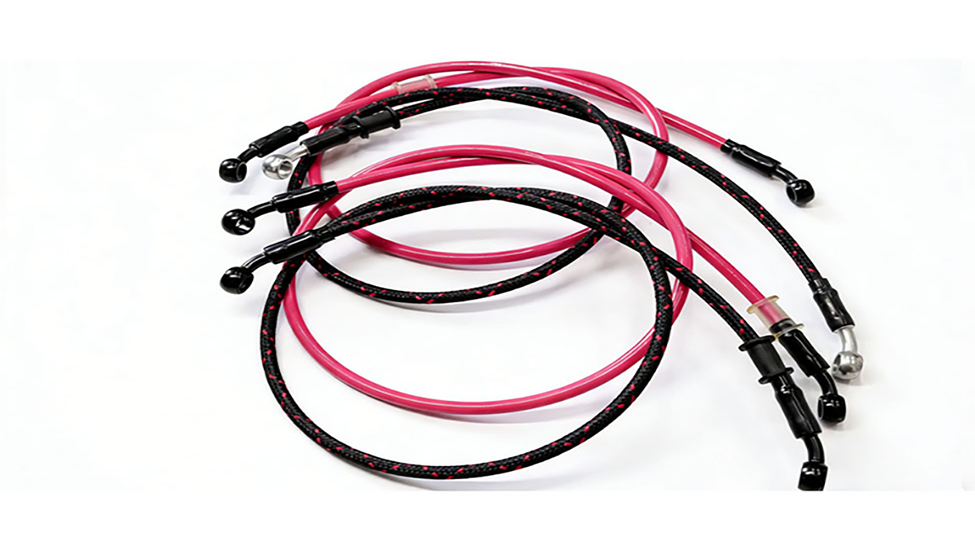
When an old motorcycle brake hose needs replacement, some riders and aftermarket workshops choose to upgrade to a braided brake line assembly.
A braided brake line generally uses a reinforced construction around the inner hose. The exact performance and durability characteristics depend on the hose material, reinforcement, fittings, assembly method, routing, and overall system design.
For modified motorcycles, can be specified with different lengths, fitting configurations, and colors according to the application.
Choosing the Right Brake Hose Material for Corrosion-Prone Environments
Material selection should be based on the complete application rather than color or appearance.
Teflon Brake Line
uses a PTFE-based inner tube and can be combined with reinforcement and suitable fittings for motorcycle and other hydraulic applications.
When selecting a PTFE brake hose assembly, buyers should still confirm pressure, temperature, fitting compatibility, hose routing, and installation requirements.
PTFE Brake Line Assembly
A complete can be specified with the appropriate hose length and fittings for the intended motorcycle application.
Nylon Brake Line
may be suitable for applications where the hose construction and operating specifications match the brake system requirements.
Nylon Brake Line Assembly
For OEM and aftermarket buyers, can be configured according to hose length and fitting requirements.
Rubber Brake Line Assembly
can be used for suitable standard replacement applications when the complete specification matches the original brake system.
Why Are Stainless Steel Braided Brake Lines Used on Modified Motorcycles?
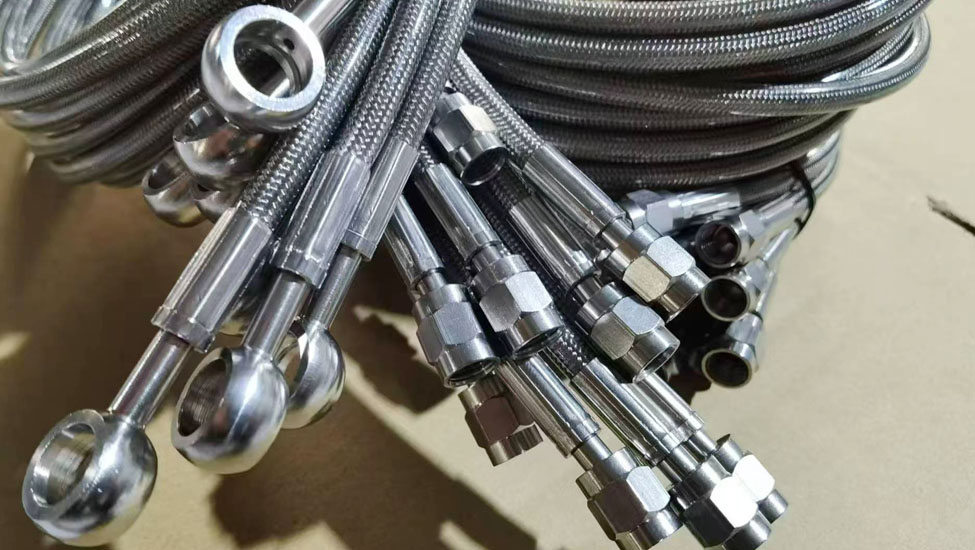
Stainless steel reinforcement is commonly used around PTFE or other suitable inner hose constructions to provide mechanical reinforcement.
The stainless steel braid can also provide resistance to external mechanical conditions when the hose is correctly designed and installed.
However, stainless steel reinforcement does not mean that the complete brake hose assembly is immune to corrosion or damage. Fittings, ferrules, bolts, protective coatings, routing, and environmental exposure still need to be considered.
This is particularly important for motorcycles used in humid or coastal regions.
How Can Motorcycle Workshops Reduce Brake Hose Corrosion Problems?
Keep Brake Hose Routing Correct
Avoid continuous contact with sharp edges, moving parts, exhaust components, and other sources of mechanical or thermal damage.
Inspect Fittings Regularly
During routine brake maintenance, inspect the fitting, ferrule, banjo bolt, and connection area.
Keep the Brake System Clean
Remove dirt and contaminants from accessible brake components using cleaning methods suitable for the specific component and manufacturer's recommendations.
Replace Damaged Components
Do not rely on cleaning alone when corrosion has caused significant material deterioration or when a brake hose assembly shows other signs of failure.
Corrosion Inspection Checklist for Motorcycle Brake Lines
- Check brake hose fittings
- Check ferrules for corrosion
- Inspect banjo bolts
- Look for rust or pitting
- Check for brake fluid leakage
- Inspect the flexible hose surface
- Check for bulging
- Check for cracking
- Check for chafing
- Check for twisting or stretching
- Check hose routing
- Check clearance from moving parts
- Check clearance from excessive heat
What Should B2B Buyers Check When Sourcing Motorcycle Brake Lines?
For motorcycle parts importers, distributors, workshops, and aftermarket brands, corrosion resistance should be considered together with the complete brake hose specification.
Recommended Purchasing Specifications
- Inner hose material
- Reinforcement material
- Fitting material
- Fitting surface treatment
- Hose length
- Thread specification
- Banjo angle
- Banjo orientation
- Assembly method
- Pressure testing requirements
- Protective sleeve requirements
- Color requirements
- OEM packaging requirements
For B2B buyers sourcing customized brake hose assemblies, requesting samples or technical drawings before mass production can help confirm fitting compatibility and hose routing.
Final Thoughts
Corrosion on motorcycle brake components should not be ignored, particularly when it is accompanied by leakage, pitting, damaged fittings, excessive deterioration, or mechanical damage.
Regular inspection of the brake hose, fittings, ferrules, banjo connections, rigid lines, and calipers can help identify problems earlier.
When replacement is necessary, the correct hose material, reinforcement, fittings, length, routing, and sealing configuration should be selected as a complete system.
For modified motorcycle applications, properly specified can be considered as aftermarket replacement or upgrade solutions when their specifications are suitable for the application.