Corrosion is a common maintenance concern in motorcycle braking systems, especially for motorcycles frequently exposed to rain, humidity, coastal environments, road salt, and muddy roads. If corrosion affects brake hoses, fittings, banjo bolts, or other metal components, it may eventually compromise the reliability of the braking system.
For motorcycle owners, repair shops, motorcycle parts distributors, and brake system manufacturers, recognizing the early warning signs of corrosion is essential. Choosing suitable replacement components, inspecting brake hose assemblies regularly, and following correct maintenance procedures can help reduce unnecessary failures and improve long-term reliability.
This guide explains the main signs of brake component corrosion, the causes of corrosion, inspection methods, and how suitable replacement brake hoses can support reliable motorcycle brake system maintenance.
Motorcycle brake components operate in an environment where moisture, dirt, temperature changes, and mechanical vibration can gradually affect exposed surfaces. Corrosion may develop on metal fittings, mounting hardware, protective coatings, or other vulnerable components.
Motorcycles used in tropical and subtropical regions may experience frequent rainfall and prolonged exposure to humid air. These conditions can accelerate corrosion when moisture remains trapped around metal fittings, threaded connections, or damaged protective coatings.
In markets such as Southeast Asia, where heavy rain and high humidity are common, routine inspection of brake hose connections and exposed metal components is particularly important.
Salt-containing moisture can increase the risk of corrosion on susceptible metals. Motorcycles used near coastlines or in areas where road salt is applied may require more frequent inspection and cleaning.
Scratches, abrasion, damaged plating, and worn protective layers can expose the underlying metal to moisture and contaminants. Corrosion may begin at these damaged areas and gradually spread if the underlying cause is not addressed.
Accumulated dirt, incompatible materials, incorrect fittings, and improper installation can contribute to premature component deterioration. A brake hose that rubs against the frame or suspension components may also suffer external abrasion and damage to its protective outer layer.
Visible reddish-brown rust, unusual discoloration, or deteriorating surface coatings on steel components can indicate corrosion. Inspect accessible banjo bolts, mounting hardware, and other exposed metal parts during routine maintenance.
Surface discoloration does not always mean a component has failed, but deep pitting, flaking metal, or corrosion around a pressure-bearing connection requires professional assessment. Do not assume that cleaning alone makes a corroded brake fitting safe to reuse.
Pitting appears as small holes, rough patches, or localized depressions on a metal surface. It can indicate more advanced corrosion than superficial discoloration.
Brake fittings are important sealing and connection components. If corrosion has affected the sealing surface, threads, or structural integrity, the component should be evaluated and replaced when necessary according to the manufacturer's requirements.
Wet areas around a brake hose fitting, banjo bolt, master cylinder, or caliper may indicate a leak. Brake fluid leakage is not proof of corrosion by itself, but corrosion, damaged sealing surfaces, worn seals, or incorrect assembly may contribute to connection problems.
Safety warning: If brake fluid is leaking or the brake lever feels abnormal, do not continue riding. Have the motorcycle inspected and repaired by a qualified technician before returning it to service.
External cracks, swelling, abrasion, exposed reinforcement, or damaged protective coverings are warning signs that a brake hose assembly needs inspection. These conditions may result from aging, heat, chemical exposure, incorrect routing, or mechanical contact rather than corrosion alone.
A damaged outer covering should not be ignored simply because the hose is not visibly leaking. The hose construction and condition must be assessed to determine whether replacement is required.
Corrosion can affect threads and metal interfaces, making fasteners difficult to remove or adjust. Excessive force may damage the fastener, hose fitting, or connected component.
Never force a seized brake connection without the correct tools and service procedure. Replace damaged hardware with components that meet the motorcycle manufacturer's specifications.
A spongy brake lever, excessive lever travel, or reduced braking performance can indicate air in the hydraulic system, fluid leakage, worn components, or other faults. Corrosion may be one contributing factor, but these symptoms cannot identify corrosion as the cause on their own.
Because braking performance is safety-critical, any unexpected change in lever feel or stopping response should be investigated promptly by a qualified technician.
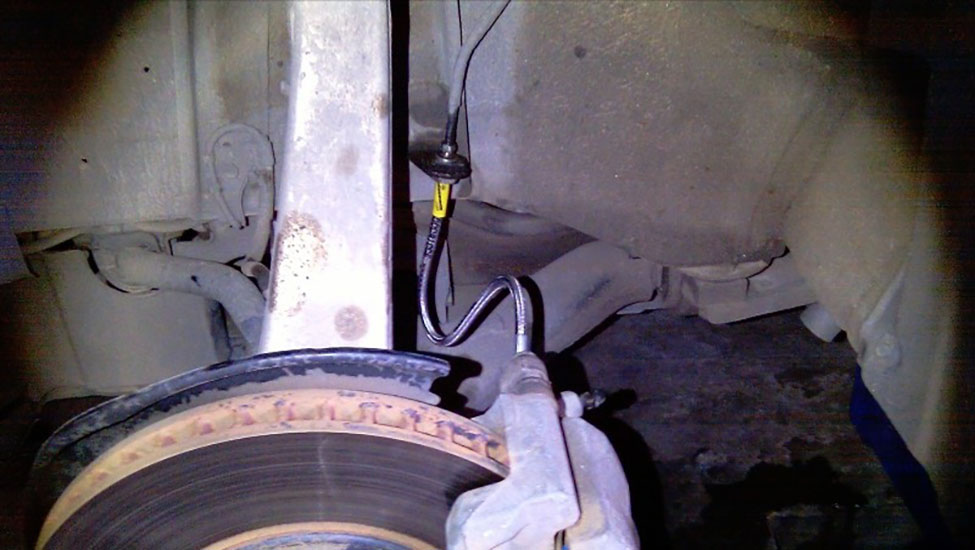
Brake hose brackets, frame contact points, and mounting areas can collect dirt and moisture. Inspect these locations for rust, damaged coatings, loose clips, and signs of rubbing or movement.
Correct brake hose routing helps prevent abrasion, excessive bending, twisting, and contact with moving components. The hose must remain clear of the tire, wheel, chain, exhaust, and suspension throughout the steering and suspension travel specified by the motorcycle manufacturer.
Corrosion does not affect every brake hose in the same way. The risk depends on the hose construction, fitting material, protective coating, installation conditions, and severity of exposure.
Brake hose assemblies often include metal end fittings and connection hardware. If these components corrode, their sealing surfaces, threads, or structural strength may be compromised. Selecting suitable fitting materials and protective finishes can help improve durability in the intended operating environment.
Some brake hose designs use rubber covers, polymer jackets, or braided reinforcement. Each construction has different characteristics, and none should be assumed to be corrosion-proof under all conditions.
For example, a stainless steel braided exterior may offer useful mechanical protection, but it does not eliminate the need to inspect the inner hose, end fittings, and connection hardware. The correct assembly must be selected according to its intended application and verified performance requirements.
Ignoring corrosion can lead to additional inspection, repair, and replacement work. For motorcycle repair shops, distributors, and fleet operators, establishing a consistent inspection process can help identify deteriorating components before they develop into more serious problems.
When a brake hose assembly shows signs of deterioration, replacement should be based on the motorcycle application, required specifications, and manufacturer's service recommendations. Appearance or color alone is not a reliable measure of braking performance or corrosion resistance.
A Teflon Brake Line typically refers to a brake line using a PTFE inner tube. PTFE is valued for its chemical resistance and ability to operate across a broad temperature range when the complete assembly is correctly designed. The hose, fittings, pressure rating, and fluid compatibility must all meet the requirements of the intended braking system.
For performance-oriented motorcycles and customized brake line projects, confirm the complete assembly's specifications rather than selecting a hose based only on its material name.
A Nylon Brake Line may be suitable for certain fluid transfer or vehicle applications, depending on its design and certification. However, not every nylon tube is suitable for hydraulic brake pressure. Always verify that the specific product is engineered and approved for the intended braking application before use.
A PTFE Brake Line Assembly combines a PTFE inner tube with compatible reinforcement and end fittings. Depending on its design, it can be a suitable option for applications requiring specific chemical compatibility, temperature performance, and pressure capability.
Buyers should check the working pressure, temperature range, fitting compatibility, bend radius, and applicable performance standards for the complete assembly.
A Nylon Brake Line Assembly must be selected according to its intended system and documented performance requirements. For hydraulic braking applications, do not substitute a general-purpose nylon assembly unless the manufacturer confirms its suitability for that exact application.
A Rubber Brake Line Assembly can provide flexibility and may be suitable for many original-equipment and replacement applications when manufactured to the appropriate specifications. Its service life depends on material quality, operating conditions, installation, and maintenance.
Inspect rubber brake hoses for cracking, swelling, abrasion, leakage, and other deterioration. Replace them when required by the vehicle manufacturer or when inspection identifies damage.
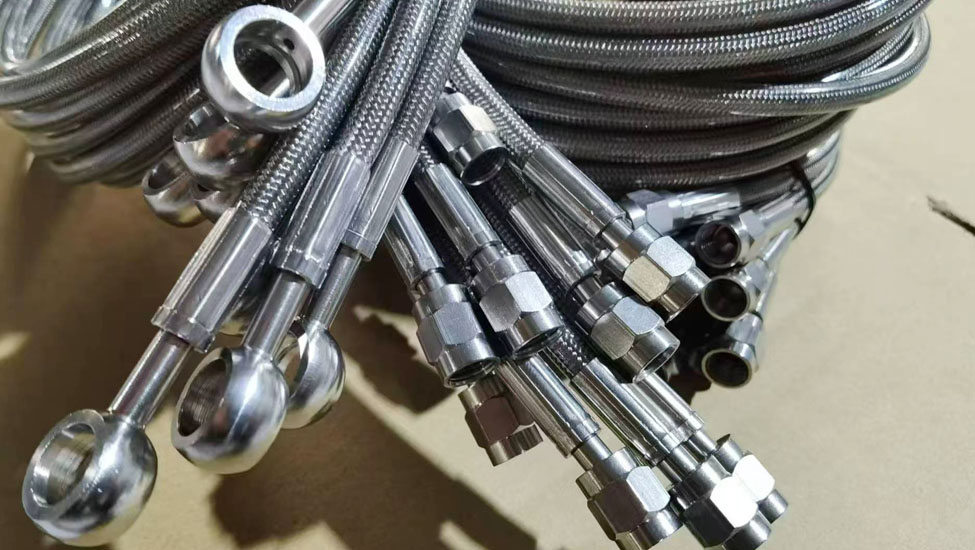
A Stainlesssteelbraided Hose uses stainless steel wire reinforcement or an external braid, depending on the product construction. In suitable brake hose designs, braided reinforcement can help control hose expansion under pressure and provide mechanical protection.
However, stainless steel braid alone does not guarantee corrosion resistance across the entire assembly. The inner tube, end fittings, braid quality, protective covering, and manufacturing process all affect overall durability.
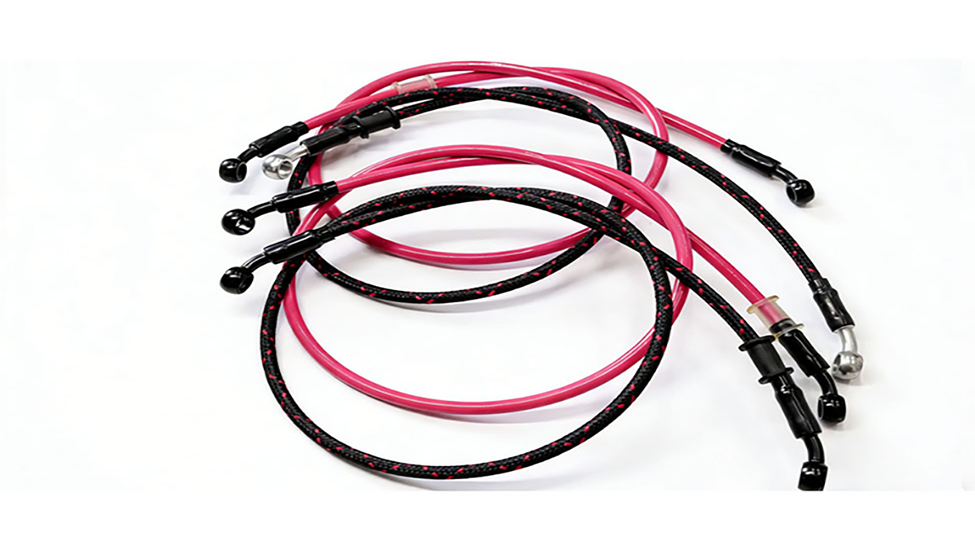
Braided Brake Lines are often selected for motorcycle upgrades and performance-oriented applications. A correctly specified assembly may provide more controlled expansion under pressure than some conventional hose constructions.
For modified motorcycles, confirm hose length, fitting angle, thread type, sealing method, pressure rating, and clearance through the full steering and suspension range. The complete assembly must be suitable for the motorcycle and its braking system.
Check the visible hose surface, fittings, mounting hardware, and connection points during scheduled maintenance. Increase inspection frequency when motorcycles operate in humid, coastal, muddy, or salt-exposed environments.
Remove accumulated dirt and road contaminants using cleaning methods approved for the motorcycle and its brake components. Avoid applying unapproved chemicals, lubricants, or coatings to brake hoses, seals, or friction surfaces.
Ensure that brake hoses are not twisted, stretched, pinched, or rubbing against sharp edges. Confirm that steering movement and suspension travel do not place excessive strain on the hose or its fittings.
Use fittings, sealing washers, and other hardware specified for the particular brake hose assembly. Follow the manufacturer's torque specifications, fluid requirements, bleeding procedure, and inspection instructions.
Components with significant corrosion, leakage, structural damage, or other defects should be assessed and replaced as required. Do not attempt to repair a damaged hydraulic brake hose with tape, sealant, or improvised fittings.
For motorcycle parts distributors, repair chains, importers, and OEM purchasing teams, evaluating the complete brake hose assembly is more important than comparing product appearance alone.
Confirm the inner tube material, reinforcement type, outer protection, fitting material, and surface finish. These specifications should match the application and expected environmental conditions.
Request documented working pressure, proof pressure, burst pressure, and temperature limits where applicable. Confirm that the complete assembly meets the requirements of the target motorcycle and relevant regulations or standards.
Check thread specifications, banjo angles, sealing interfaces, hose length, and installation clearance. For customized brake lines, provide accurate drawings, samples, or vehicle application details to reduce compatibility issues.
Professional buyers should ask about assembly inspection, leak testing, pressure testing, material traceability, and quality documentation. Test methods and acceptance criteria should be appropriate for the product and its intended application.
Yes. Severe corrosion can damage sealing surfaces, threads, or the structural integrity of a fitting and may contribute to leakage. However, leaks can also result from worn seals, incorrect installation, or damaged components. Any suspected brake fluid leak requires immediate inspection.
No. Stainless steel can resist corrosion under many conditions, but its resistance depends on the material grade, environment, surface condition, and maintenance. Other assembly components may also corrode. Regular inspection remains necessary.
Follow the motorcycle manufacturer's replacement schedule. Replace the hose when it shows leakage, cracking, swelling, reinforcement damage, or other defects requiring replacement. If the hose or fittings have significant corrosion or the assembly's condition is uncertain, obtain a professional assessment before riding.
No. The assembly must match the motorcycle's hydraulic system, pressure requirements, fittings, routing, and applicable regulations. A product designed for one motorcycle should not automatically be assumed compatible with another model.
Useful information includes the vehicle make and model, model year, required hose length, fitting type and angle, thread specifications, hose construction, operating conditions, target quantity, and any applicable certification or testing requirements.
Corrosion on motorcycle brake components can begin with small signs such as surface discoloration, damaged coatings, or rust around mounting points. More serious warning signs include pitting, damaged fittings, fluid leakage, and deterioration of the brake hose assembly.
Regular inspection, correct installation, suitable materials, and timely replacement are essential for maintaining brake system reliability. For motorcycle manufacturers, importers, distributors, and aftermarket parts businesses, choosing a brake hose assembly that meets the exact application requirements is a practical way to support product quality and customer confidence.
When sourcing customized motorcycle brake hoses, evaluate the complete assembly, including the inner tube, reinforcement, outer protection, end fittings, pressure rating, and quality documentation. Always prioritize verified specifications and applicable safety requirements over appearance or marketing claims.