The Material Science of Brake Drag: How Your Hose Choice Prevents or Causes the Problem
Brake drag isn't random; it's often a direct result of material failure under the harsh conditions of heat, pressure, and chemical attack. For performance enthusiasts and workshops in hot climates like the Middle East or humid regions like Southeast Asia, choosing the right brake line material is a proactive defense against drag. This article dives into the engineering reasons why standard materials fail and how advanced alternatives are designed to succeed.
The Weak Link: Standard Rubber Hose Construction and Failure Modes
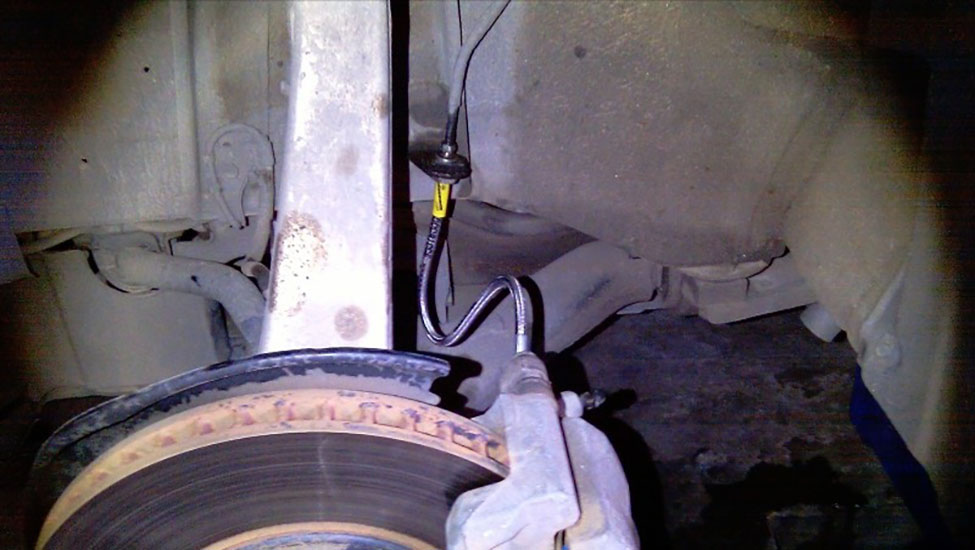
Understanding why a part fails starts with knowing how it's built. A typical OEM rubber brake hose is a composite:
Anatomy of a Failure-Prone Hose:
- Inner Tube: Made of EPDM or NBR rubber, designed to be fluid-compatible.
- Reinforcement Layer: A spiral or braid of textile or low-tensile steel wire. This gives the hose its burst strength but doesn't fully prevent expansion.
- Outer Jacket: More rubber, for environmental protection.
The Critical Flaw: The bond between the inner tube and the reinforcement can break down. Heat from brakes, chemical attack from old or contaminated fluid, and constant flexing weaken this bond. Once delaminated, the inner tube is free to move, leading to the one-way valve effect that causes drag.
The Engineered Solution: Materials That Resist Internal Degradation
To prevent drag, you need a hose whose inner passage remains stable and intact for the life of the vehicle.
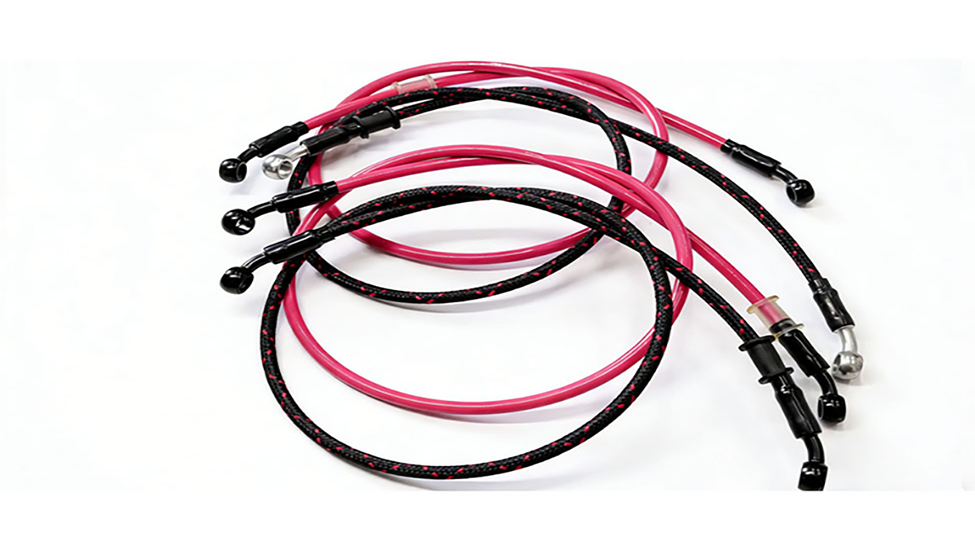
1. Reinforced Thermoplastic: Nylon Brake Line
This is a significant step up from rubber. Instead of multiple bonded layers, high-quality nylon hose uses a thick, extruded tube of reinforced thermoplastic.
- Monolithic Construction: No layers to separate. The tube is a single, coherent piece, eliminating the possibility of internal delamination.
- Chemical Resistance: Highly resistant to glycol-based brake fluids, preventing the swelling and softening that attacks rubber.
- Temperature Rating: Handles continuous temperatures (~135°C) that would degrade rubber, making it suitable for spirited street and off-road use.
2. The Gold Standard: PTFE with Stainless Steel Braided Reinforcement
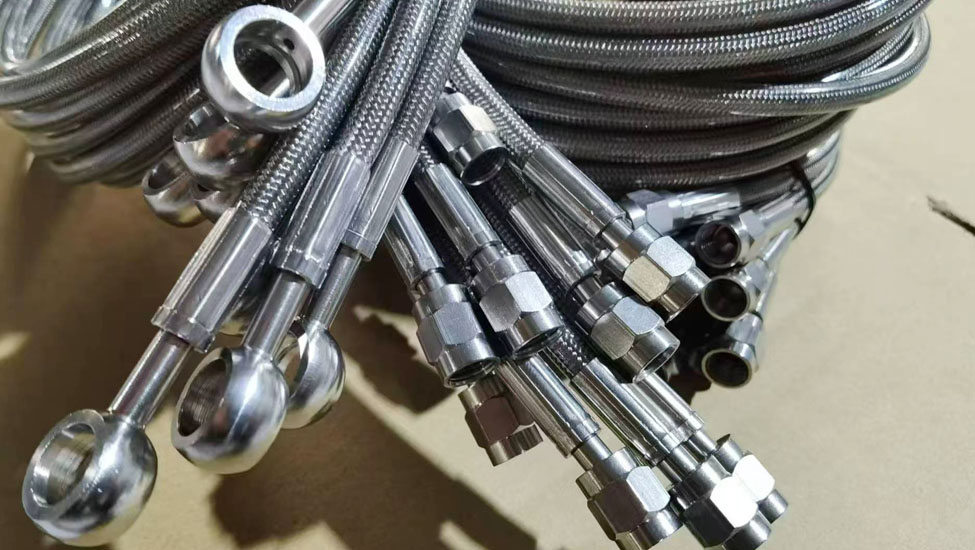
For ultimate reliability, the industry standard is a PTFE (Teflon) inner liner inside a stainless steel braid. Our Teflon Brake Line and PTFE Brake Line Assembly are built this way.
Why It Cannot Cause Drag:
- Inert, Non-Stick Liner: PTFE is chemically inert. It does not react with or break down in brake fluid. Nothing sticks to it or flakes off.
- Zero Delamination: There is no "bond" to break. The PTFE tube is a standalone liner.
- Structural Cage: The stainless steel braid is not just a cover; it's a rigid structural sheath that physically prevents the PTFE liner from collapsing, distorting, or ballooning under any pressure or vacuum condition.
- Extreme Heat Tolerance: PTFE maintains its properties from -70°C to +260°C, far beyond any brake system temperature, preventing heat-induced softening.
This combination makes PTFE/stainless steel braided hoses immune to the internal failures that cause brake drag.
Climate Considerations: Why Your Environment Matters
High-Heat Regions (Middle East): Accelerates rubber degradation and increases under-hood temperatures. PTFE's extreme heat tolerance makes it the ideal choice here.
High-Humidity/Coastal Regions (Southeast Asia, Japan): Promotes corrosion in fittings and increases moisture in brake fluid, which attacks rubber. The stainless steel fittings and inert PTFE liner offer superior corrosion and chemical resistance.
Choose the Right Material for Your Climate and Driving Style
Preventing brake drag starts with specifying the correct component. Are you driving a performance car in Dubai's heat? A durable Nylon Brake Line is a great upgrade. For track use, desert touring, or maximum longevity, the PTFE Brake Line Assembly is the definitive solution. As highlighted on our site, we leverage data from multiple vehicle models to quickly provide the right OEM replacement or custom solution. Describe your vehicle and use case, and we'll get you the right parts. Contact us for a technical consultation.