For automotive enthusiasts and professionals in Southeast Asia, the Middle East, and Japan/Korea, brake system reliability is paramount. A brake fluid leak is a critical safety concern that requires immediate attention. This technical bulletin explains the common symptoms, underlying causes, and how upgrading to durable, reinforced brake lines prevents this dangerous failure, ensuring consistent performance in demanding conditions.
Early detection is crucial. Watch for these key symptoms, which may indicate a failing brake line.
This is the most common indicator. When fluid leaks out, air enters the hydraulic system, creating compressible gaps. The pedal will feel soft, travel further towards the floor, and may require pumping to build pressure. This is a direct sign of fluid loss and failing system integrity.
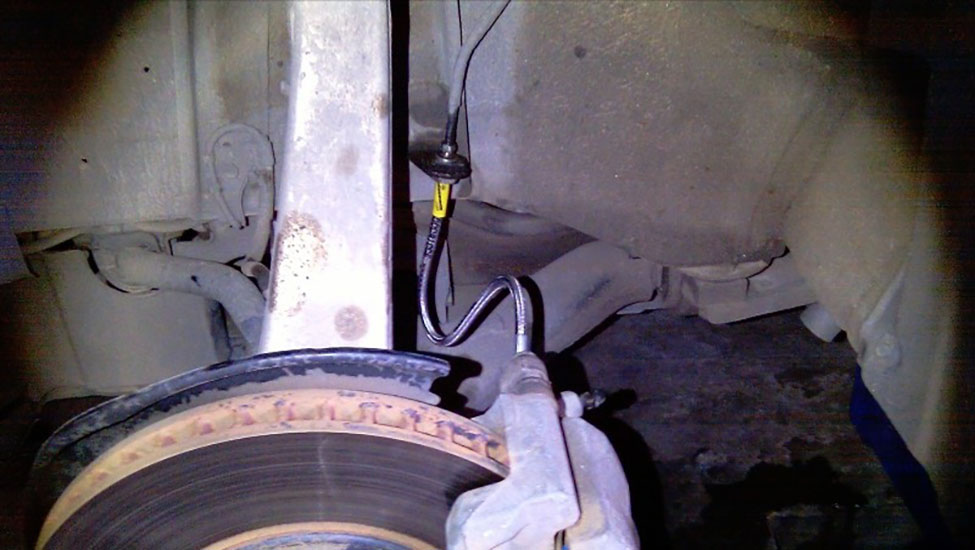
Check the ground where you park. A clear, slick, oily fluid (brake fluid) indicates a leak. The fluid's location can help pinpoint the source—near a wheel suggests a hose or caliper issue; under the chassis center suggests a hard line failure.
Modern vehicles have brake fluid level sensors. A low fluid level due to a leak will trigger the red brake warning light. Never ignore this light.
As fluid volume decreases, hydraulic pressure drops. You will notice the vehicle takes longer to stop, and the brakes feel less responsive, especially during repeated or hard braking.
Understanding the "why" helps in choosing a better solution.
This is the primary cause for standard rubber hoses. Road debris, salt (common in coastal Japan/Korea and the Middle East for dust control), and UV exposure degrade the outer rubber layer. This leads to cracks, abrasion, and eventually, rupture.
Over time, heat and moisture cause the inner lining of standard rubber hoses to break down. The hose can develop weak spots that bulge under pressure, stretching the outer reinforcement until it cracks and leaks. This internal failure is invisible from the outside until it's too late.
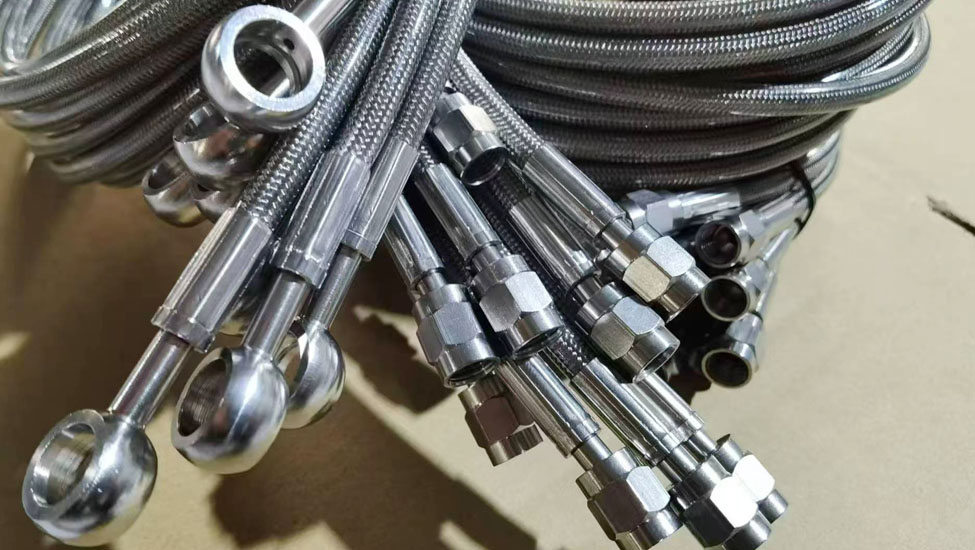
Leaks often occur at the metal fittings (where the hose connects to the caliper or hard line) due to corrosion, over-tightening, or vibration-induced loosening. Using lines with improperly crimped or low-quality fittings is a major risk.
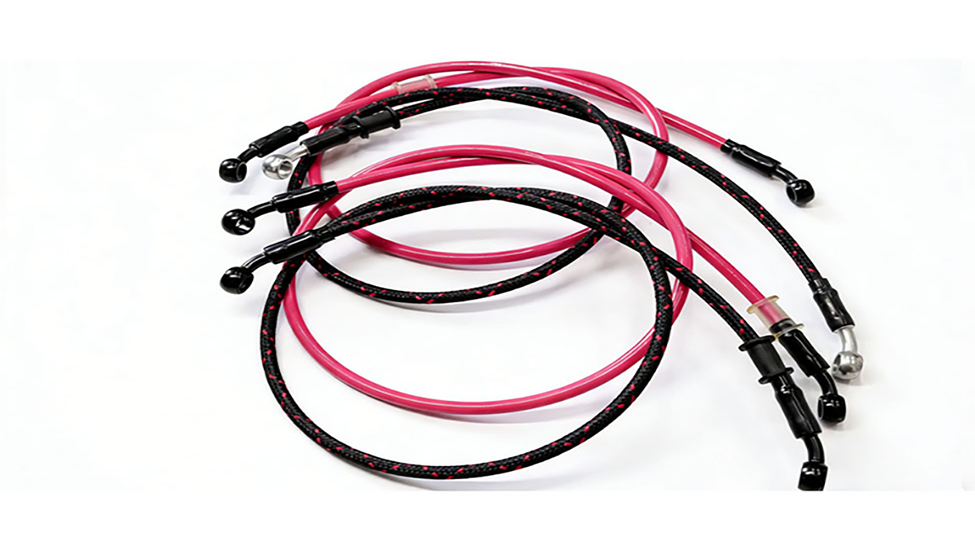
Replacing aging lines with purpose-built, reinforced assemblies is the most effective preventive measure.
Performance lines are engineered to resist the exact causes of failure.