Stainless Steel Braided vs Rubber Motorcycle Brake Lines: Which Is Better?
When upgrading a motorcycle braking system, one of the most common questions is whether to continue using the original rubber brake hose or switch to stainless steel braided brake lines.
The answer depends on the motorcycle, riding style, budget and modification objectives. Neither hose construction should be selected simply because it is more expensive or looks better.
What Is the Difference Between Rubber and Braided Brake Lines?
Rubber Brake Lines
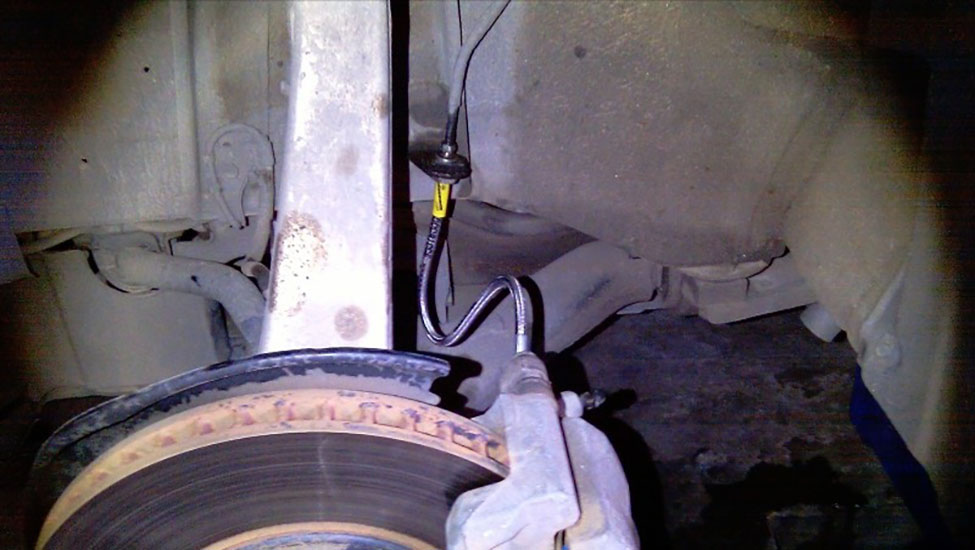
Rubber brake hoses are widely used as original equipment because they provide flexibility, are relatively economical and are suitable for many standard street motorcycles.
For a standard replacement application, a properly specified Rubber Brake Line Assembly can be a practical solution.
Stainless Steel Braided Brake Lines
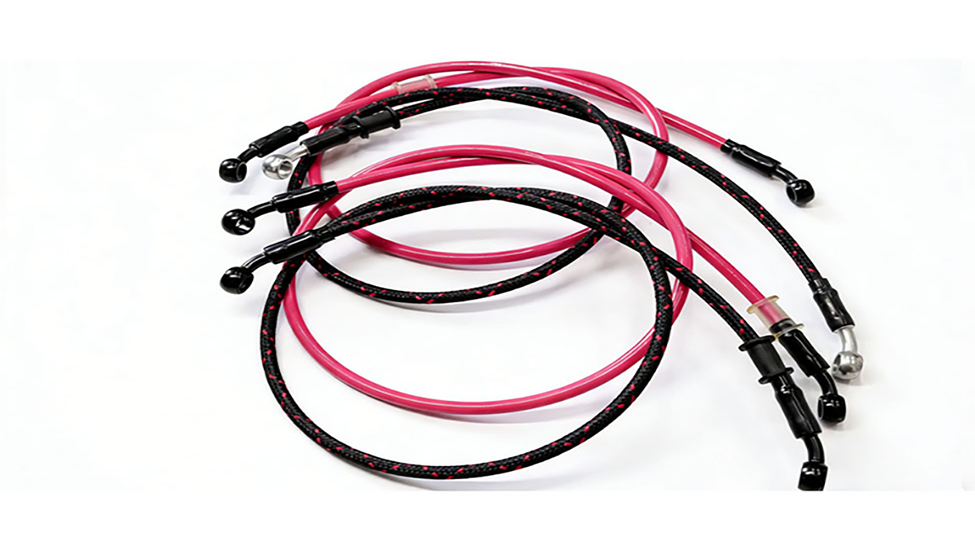
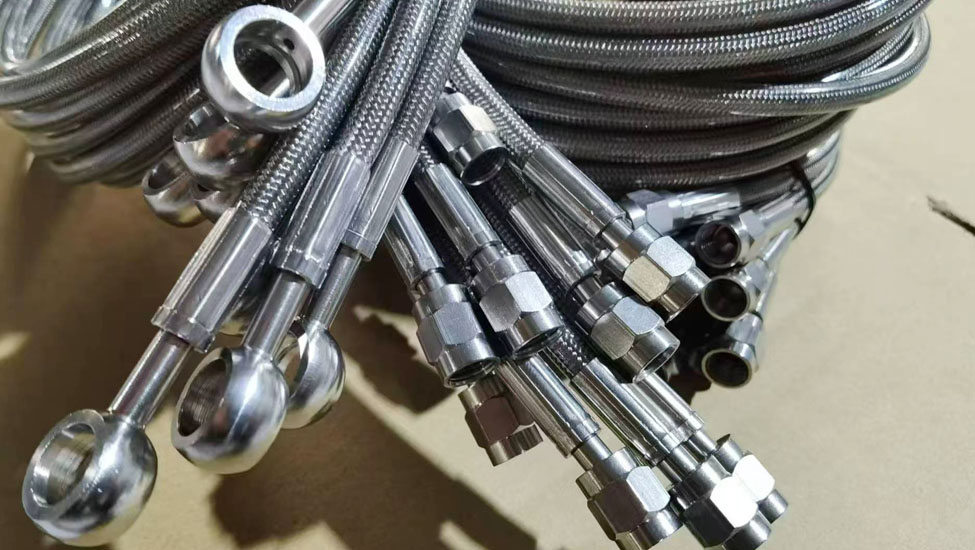
A stainless steel braided brake line normally combines an inner hydraulic tube with stainless steel reinforcement. The reinforcement helps limit hose expansion under hydraulic pressure.
This construction is particularly popular in sport motorcycles, custom motorcycles and aftermarket brake system upgrades.
Why Do Riders Prefer Braided Brake Lines?
More Stable Brake Feel
One of the most noticeable differences can be brake lever feel. Because the reinforced hose is designed to resist expansion, the lever can feel firmer and more consistent under demanding braking conditions.
Better Protection Against Abrasion
The external stainless steel braid can provide additional mechanical protection. This can be useful on modified motorcycles where brake hose routing differs from the original configuration.
More Customization Options
Aftermarket braided brake lines can be produced with different hose lengths, fittings, banjo angles and external finishes, making them suitable for custom motorcycle projects.
Does a Braided Brake Line Make a Motorcycle Stop Faster?
This is an important distinction.
A braided brake line does not automatically increase the friction between the brake pads and disc, so it should not be described as a component that directly creates more braking power.
Its main contribution is hydraulic pressure transmission and hose expansion control. A more consistent lever response can make brake control feel more predictable, particularly when the system is used repeatedly.
Brake Performance Depends on the Complete System
- Master cylinder
- Brake caliper
- Brake pads
- Brake disc
- Brake fluid
- Brake hose
- Tires
- Installation and maintenance
PTFE, Nylon and Rubber Brake Hose Options
When Is a Teflon Brake Line Useful?
PTFE, commonly known as Teflon in many product descriptions, is frequently used as the inner tube in performance hydraulic hose constructions because of its chemical resistance.
Our Teflon Brake Line is intended for applications where a PTFE-based brake hose construction is required.
When Should You Consider a Nylon Brake Line?
Nylon-based brake lines can be used in applications where flexibility, weight and specific hose characteristics are important.
Our Nylon Brake Line and Nylon Brake Line Assembly products can be selected according to the application and required assembly configuration.
When Is a Rubber Brake Line Appropriate?
Rubber remains a practical choice for many standard motorcycle applications where flexibility and conventional OE-style construction are required.
How to Choose Between Rubber and Braided Brake Lines
For Daily Commuting
For a standard commuter motorcycle, the priority should be correct fitment, reliable condition and proper maintenance. An undamaged original-type hose may be completely suitable.
For Sport Riding
For riders who regularly brake hard or ride at higher speeds, the pressure-control characteristics of a stainless steel braided brake line may make it a worthwhile upgrade.
For Modified Motorcycles
Custom motorcycles often benefit from braided brake lines because the hose can be specified according to custom routing and fitting requirements.
For Wholesale Buyers
Distributors should pay attention to consistency between batches. A stable hose length, fitting dimension, crimping process and material specification are important when selling the same product repeatedly.
What Should You Check Before Buying?
Hose Length
Incorrect hose length can create problems during steering and suspension movement. Always measure carefully.
Fitting Thread
Confirm the thread type and size before placing an order.
Banjo Angle
The correct banjo angle can make installation easier and prevent unnecessary hose twisting.
ABS Compatibility
For ABS motorcycles, the replacement hose should follow the original brake circuit and routing requirements.
Assembly Quality
Look at the complete assembly rather than only the hose material. The connection between the hose and fitting is an important part of the finished product.
Maintenance Tips for Motorcycle Brake Lines
Inspect Before Long Trips
Check the hose surface, fittings and routing before long-distance riding.
Look for Abrasion
Make sure the hose is not rubbing continuously against the fork, frame, wheel or other components.
Check for Leakage
Any brake fluid leakage should be treated as a serious issue and inspected before riding.
Our Main Brake Hose Products
We manufacture and supply brake hose solutions for aftermarket, motorcycle modification and wholesale applications.
Our main product range includes Teflon Brake Line, Nylon Brake Line, PTFE Brake Line Assembly, Nylon Brake Line Assembly, Rubber Brake Line Assembly and stainless steel Braided Brake lines.
Custom hose lengths, fittings and assembly configurations can be discussed for different motorcycle and vehicle applications.
Motorcycle Brake Hose FAQ
How long does a motorcycle brake hose last?
Service life depends on the material, environment, temperature, usage and maintenance. Inspect the hose regularly rather than relying on a universal replacement period.
Are stainless steel braided brake lines safer than rubber hoses?
A properly manufactured braided line can offer better resistance to expansion and abrasion, but safety depends on the entire braking system and correct installation.
Can I replace my rubber hose with a braided brake line?
In many applications, yes, but the replacement must have the correct length, fittings, thread, banjo angle and routing for the motorcycle.
Is a braided brake line suitable for ABS?
It can be used on many ABS applications when the assembly is specifically designed for the original brake system. ABS routing and connection requirements must be confirmed before installation.
Need a Custom Brake Hose?
If you are unsure which hose construction or fitting configuration is suitable, send us your drawing, existing sample or clear photos with measurements.
Our technical team can review the requirements before production. Contact us for customized brake hose solutions and wholesale inquiries.