Spotting Brake Fluid Leaks Before They Become a Crisis: A Diagnostic Guide
2026-5-20
Comments
Spotting Brake Fluid Leaks Before They Become a Crisis: A Diagnostic Guide
Is That Puddle Under Your Car Brake Fluid? Here’s How to Know
For mechanics and car enthusiasts in the humid climates of Southeast Asia or the dusty roads of the Middle East, brake fluid leaks are a critical safety concern that goes beyond simple component failure. A leak isn't just about losing fluid; it introduces moisture and air into the entire hydraulic system, leading to corrosion, a spongy pedal, and ultimately, brake failure. The first sign is often a small, oily puddle near the wheels or under the master cylinder, but by then, the problem has already begun.
The Four Most Common Leak Points and Their Symptoms
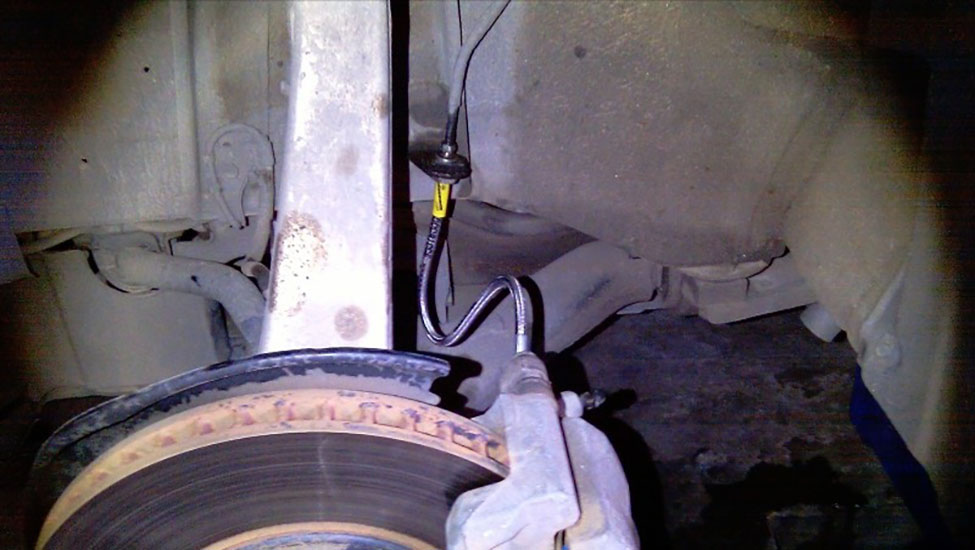
- At Hose Fittings (Calipers/Wheel Cylinders): Caused by worn sealing washers or over-tightened/cross-threaded fittings. Symptom: Fluid accumulation around the banjo bolt or union nut, often accompanied by a gradual drop in brake fluid reservoir level.
- Along the Hose Itself: The rubber outer jacket of a standard Rubber Brake Line Assembly can crack, swell, or develop abrasion holes from rubbing against chassis components. Symptom: Visible wetness or streaks along the hose length, not just at the ends.
- Master Cylinder or ABS Pump Seals: Internal seals fail, allowing fluid to leak into the brake booster or out the back of the unit. Symptom: A low pedal that sinks to the floor, and fluid on the firewall or inside the driver's footwell (for some models).
- Brake Caliper Pistons: Piston seals degrade, allowing fluid to leak onto the brake pads and rotor. Symptom: Contaminated, glazed brake pads, reduced braking power, and potentially a burning smell.
Why Upgrading Your Lines is a Proactive Solution Against Leaks
A leaking standard rubber hose is a clear failure. But the real upgrade advantage lies in preventing the failure in the first place. Our performance hoses are engineered to resist the root causes of leaks:
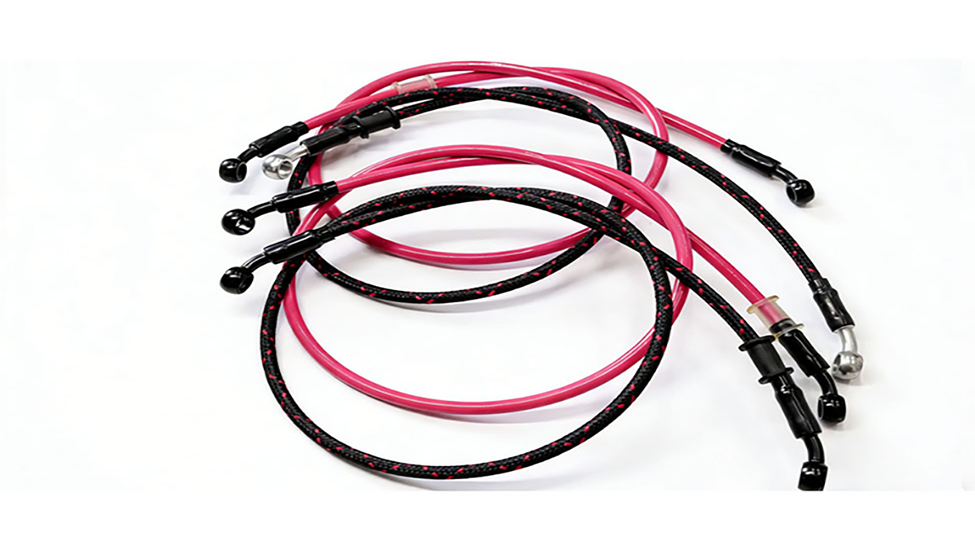
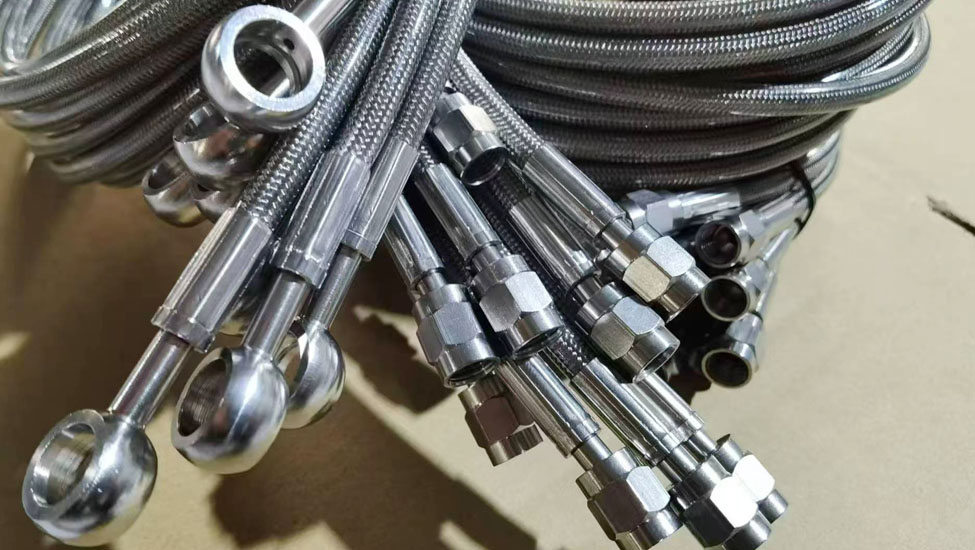
- Superior End Fittings: Our PTFE Brake Line Assembly and Nylon Brake Line Assembly use precision-machined fittings with high-grade sealing washers, designed to create a perfect, long-lasting seal that withstands vibration and pressure spikes.
- Abrasion-Resistant Outer Casing: The stainless steel braid on a Stainlesssteelbraided Hose isn't just for looks. It acts as a protective armor, preventing the inner PTFE or nylon tube from being cut or worn through by road debris or chafing – a common cause of leaks in off-road and harsh environments.
FAQ: Upgrading for Safety and Peace of Mind
- Q: Do改装 hoses really improve safety compared to just replacing with OEM rubber? A: Yes, significantly. While a new OEM hose solves the immediate leak, a performance Teflon Brake Line provides enhanced durability. The stainless steel braid protects against external damage, and the inert PTFE inner liner cannot degrade and contaminate the brake fluid, preserving the integrity of expensive ABS pumps and calipers. It's a long-term reliability upgrade.
- Q: How often should brake hoses be replaced as preventative maintenance? A: For standard rubber hoses, a thorough visual and physical inspection (checking for softness or bulges) is recommended every 2 years or with every major brake service. High-quality Braided Brake lines with PTFE cores are considered a lifetime component for the vehicle under normal use, barring physical impact damage.