Motorcycle Brake Line Maintenance: Inspection, Replacement, and Safety Tips
Motorcycle brake line maintenance is essential for reliable braking performance and long-term vehicle safety. Brake hoses operate under hydraulic pressure and are exposed to vibration, heat, moisture, road debris, and repeated movement. Over time, these conditions can contribute to external damage, leakage, or deterioration.
For motorcycle owners, repair workshops, aftermarket parts distributors, and OEM buyers, understanding how to inspect and select brake lines helps reduce avoidable failures and maintenance costs. This guide explains common motorcycle brake hose problems, inspection methods, replacement considerations, and the differences between several brake line constructions.
1. Why Regular Motorcycle Brake Line Inspection Matters
Brake Hoses Work Under Hydraulic Pressure
When the rider applies the brake lever or pedal, hydraulic pressure travels through the brake line to operate the caliper. The hose must contain the brake fluid and withstand the pressure generated by the braking system.
A damaged, leaking, or incorrectly installed brake hose can compromise braking performance. Regular inspection helps identify visible problems before they develop into more serious safety issues.
Environmental Conditions Can Affect Brake Hose Service Life
Motorcycles used in hot climates, heavy rain, coastal environments, or dusty conditions may experience different forms of environmental exposure. Heat, moisture, road contamination, and contact with unsuitable chemicals can affect hose coverings, fittings, and surrounding components.
Motorcycle owners and maintenance professionals should follow the vehicle manufacturer's inspection schedule and replace brake hoses when required by the manufacturer or when damage is identified.
2. Common Motorcycle Brake Hose Problems and Their Warning Signs
Cracks and Surface Deterioration
Cracking, hardening, swelling, or other visible changes in a brake hose may indicate deterioration. The condition of the outer cover alone cannot confirm the integrity of the inner tube, so suspicious hoses should be assessed by a qualified technician.
Brake Fluid Leakage Around Hoses and Fittings
Brake fluid around a hose connection, banjo bolt, fitting, or crimped section may indicate a leak or an improperly sealed connection. Any suspected brake fluid leak requires immediate attention.
Do not continue riding a motorcycle with a suspected hydraulic brake leak. Have the system inspected and repaired before it returns to service.
Bulging, Abrasion, and Exposed Reinforcement
A hose that bulges under pressure, shows deep abrasion, or has exposed reinforcement may no longer be safe to use. Damage can result from incorrect routing, contact with sharp edges, excessive bending, or interference with moving components.
Spongy Brake Lever or Unexpected Brake Response
A spongy brake lever or an unexpected change in braking response may be caused by air in the hydraulic system, fluid problems, hose damage, or faults in other brake components. These symptoms should not automatically be attributed to the brake hose alone.
A qualified technician should inspect the complete braking system to identify the cause and determine the appropriate repair.
3. How to Inspect Motorcycle Brake Lines
Step 1: Check the Entire Visible Hose Length
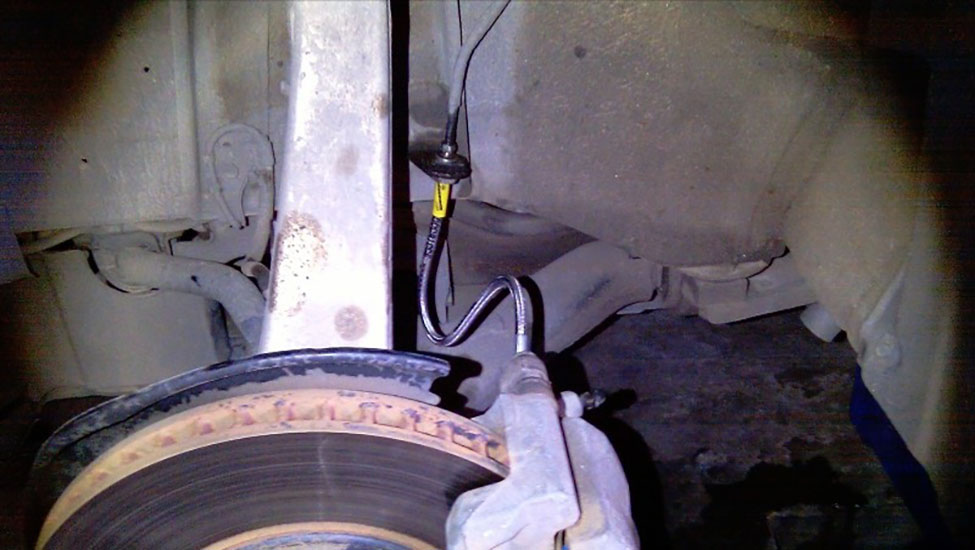
Inspect accessible hose sections for cracks, swelling, leakage, abrasion, kinks, and signs of external damage. Pay particular attention to areas close to the front fork, handlebar, frame, engine, and brake caliper.
Step 2: Examine Fittings and Connection Points
Check the visible condition of fittings and connection points for corrosion, damage, or signs of fluid leakage. Do not attempt to correct a leak by randomly tightening fittings, as the correct tightening procedure and torque depend on the specific connection design.
Step 3: Check Hose Routing During Steering Movement
On motorcycles with front steering movement, the brake hose must follow the intended routing throughout the permitted steering range. It should not become stretched, twisted, pinched, or trapped between components.
Inspection and movement checks should follow the vehicle manufacturer's service procedures. Do not disconnect hydraulic components or perform pressure tests without the required tools and technical knowledge.
Step 4: Review Service History and Replacement Requirements
Check the manufacturer's recommended inspection and replacement intervals, previous repairs, and the age and condition of the installed hoses. A hose may require replacement because of age, damage, contamination, or a manufacturer-specified service limit even when no obvious external leak is present.
4. Choosing the Right Replacement Motorcycle Brake Line
Rubber Brake Line Assembly
Rubber brake hoses are widely used in original-equipment motorcycle braking systems. Their flexibility supports normal movement when the hose is correctly designed and installed for the application.
A Rubber Brake Line Assembly should be selected according to the specified pressure rating, temperature range, brake fluid compatibility, reinforcement structure, and vehicle requirements. Product quality and construction vary among manufacturers.
Teflon Brake Line and PTFE Brake Line Assembly
PTFE, commonly known as Teflon, is used as an inner tube material in certain hydraulic brake line constructions. It offers useful chemical resistance and broad temperature capability when incorporated into a properly engineered assembly.
A Teflon Brake Line or PTFE Brake Line Assembly must have suitable reinforcement, compatible fittings, and verified performance for the intended braking system. General-purpose PTFE tubing should not be assumed suitable for hydraulic braking without the necessary design validation.
Stainless Steel Braided Hose and Braided Brake Lines
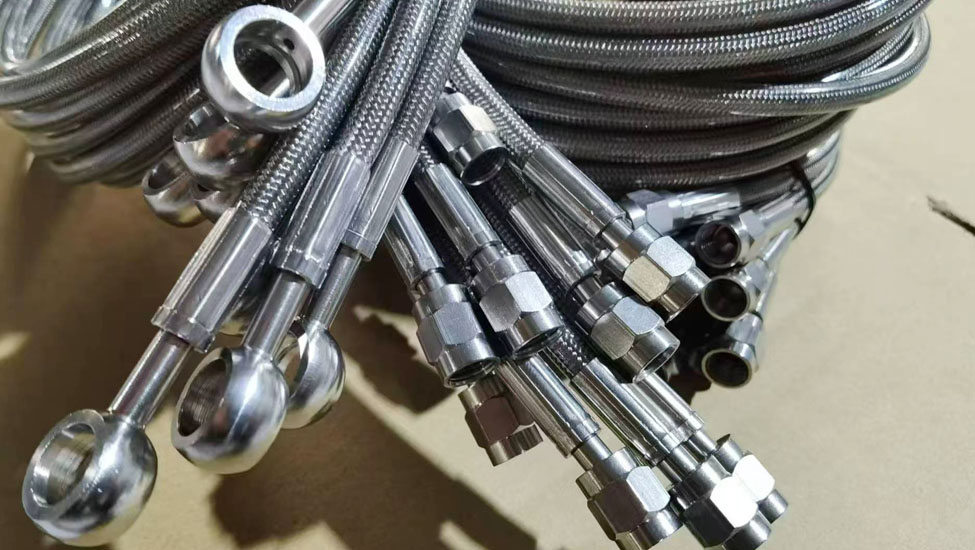
Stainless steel braided hose uses a metal braid as a reinforcement layer. In a correctly engineered brake line, this reinforcement can help control hose expansion under hydraulic pressure.
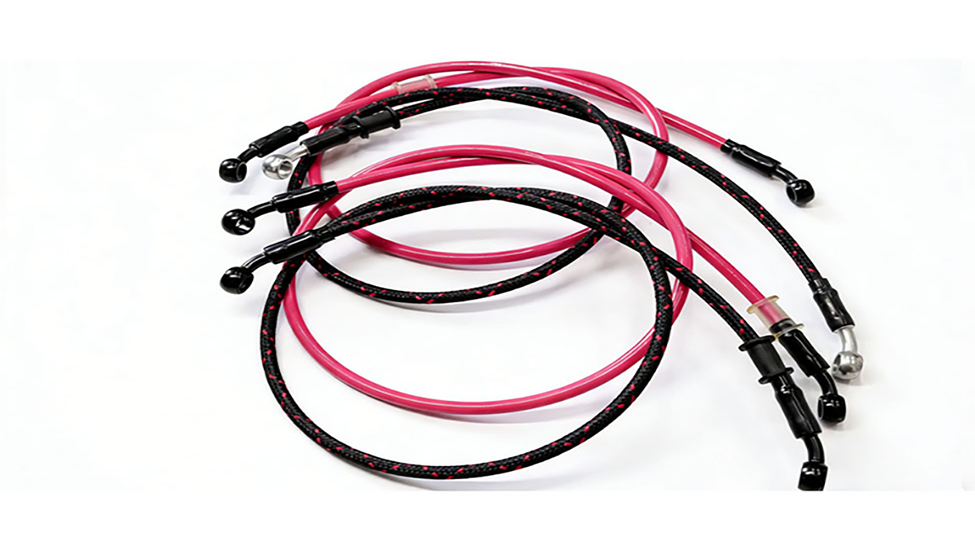
Braided Brake Lines are commonly considered for aftermarket motorcycle projects, customized vehicles, and replacement applications where a specific reinforced construction is required. Their actual performance depends on the inner tube, braid design, fittings, assembly quality, and test results.
When sourcing a Stainlesssteelbraided Hose, buyers should confirm the hose specifications, corrosion protection, fitting materials, and compatibility with the intended brake system rather than selecting a product based on appearance alone.
Nylon Brake Line and Nylon Brake Line Assembly
Nylon tubing is used in various automotive and industrial fluid-transfer applications. However, ordinary nylon tubing is not automatically suitable for motorcycle hydraulic braking systems.
A Nylon Brake Line or Nylon Brake Line Assembly should only be used when the complete product is specifically designed, rated, and validated for the intended brake application. Buyers should request documentation covering pressure capability, fluid compatibility, operating temperature, and applicable safety requirements.
5. When Should You Replace a Motorcycle Brake Hose?
Brake hoses should be replaced when the vehicle manufacturer requires it or when inspection identifies damage or other conditions that make continued use unsafe.
- Visible cracking, swelling, or significant deterioration.
- Brake fluid leakage around the hose, fittings, or crimped sections.
- Exposed reinforcement, deep abrasion, or structural damage.
- Incorrect hose length, damaged connections, or unsafe routing.
- Replacement required by the vehicle manufacturer's maintenance schedule.
- Uncertain hose history combined with condition or compatibility concerns identified during inspection.
Important Considerations During Replacement
The replacement hose must match the application in length, fitting type, connection dimensions, pressure rating, and brake fluid compatibility. A visually similar hose may not have the correct specifications for a particular motorcycle.
Brake hose replacement involves opening a hydraulic system, which requires the correct tools, installation procedure, and bleeding process. Follow the vehicle manufacturer's service instructions or use a qualified motorcycle technician. Before the motorcycle is returned to service, the completed system must be checked for leakage and correct braking operation.
6. Brake Line Maintenance Advice for Distributors and OEM Buyers
Confirm Technical Specifications Before Ordering
For motorcycle parts importers, wholesalers, repair networks, and aftermarket brands, accurate product specifications are essential when sourcing replacement brake hoses. Before ordering, confirm the target vehicle models, hose lengths, fitting types, thread specifications, material construction, and applicable technical requirements.
Evaluate Manufacturing and Quality Control
Brake hose assembly quality depends on the consistency of materials, reinforcement, fitting dimensions, crimping operations, and final inspection. Buyers should ask suppliers about production controls, pressure testing, traceability, and the technical documentation available for each product range.
Consider Customization Without Compromising Safety
OEM and private-label projects may require custom hose lengths, fitting angles, outer finishes, colors, packaging, or branding. These options can support different aftermarket product ranges, but every customized assembly must remain within its validated design and operating limits.
For export markets in Southeast Asia, the Middle East, Japan, and South Korea, suppliers and buyers should also confirm the applicable local requirements and intended vehicle applications before production.
7. Frequently Asked Questions About Motorcycle Brake Line Maintenance
How often should motorcycle brake lines be inspected?
Follow the inspection schedule specified by the motorcycle manufacturer. Additional inspection may be appropriate after a crash, repair, severe environmental exposure, or suspected hose damage. Visible defects or brake fluid leakage require prompt professional assessment.
Are braided brake lines maintenance-free?
No. Stainless steel braided brake lines still require regular inspection. Check for damaged outer protection, corrosion, abrasion, leaking connections, incorrect routing, and any other signs of deterioration.
Can replacing a brake hose improve brake lever feel?
A correctly specified replacement hose may help restore normal braking response when the original hose is damaged or unsuitable. However, lever feel is also affected by air in the system, brake fluid condition, master cylinder performance, caliper condition, and other components.
What should a buyer request from a brake hose manufacturer?
Buyers should request clear product specifications, fitting details, material information, applicable test documentation, inspection procedures, and confirmation that the complete assembly is suitable for the intended braking application.
Conclusion
Regular motorcycle brake line inspection helps identify hose deterioration, fluid leaks, fitting damage, and routing problems before they compromise braking safety. When replacement is necessary, material selection should be based on verified technical specifications and compatibility with the intended vehicle.
Whether selecting a rubber brake hose, a PTFE-based assembly, or a stainless steel braided brake line, buyers should prioritize product validation, manufacturing consistency, correct installation, and documented quality control. For distributors and OEM brands, working with a qualified manufacturer can help support reliable sourcing and consistent brake line specifications across different markets.