Motorcycle Brake Hose Upgrade Guide: When and Why Should You Upgrade?
Brake hoses are easy to overlook on a motorcycle. Riders often pay more attention to brake pads, discs, calipers and master cylinders, while the hose connecting these components is left unchanged for years.
For a modified motorcycle, however, the original brake hose may no longer be the best match after changing the handlebars, calipers, suspension or brake components. A properly selected upgraded brake hose can provide a different combination of flexibility, reinforcement, routing and hydraulic characteristics.
This guide explains what motorcycle riders, modification shops and parts buyers should consider before upgrading a brake hose.
1. What Is a Motorcycle Brake Hose?
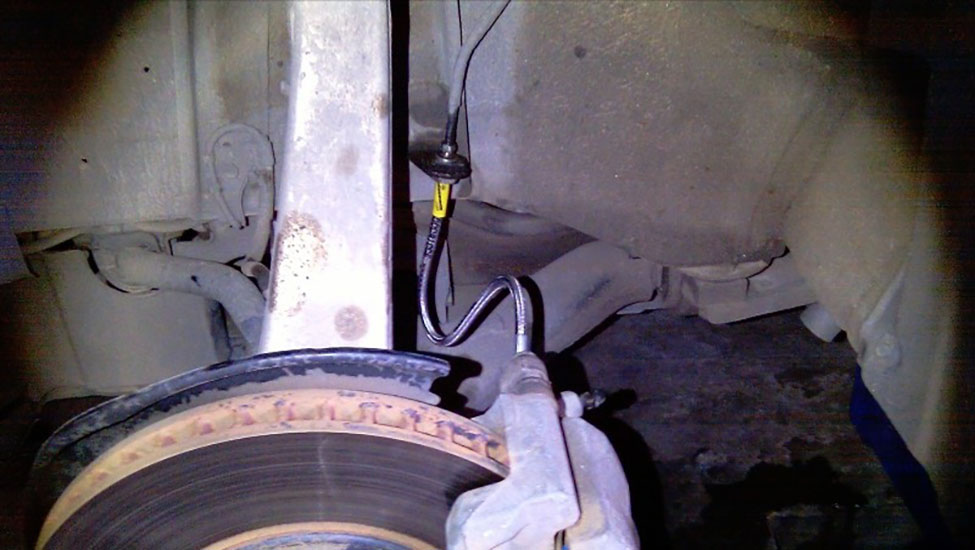
A motorcycle brake hose transfers hydraulic brake fluid from the master cylinder to the caliper. When the brake lever is operated, hydraulic pressure is transmitted through the fluid and hose to the caliper.
The hose therefore needs to withstand pressure while remaining flexible enough to follow the movement of the motorcycle.
Typical Brake Hose Construction
- Inner tube compatible with the specified brake fluid
- Reinforcement layer
- Protective outer layer where required
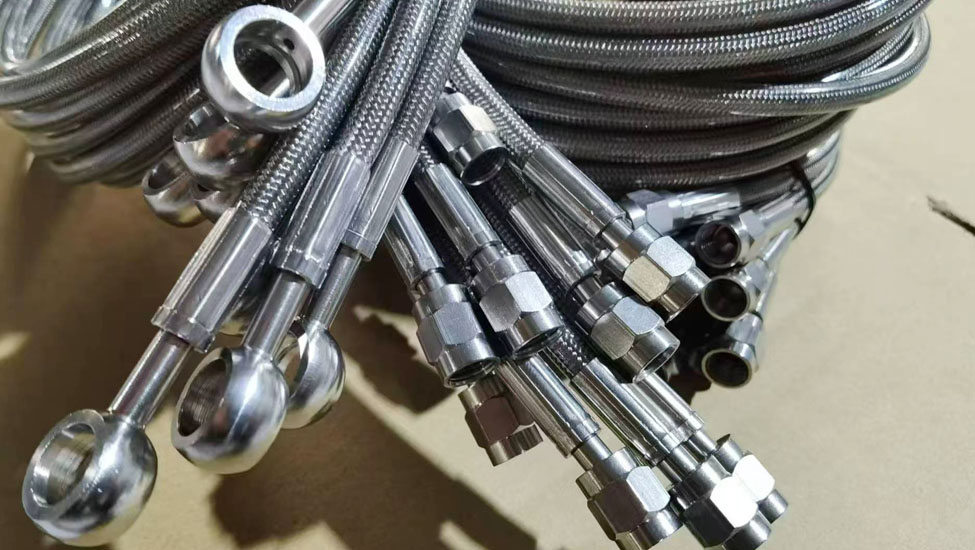
- Metal fittings
- Crimped hose-to-fitting connections
2. Why Do Riders Upgrade Motorcycle Brake Hoses?
There are several reasons for replacing a standard motorcycle brake hose with an aftermarket or braided construction.
- The original hose is aged or damaged.
- The motorcycle has been modified.
- The handlebar position has changed.
- The caliper or master cylinder has been replaced.
- A different hose length is required.
- The rider wants a reinforced aftermarket hose construction.
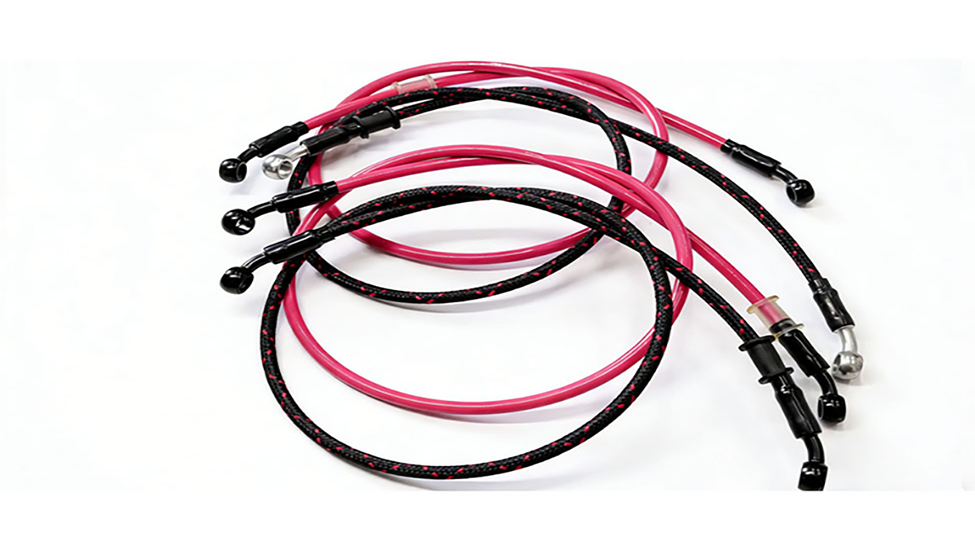
- The owner wants a different appearance or color.
For modified motorcycles, the most important point is compatibility. A visually attractive hose is not useful if the length, fittings or routing are incorrect.
3. Stainless Steel Braided Hose vs Conventional Rubber Hose
Conventional rubber brake hoses are widely used in original equipment and replacement applications. A braided brake hose uses reinforcement around the inner tube to provide a different mechanical structure.
For customers comparing the two, our Rubber Brake Line Assembly can be considered when a conventional rubber hose construction is required.
For performance-oriented aftermarket projects, a reinforced PTFE Brake Line Assembly can be considered when PTFE inner tube construction is appropriate for the application.
4. Why PTFE Is Commonly Used in Performance Brake Lines
PTFE is frequently selected as an inner tube material for performance-oriented brake hose assemblies because of its chemical resistance and dimensional stability.
A typical construction can combine a PTFE inner tube with stainless steel reinforcement and suitable end fittings.
Our Teflon Brake Line range is suitable for projects where this type of hose construction is required.
However, the correct material should always be selected according to the brake fluid, temperature range, pressure requirements and complete system specification.
5. How to Choose the Correct Brake Hose Length
Length is one of the most important dimensions when upgrading a motorcycle brake hose.
The correct length should follow the actual routing path. It should allow full steering movement and, where applicable, suspension movement without pulling the hose tight.
Check These Points Before Ordering
- Master cylinder connection position
- Caliper connection position
- Original hose routing
- Handlebar movement
- Fork movement
- Fitting angle
- Clearance from hot components
For custom projects, an original hose sample or technical drawing is usually the most reliable reference.
6. Choosing the Correct Brake Hose Fittings
Changing the hose without checking the fittings can create installation problems.
Before ordering, confirm the fitting type, thread specification, angle and orientation at both ends. Two hoses can have the same length but still be completely different assemblies because the end fittings are positioned differently.
7. Teflon, Nylon and Rubber Brake Hose Construction
Different hose materials serve different applications.
Nylon Brake Line products can be considered for applications where nylon-based hose construction is specified.
For customers requiring a complete nylon assembly, the Nylon Brake Line Assembly provides another configuration for comparison.
For conventional applications, rubber constructions may still be the appropriate choice. The correct selection depends on the actual hydraulic system rather than simply choosing the most expensive hose.
8. What Overseas Buyers Care About When Purchasing Modified Brake Lines
For motorcycle parts distributors and importers, the concerns are usually different from those of an individual rider.
Consistency Between Batches
Once a sample has been approved, future production should maintain the same important dimensions, fittings and construction.
Custom Lengths and Fittings
Aftermarket distributors often need different hose lengths or fitting configurations for different motorcycle models.
Packaging and Product Identification
Private-label customers may also require individual packaging, product codes, labels and customized cartons.
Sample Approval
For a new brake line project, approving a physical sample before mass production is a practical way to reduce specification errors.
9. Daily Maintenance of Motorcycle Brake Hoses
Upgrading the brake hose does not eliminate the need for regular inspection.
- Check for brake fluid leakage.
- Inspect the hose surface for abrasion.
- Check the crimped fitting areas.
- Make sure the hose is not twisted.
- Check clearance during steering movement.
- Inspect the hose after other brake or suspension modifications.
10. Our Main Brake Hose Products
Our product range covers different hose constructions for motorcycle and aftermarket applications, including Teflon brake lines, PTFE brake line assemblies, nylon brake lines, nylon brake line assemblies, rubber brake line assemblies and stainless steel braided hose products.
The correct construction can be discussed according to application, hose length, fittings, pressure requirements, temperature conditions and customer specifications.
11. FAQ About Motorcycle Brake Hose Upgrades
How often should motorcycle brake hoses be replaced?
There is no universal replacement interval for every motorcycle. Follow the motorcycle manufacturer's maintenance recommendations and inspect the actual hose condition. Leakage, cracking, severe abrasion or damaged fittings should be addressed before continued use.
Does upgrading to a braided brake hose really improve safety?
A correctly specified braided hose can provide different reinforcement and dimensional characteristics compared with some conventional hose constructions. However, braking safety depends on the complete braking system, component compatibility and installation quality. A hose upgrade alone should not be treated as a guarantee of improved safety.
Are aftermarket brake hoses suitable for every motorcycle?
No. The hose must match the motorcycle's connection points, fitting specifications, length, routing, brake fluid compatibility and hydraulic system requirements.
Can you make a motorcycle brake hose according to a drawing?
Yes. A technical drawing or existing hose sample can be used to check the required dimensions, fittings, angles and hose construction.
If you have a drawing, original sample or required hose style, send it to our factory for technical evaluation.
Contact our brake hose factory for custom motorcycle brake lines, samples and quotations.