Motorcycle Brake Hose Buying Guide: How to Choose the Right Material
Choosing a motorcycle brake hose is not simply a matter of finding the correct length. The hose material, inner tube construction, reinforcement, fittings and operating environment all affect the final result.
For riders, workshops and distributors, one of the most important questions is often: Which brake hose material is best for a motorcycle?
The answer depends on the motorcycle, brake fluid, riding conditions, hose routing and the type of brake system being used. This guide explains the main material options and what should be checked before ordering a replacement or upgraded motorcycle brake hose.
Why Does Brake Hose Material Matter?
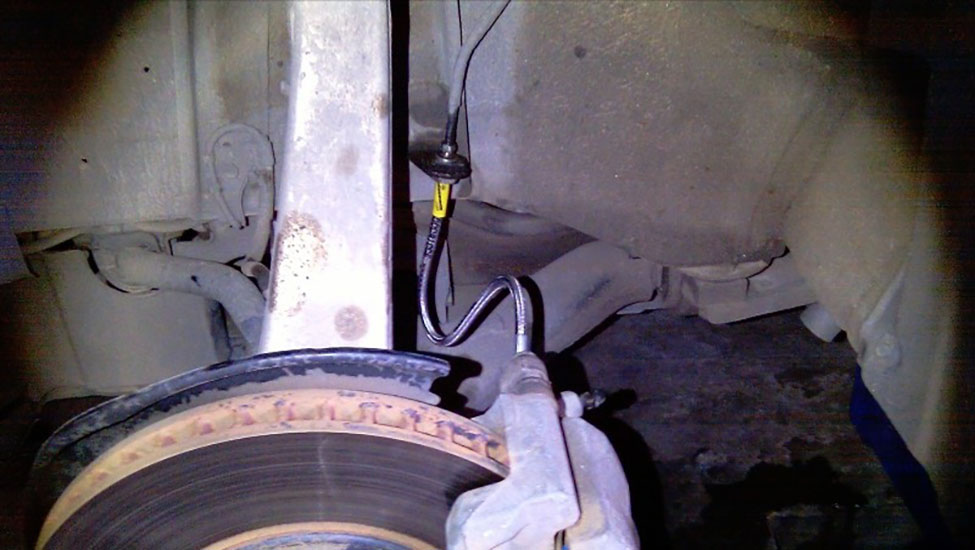
A motorcycle brake hose carries hydraulic brake fluid from the master cylinder to the caliper. When the brake lever is pulled, hydraulic pressure travels through the hose.
The hose therefore needs to withstand pressure while remaining flexible enough for steering, suspension movement and normal motorcycle operation.
The Main Requirements of a Motorcycle Brake Hose
- Pressure resistance
- Brake fluid compatibility
- Temperature resistance
- Flexibility
- Resistance to vibration
- Resistance to abrasion and environmental exposure
- Reliable fitting connections
Rubber Brake Hose: The Traditional Choice
Rubber brake hoses are widely used on original motorcycle braking systems because they offer good flexibility and are relatively economical.
A correctly specified rubber hose can work well for normal road use. However, rubber is a flexible material and its characteristics can change with age, temperature and environmental exposure.
When Is a Rubber Brake Hose a Practical Choice?
Rubber hose can be suitable for standard replacement applications where the motorcycle remains close to its original factory configuration.
For replacement projects requiring a complete assembled product, our Rubber Brake Line Assembly can be considered according to the required application and fitting configuration.
Nylon Brake Hose: Lightweight and Flexible
Nylon is another material used in hydraulic hose applications. It offers a useful combination of flexibility, low weight and resistance to many common operating conditions.
For motorcycles where weight, flexibility and routing are important considerations, a Nylon Brake Line can be considered as part of the brake hose specification.
What Should Buyers Check?
Do not select nylon hose only because it is lightweight. The complete specification should include pressure requirements, inner diameter, outer construction, brake fluid compatibility and fitting configuration.
PTFE Brake Hose for Performance Applications
PTFE, also known as polytetrafluoroethylene, is commonly used in hydraulic applications where chemical resistance and temperature stability are important.
A PTFE inner tube can also be combined with reinforcement to create a more controlled brake line construction.
For motorcycle modification projects, a Teflon Brake Line is one option when the project requires a PTFE-based inner hose.
Why Is PTFE Used in Brake Lines?
- Good chemical resistance
- High temperature capability
- Low friction characteristics
- Suitable for hydraulic applications when correctly specified
- Can be combined with external reinforcement
What Is a PTFE Brake Line Assembly?
A brake hose is only useful when the complete assembly is correctly matched to the motorcycle.
A PTFE Brake Line Assembly normally combines the hose with the required fittings and assembly configuration.
Why Is the Assembly Important?
Even a high-quality hose can cause installation problems if the fittings are incorrect, the hose is too short or the fitting angles do not match the motorcycle.
For this reason, professional buyers normally specify the hose and fittings as one complete system rather than selecting the tube alone.
Stainless Steel Braided Brake Hose
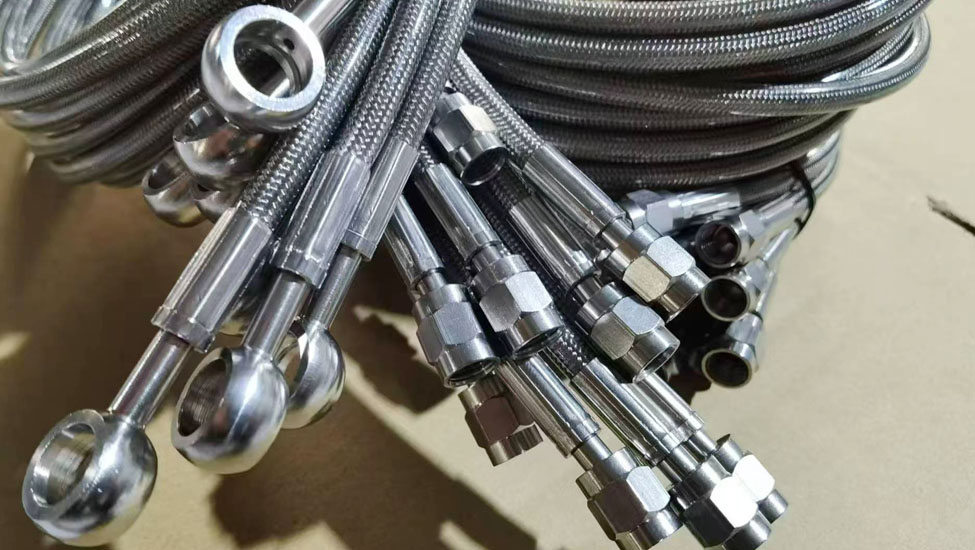
For motorcycle modification, one common construction is a flexible inner hose combined with stainless steel braided reinforcement.
The reinforcement helps control expansion of the hose when hydraulic pressure increases and also provides an additional protective structure around the inner hose.
Does Stainless Steel Braiding Increase Brake Performance?
A braided construction does not create additional braking force by itself. Its main purpose is to provide controlled hose behavior under hydraulic pressure.
Depending on the motorcycle and existing brake system, riders may notice a more direct or consistent brake lever response after a correctly installed reinforced line.
How to Choose Between Rubber, Nylon and PTFE?
| Material | Main Characteristics | Typical Consideration |
|---|---|---|
| Rubber | Flexible, economical, widely used | Standard replacement applications |
| Nylon | Lightweight and flexible | Weight-sensitive and customized applications |
| PTFE | Chemically resistant and temperature stable | Performance and modified applications |
Material Selection Mistakes to Avoid
Choosing Only by Price
The cheapest hose is not necessarily the most suitable hose. Brake lines are safety-related components, so material, construction and assembly quality should be considered together.
Choosing Only by Appearance
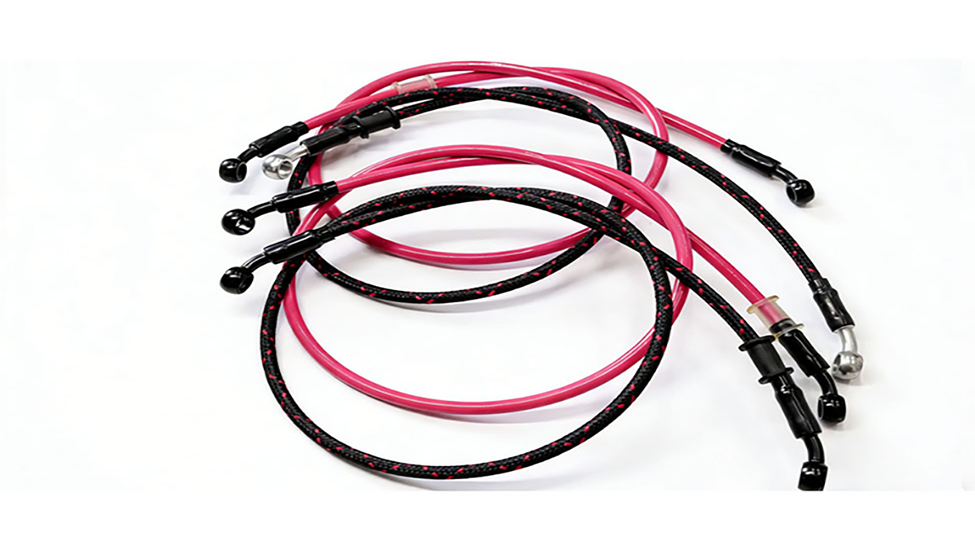
Colored outer coatings and braided finishes can change the appearance of a motorcycle, but appearance should not be the main technical selection criteria.
Ignoring Brake Fluid Compatibility
The hose material must be compatible with the brake fluid specified for the application.
What Do Overseas Motorcycle Buyers Usually Check?
For export and aftermarket projects, buyers commonly pay attention to fitting accuracy, hose length, material consistency, appearance, packaging and repeatable production quality.
Workshops and distributors may also require samples before placing larger orders.
Our Motorcycle Brake Hose Products
We supply motorcycle brake hose solutions using different hose constructions and assembly configurations. Our product range includes Nylon Brake Line Assembly, PTFE brake lines, nylon brake hoses and rubber brake line assemblies.
For customized projects, hose material, length, fitting type, fitting angle and assembly requirements can be discussed according to the application.
Have a Drawing or Existing Sample?
If you are unsure which material or construction is suitable, send us your drawing, original hose or clear photographs. This allows the specification to be reviewed before production.
Contact Us for Custom Motorcycle Brake Hoses
Motorcycle Brake Hose Maintenance
- Inspect the hose surface regularly.
- Check for cracking, swelling or abrasion.
- Inspect fittings for signs of leakage.
- Keep the hose away from sharp edges.
- Check routing after changing handlebars or brake components.
- Replace damaged hoses rather than continuing to use them.
FAQ About Motorcycle Brake Hose Materials
How long does a motorcycle brake hose last?
There is no single service life for every hose. Material, construction, environment, temperature, vibration and installation all affect service life. Regular inspection is more useful than relying only on a fixed replacement period.
Is a PTFE brake hose better than a rubber hose?
PTFE and rubber have different characteristics. PTFE is often selected for chemical resistance and temperature stability, while rubber remains a practical choice for many standard applications.
Are braided brake lines safer?
A correctly specified and properly installed reinforced brake line can provide controlled hose behavior and consistent hydraulic response. It does not replace correct maintenance or other brake system components.
Can the same brake hose fit every motorcycle?
No. Hose length, fittings, thread specifications, angles and routing vary between motorcycles and brake system configurations.