Is Your Brake Line Failing? A Professional Diagnostic Checklist You Can Perform
As a brake line manufacturer serving workshops and enthusiasts from the humid coasts of Southeast Asia to the arid climates of the Middle East, we see a common thread: many brake failures are preventable with proper inspection. A spongy pedal or a slight pull under braking shouldn't be ignored. This guide provides a structured, step-by-step method to diagnose potential brake line issues before they compromise safety. Think of it as a pre-flight check for your most critical safety system.
Phase 1: The Visual & Tactile Inspection (The 5-Minute Check)
This initial check requires no tools and can reveal obvious problems.
1. The Bulge and Crack Test
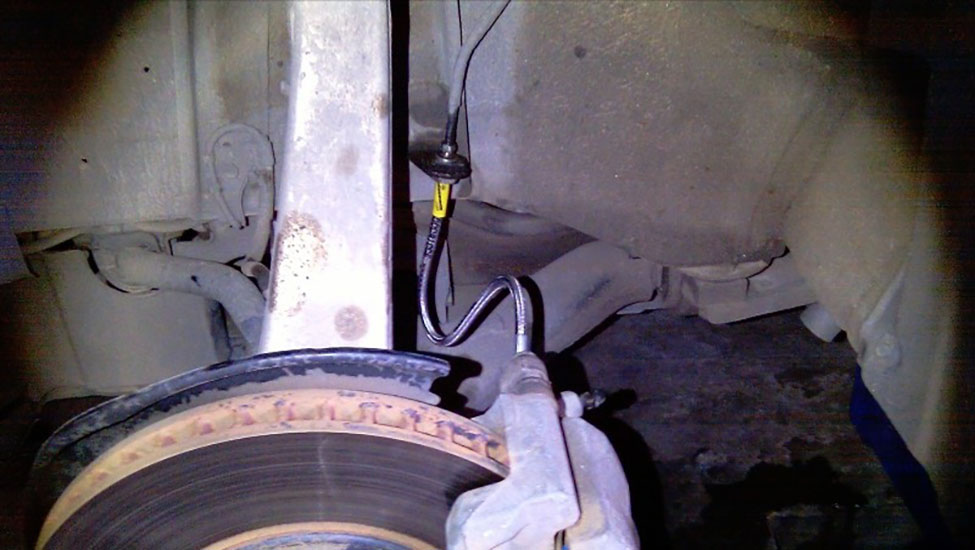
With the vehicle parked on level ground and the engine off, trace each flexible brake hose from the chassis to the caliper. Look closely for:
- External Cracking (Weather Checking): Fine, spider-web cracks on the hose surface indicate rubber degradation from UV exposure and ozone—common in sunny regions like the Gulf or Thailand.
- Bulges or Blisters: A swollen section is a red alert. The inner tube is failing and the hose is acting like a balloon under pressure. This is a classic failure mode of older Rubber Brake Line Assemblies and demands immediate replacement.
- Abrasion or Chafing: Check where the hose passes near suspension components. Rubbing can wear through the outer cover, leading to sudden failure.
2. The Fitting and Connection Check
Examine the metal fittings at both ends of the hose. Look for:
- Wetness or Crusty Residue: Any sign of brake fluid seepage indicates a failing seal. A white, crusty deposit is often dried brake fluid and dirt.
- Corrosion on Fittings: Especially critical in coastal areas (Japan, Philippines, UAE) where salt accelerates rust. Corroded fittings can seize or crack.
Phase 2: The Dynamic Test (Two-Person Operation)
This test identifies internal degradation that isn't visible from the outside.
3. The Pressure Hold and Bulge Test
With the vehicle safely supported, have an assistant firmly pump the brake pedal 3-4 times and hold steady pressure. While they hold pressure, closely observe each flexible hose. If you see any section of the hose expand or pulse slightly, the inner reinforcement has failed. The hose is expanding under pressure instead of transferring it to the caliper, directly causing a spongy pedal. This is a definitive fail.
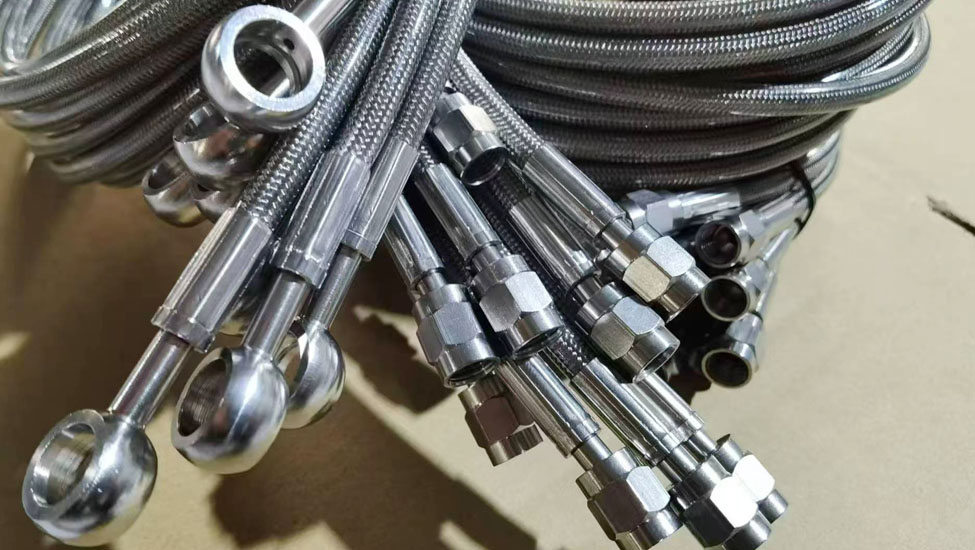
The Engineering Reason: This internal expansion is the primary performance flaw in aged rubber hoses. Upgrading to a Teflon (PTFE) core line with a stainless steel braid eliminates this expansion, giving a firm, immediate pedal response.
Phase 3: The Operational Assessment
4. Evaluating Pedal Feel and Vehicle Behavior
During a safe test drive, note:
- Pedal Travel: Does the pedal sink slowly toward the floor when constant pressure is applied?
- Pull Under Braking: Does the vehicle consistently pull to one side? This could indicate a partially restricted or failing hose on one side.
- Return to Center: After a turn with light brake application, does the vehicle feel sluggish to straighten? A sticking caliper, often caused by a deteriorating hose acting as a check valve, could be the cause.
Diagnosis to Solution: Matching the Fix to the Find
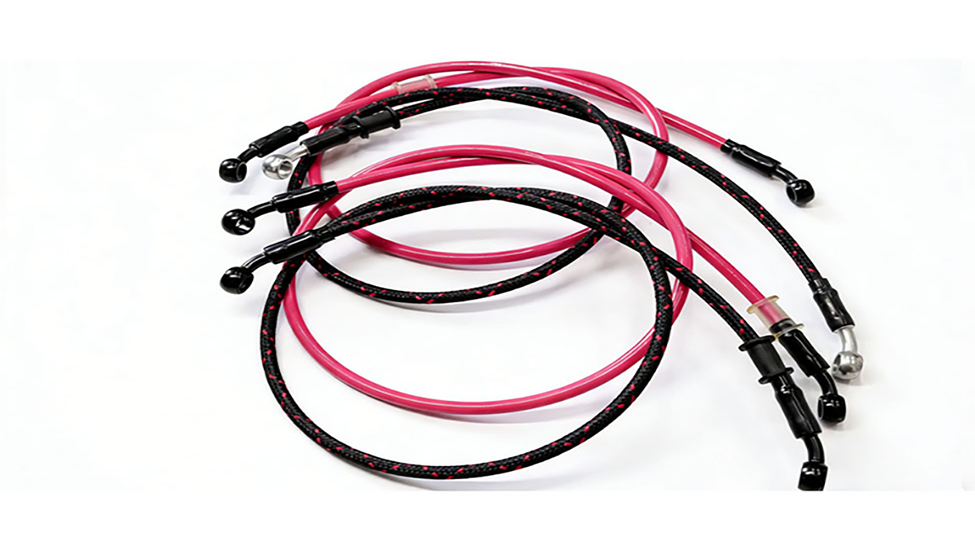
If you find cracks/bulges: Complete replacement is non-negotiable. For daily drivers, a Nylon Brake Line Assembly offers excellent durability. For performance or severe service, choose a PTFE braided line.
If you fail the pressure-hold test: Your hoses are degrading internally. This is the perfect scenario for an upgrade to braided brake lines to restore precise pedal feel.
If you see corrosion on fittings: Replace with a kit featuring corrosion-resistant fittings to prevent recurrence.
FAQ & Expert Advice
Q: How often should I perform this inspection?
A: Visually inspect every time you rotate your tires (every 5,000-8,000 miles) or at least twice a year. Perform the pressure-hold test annually or if you notice any change in pedal feel.
Q: I drive a modified car. Are braided lines a necessity?
A: For any vehicle with performance pads, track use, or increased power, they are highly recommended. They replace the weakest hydraulic link, ensuring your upgraded calipers and pads perform as designed. The firmer pedal improves modulation.
Q: My vehicle is a JDM import. Can I get lines that fit?
A: Absolutely. We specialize in fitments for global markets, including Japanese, Korean, and European models. If you have a rare model, send us your OEM sample or detailed measurements for a custom set.