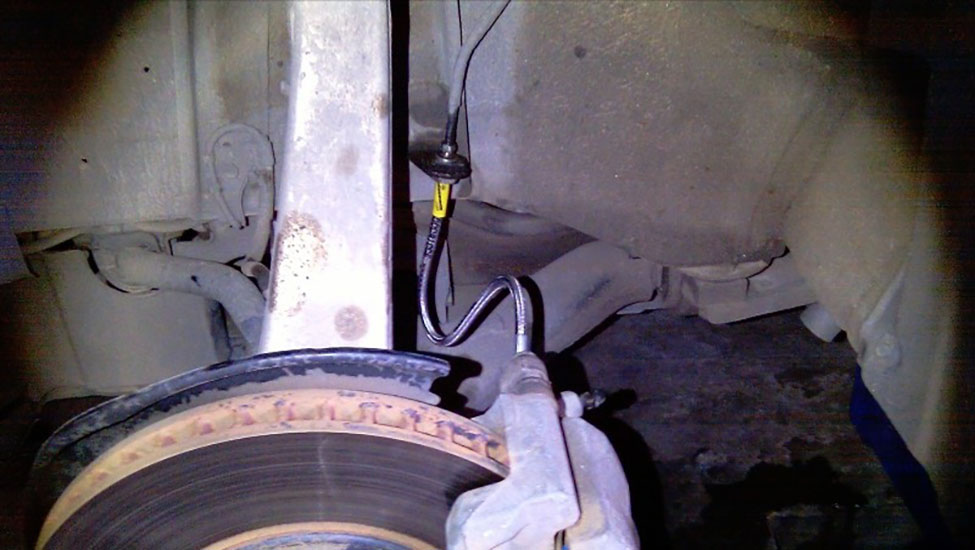
A common complaint we hear from workshops in Japan and Korea is: "I replaced the caliper and pads, but the car still drags." Often, the issue isn't the components; it's the Rubber Brake Line Assembly being pinched or twisted during reassembly.
When a hose is installed with a tight bend radius (e.g., too close to a control arm) or gets twisted 90 degrees, it creates a choke point. This mechanical restriction prevents the return spring in the caliper from pulling the piston back, causing chronic drag. Unlike a burst hose, a kinked hose looks fine externally but fails hydraulically.
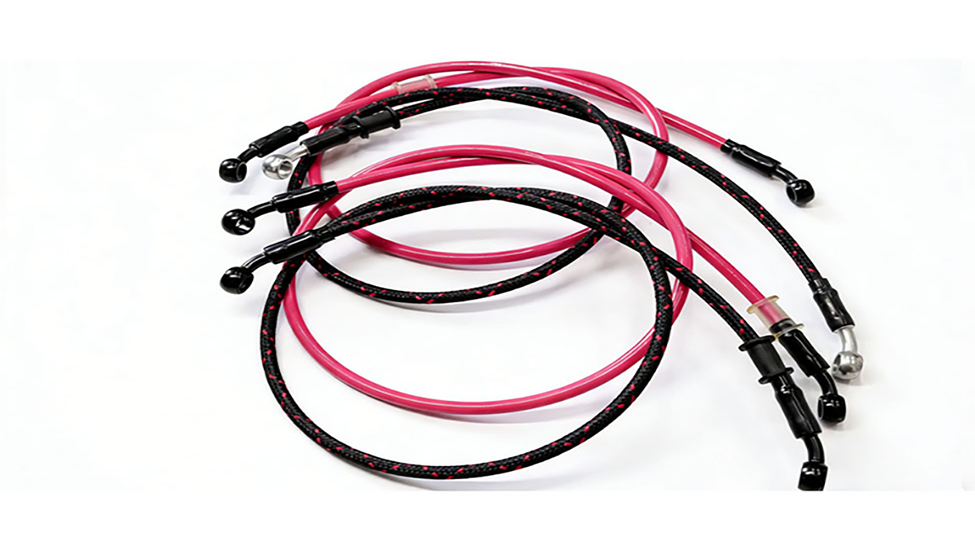
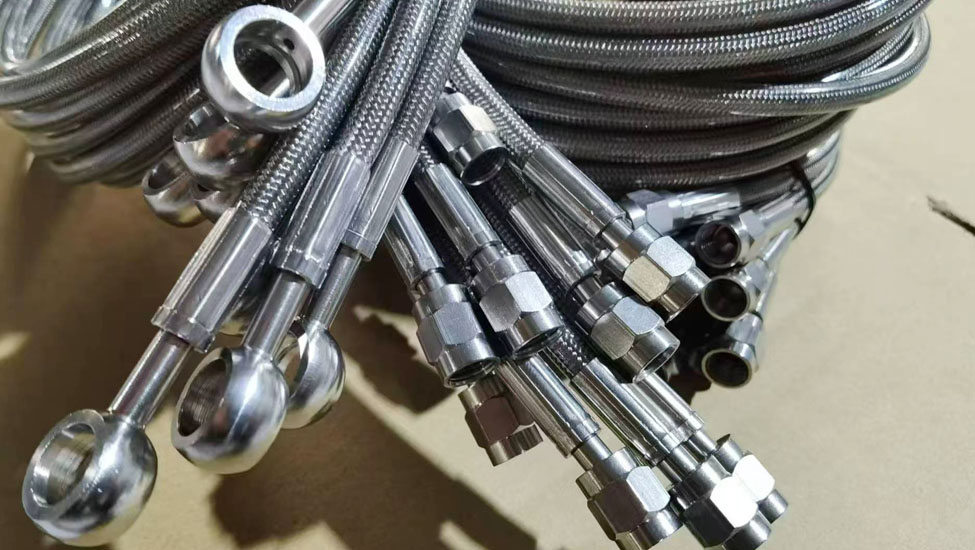
For applications requiring extreme flexibility without collapse, a Nylon Brake Line is superior. It resists kinking better than rubber and maintains its shape. For off-road or high-impact environments (common in African and rural Asian terrains), a Stainless Steel Braided Hose is mandatory.
The braid acts as an exoskeleton, preventing the hose from flattening or getting cut by debris while allowing the necessary flex. Our Braided Brake lines are engineered to handle the suspension travel of lifted trucks and tuned suspensions without inducing drag.
Installation Best Practice: Never twist the hose during installation. Always use a wrench on both the hose end and the caliper fitting to prevent rotation. Ensure there is at least 1 inch of clearance from any moving suspension parts. Questions about routing? Email our engineers directly.