How to Choose the Correct Motorcycle Brake Hose Length: A Practical Guide
Brake hose length is one of the easiest specifications to get wrong when ordering motorcycle brake lines.
A line that looks correct when the motorcycle is parked may become too tight when the handlebar is turned, the fork moves through its travel or the motorcycle is modified.
For this reason, selecting the correct motorcycle brake hose length requires more than measuring the distance between the master cylinder and caliper.
Why Is Motorcycle Brake Hose Length Important?
The brake hose needs to connect the hydraulic components while allowing normal movement of the motorcycle.
On a front brake system, this includes handlebar movement and front suspension movement. On modified motorcycles, changes to the handlebar, fork, caliper or master cylinder can change the required hose length.
The Correct Hose Should
- Reach both connection points without tension.
- Allow normal steering movement.
- Allow normal suspension movement.
- Avoid sharp bends.
- Avoid contact with moving or sharp components.
- Remain secure in the intended routing position.
How to Measure a Motorcycle Brake Hose
Method 1: Measure the Existing Hose
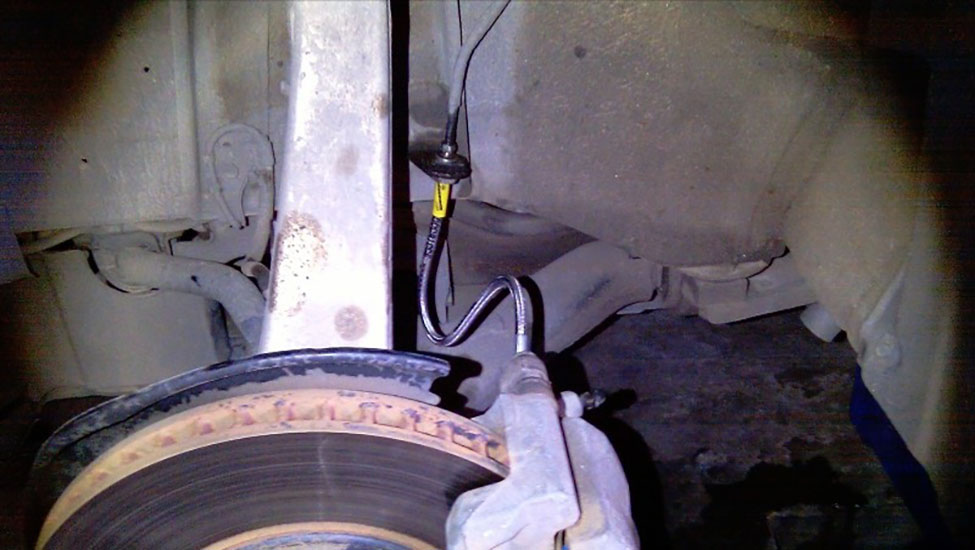
If the original hose is still installed and correctly routed, it can provide a useful reference.
Remove the hose only when the brake system can be safely serviced. Do not rely on a visual estimate from the installed motorcycle alone.
Method 2: Measure the Required Routing
For a modified motorcycle, measure along the intended routing rather than taking a straight-line measurement between the two connection points.
This produces a more realistic estimate of the required hose length.
Method 3: Provide a Sample or Drawing
For custom brake line production, an original hose, drawing or clear photographs can provide much more information than a motorcycle model name alone.
Why Motorcycle Modifications Change Brake Hose Length
Aftermarket handlebars, different forks, upgraded calipers and relocated master cylinders can all change the geometry of the brake system.
Handlebar Changes
A higher or wider handlebar can increase the distance between the master cylinder and the original hose routing.
Caliper Changes
A different caliper may have a different connection position or fitting orientation.
Fork Changes
Different fork dimensions and suspension movement can change the required routing.
How Much Extra Length Should Be Added?
There is no universal amount of extra length that should be added to every motorcycle.
The correct amount depends on the actual routing and movement of the motorcycle.
Too Little Length
A hose that is too short can become tight during steering or suspension movement. This creates unnecessary mechanical stress.
Too Much Length
A hose that is excessively long can form unnecessary loops and may contact other components.
Correct Length
The correct hose length provides sufficient movement while keeping the routing controlled and clear of interference.
Choosing the Right Brake Hose Construction
Length is only one part of the specification. The hose construction should also match the intended application.
For applications using a PTFE inner tube, our Teflon Brake Line can be considered for customized motorcycle brake line projects.
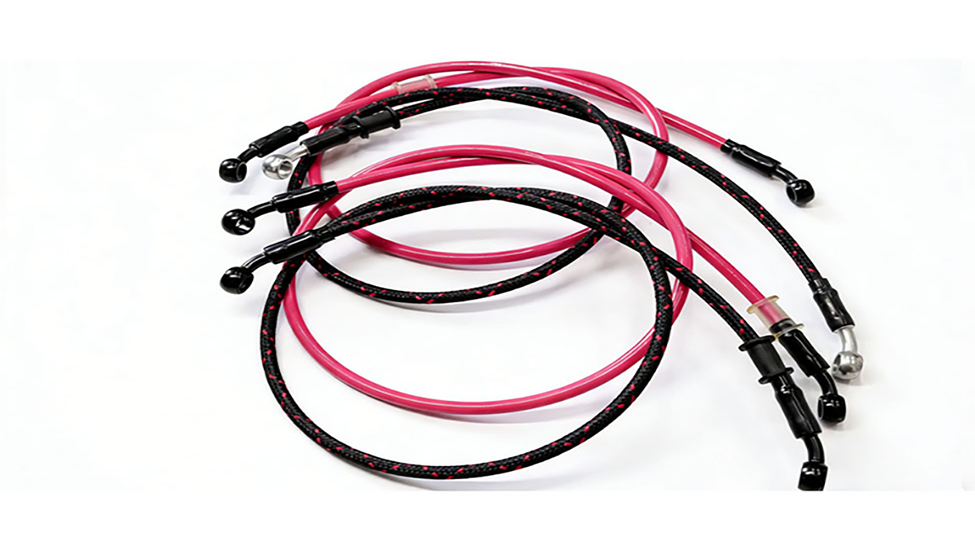
For lightweight hose applications, a Nylon Brake Line may be suitable depending on the pressure, temperature and brake fluid requirements.
Traditional replacement applications can also use a Rubber Brake Line Assembly when the specifications match the motorcycle.
Why Braided Brake Lines Are Popular for Motorcycle Upgrades
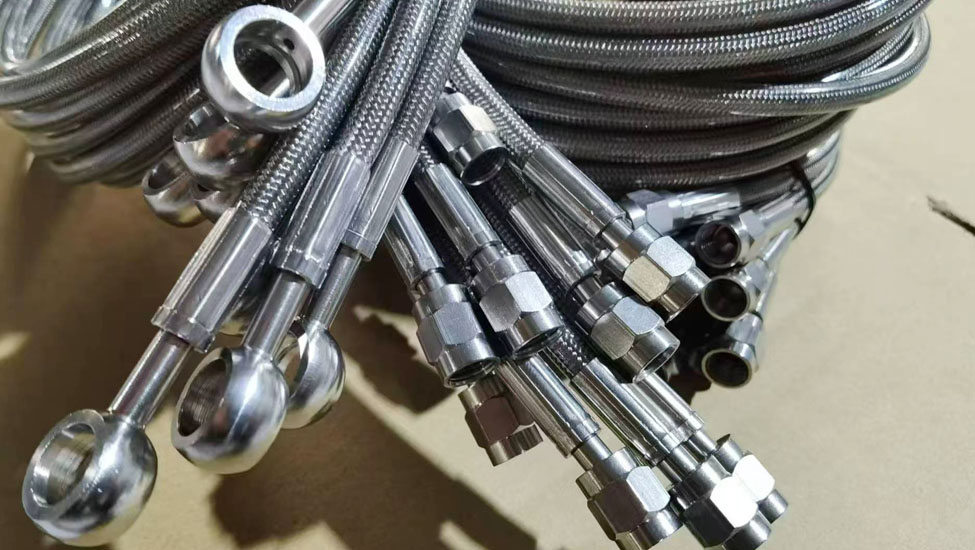
Stainless steel braided reinforcement is commonly used in aftermarket motorcycle brake lines because it helps control hose expansion under hydraulic pressure.
For some motorcycles, this can contribute to a more direct brake lever response.
But a Brake Line Is Only One Part of the System
Brake pads, discs, calipers, master cylinders, brake fluid, tires and suspension all influence braking performance.
Replacing the hose should therefore be considered as part of a complete brake system rather than as an isolated performance modification.
Installation Points That Should Not Be Ignored
Check Steering Movement
Turn the handlebar fully in both directions and confirm that the hose remains free from tension and interference.
Check Suspension Movement
The hose should remain correctly routed throughout the expected suspension movement.
Check Fitting Orientation
Fitting angles should allow the hose to follow a natural path without twisting.
Check for Contact
The hose should not continuously rub against sharp edges, moving parts or hot components.
What Should You Tell a Brake Hose Manufacturer?
The more accurate the technical information, the easier it is to produce the correct assembly.
Useful Information Includes
- Motorcycle make and model
- Model year
- Front or rear application
- Required hose length
- Hose material
- Reinforcement type
- Fitting type
- Fitting angle
- Thread specification
- Photographs of the original installation
- Technical drawing if available
What International Buyers Look for in a Brake Hose Supplier
For overseas workshops, distributors and importers, product consistency is often as important as the initial sample.
Buyers may check dimensional accuracy, fitting quality, hose appearance, assembly consistency, packaging and the supplier's ability to reproduce the same specification for repeat orders.
Why Sample Approval Matters
Before mass production, confirming one sample against the actual motorcycle or technical drawing can reduce problems later.
Our Motorcycle Brake Hose Manufacturing Capability
We manufacture motorcycle brake hose products and customized brake line assemblies for aftermarket, replacement and modification applications.
Our range covers PTFE brake lines, nylon brake hoses, nylon brake assemblies and rubber brake line assemblies. Different hose lengths, fittings, angles and assembly configurations can be discussed according to customer requirements.
Need a Custom Brake Hose?
If you do not know the exact hose specification, you can send us the original hose, drawing, dimensions or clear photographs.
Our engineering team can review the basic configuration and help confirm the required specification before production.
Contact Us for Custom Motorcycle Brake Lines
Motorcycle Brake Hose Maintenance Tips
- Inspect the hose regularly for cracking or swelling.
- Check fittings for brake fluid leakage.
- Inspect areas exposed to repeated movement.
- Check routing after handlebar or suspension modifications.
- Keep the hose away from sharp edges and excessive heat.
- Replace a hose if serious damage or deterioration is found.
FAQ: Motorcycle Brake Hose Selection
How long should a motorcycle brake hose be?
It should be long enough to accommodate the complete steering and suspension movement without being excessively loose. The correct length depends on the motorcycle configuration and hose routing.
Can I use the original hose length after modifying my motorcycle?
Not always. Handlebar, fork, caliper and master cylinder changes can alter the required hose length and fitting configuration.
Does a longer brake hose make braking better?
No. The objective is correct routing, not maximum length. Excessive length can create unnecessary loops and interference.
How often should motorcycle brake hoses be replaced?
Replacement depends on material, age, operating environment and physical condition. Inspect the hose regularly and replace it when significant deterioration, leakage or damage is found.
Are custom motorcycle brake lines suitable for every model?
A custom line can be manufactured for many different applications, but the correct fittings, dimensions, hose construction and routing must be confirmed for each motorcycle.