How to Choose Stainless Steel Braided PTFE Brake Hoses for Modified Brake Systems
Choosing a brake hose for a modified motorcycle or performance vehicle is not simply a matter of selecting a stainless steel appearance. The inner tube material, reinforcement, hose length, fitting specification, routing and brake fluid compatibility all need to match the actual application.
Stainless steel braided PTFE brake hoses are frequently selected for modified brake systems because they combine a PTFE inner tube with external reinforcement. For overseas distributors and aftermarket buyers, this construction also provides a practical starting point for customized brake hose programs.
Why Are PTFE Brake Hoses Used in Modified Brake Systems?
Modified brake systems may use different calipers, master cylinders, handlebars, suspension components or routing compared with the original vehicle. As a result, the original brake hose may no longer have the required length or fitting configuration.
A customized PTFE brake hose can be manufactured around the actual application, provided the required specifications are clearly defined.
Five Factors to Check Before Buying a Braided PTFE Brake Hose
1. Inner Tube Material
The inner tube is the part that carries brake fluid, so material selection is critical. PTFE is commonly selected for applications requiring chemical resistance and stable performance across a broad temperature range.
Customers should not assume that every hose marketed as a “performance brake line” has the same internal construction. Ask the supplier for the actual hose structure and application specifications.
2. Stainless Steel Reinforcement
The braid provides mechanical reinforcement around the inner tube. Its purpose is to help control expansion under hydraulic pressure rather than simply improve appearance.
For modified brake systems, reinforcement construction should be considered together with hose diameter, pressure requirements and fitting assembly.
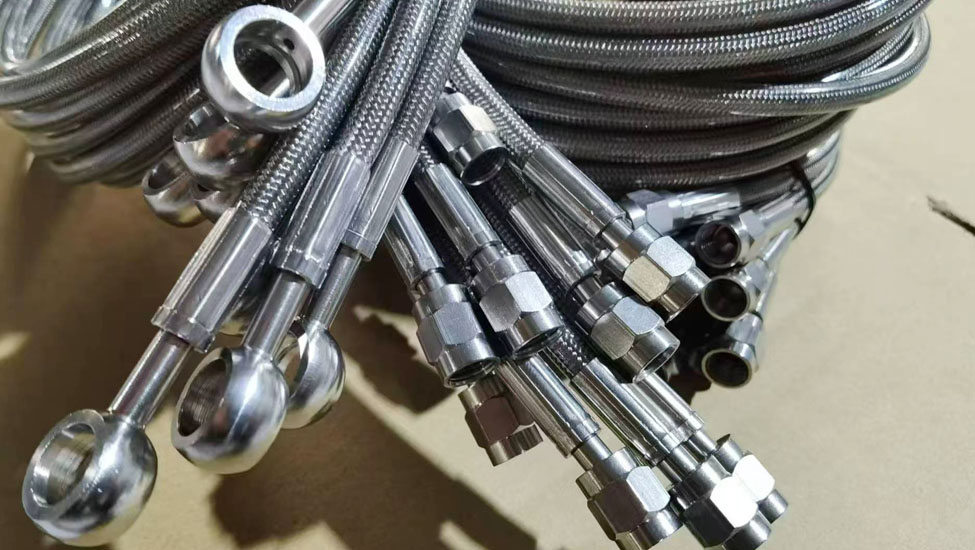
3. Fitting Type and Thread
Fittings are one of the most important parts of a custom brake hose.
Before ordering, confirm:
- Thread type
- Thread pitch
- Banjo size
- Fitting angle
- Connection type
- Sealing method
- Required orientation
Providing a sample fitting or drawing can help prevent incorrect production.
4. Finished Hose Length
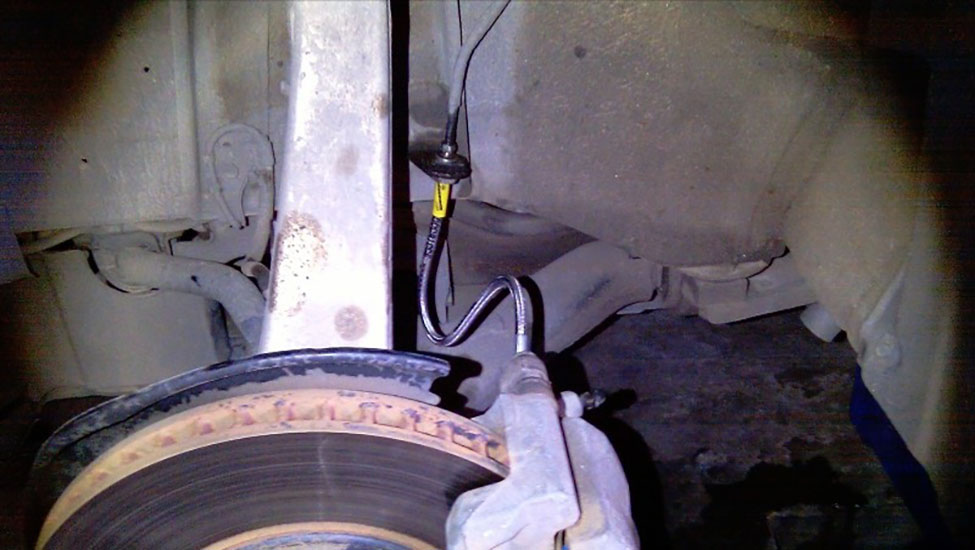
Measure the required hose length carefully. A motorcycle brake hose should allow full steering movement without excessive tension, twisting or interference with other components.
For automotive applications, suspension travel and wheel movement should also be considered when determining the final hose length.
5. Brake Fluid and Application Conditions
The selected hose material must be compatible with the intended brake fluid and operating conditions. Temperature, pressure, vibration and environmental exposure should also be considered during product selection.
PTFE, Nylon and Rubber Brake Hoses: Which One Should You Choose?
There is no single hose construction that is best for every vehicle. The correct selection depends on the application.
Teflon Brake Line
A Teflon Brake Line is suitable for projects requiring a PTFE-based inner tube. It can be considered for modified motorcycles, performance vehicles, aftermarket brake systems and custom hose applications.
PTFE Brake Line Assembly
When the customer needs a ready-to-install finished product, a PTFE Brake Line Assembly can be produced with specified hose length and fittings. This format is particularly useful for aftermarket kits and wholesale distribution.
Nylon Brake Line
A Nylon Brake Line provides a different material option for applications where nylon construction is appropriate. Material selection should always be based on the actual working conditions rather than price or appearance alone.
Rubber Brake Line Assembly
For conventional applications, a Rubber Brake Line Assembly remains a practical choice. Rubber construction is widely used in original equipment and standard replacement applications.
Why Buyers Choose Stainless Braided Brake Lines
For modified motorcycles and performance-oriented vehicles, stainless braided construction offers several practical advantages.
- Reinforced construction around the inner tube
- Controlled expansion under hydraulic pressure
- PTFE options for the fluid-carrying inner tube
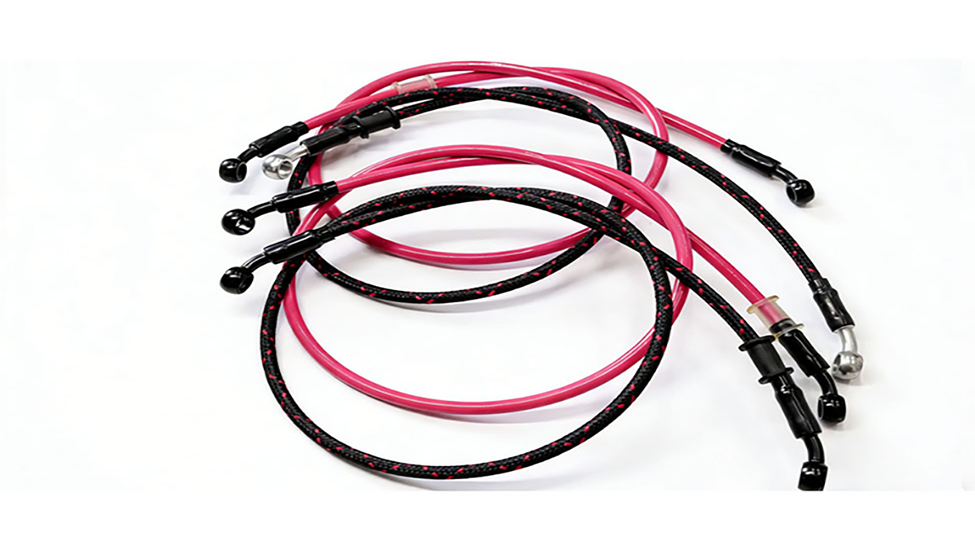
- Customized hose lengths
- Multiple fitting and banjo configurations
- Suitable for aftermarket and performance applications
- Flexible options for private-label and wholesale programs
These characteristics explain why Stainlesssteelbraided Hose and Braided Brake lines remain common search terms among motorcycle enthusiasts, brake component distributors and aftermarket buyers.
What Should Overseas Distributors Ask a Brake Hose Manufacturer?
Ask About Material Construction
Confirm whether the hose uses PTFE, nylon or rubber as the inner tube and what type of reinforcement is used.
Ask About Customization
If you are developing your own brake hose kit, ask whether the manufacturer can customize hose length, fittings, angles, colors, packaging and labels.
Ask About Samples
A sample approval process is recommended before placing a large production order. The sample should be checked against the intended vehicle or brake system before mass production.
Ask About Production Consistency
For repeat orders, consistency between batches is important. Hose dimensions, fitting position, crimping and overall assembly should remain stable according to the approved specification.
Common Mistakes When Buying Modified Brake Hoses
Choosing Only by External Appearance
A stainless steel outer braid does not automatically mean the hose has the same internal construction or performance. Confirm the actual materials.
Ignoring Fitting Compatibility
A hose with the correct length can still be unusable if the fitting thread, angle or sealing method is incorrect.
Using an Incorrect Hose Length
Too short can create tension during steering or suspension movement. Excessive length can create unnecessary loops and potential rubbing points.
Replacing Only the Hose Without Checking the System
Brake performance depends on the complete hydraulic system. When replacing or modifying a hose, inspect the fittings, sealing washers, calipers, master cylinder and brake fluid condition as appropriate.
Maintenance Guide for Stainless Braided Brake Hoses
- Inspect the braid and outer surface regularly.
- Check for corrosion, abrasion and contact with sharp components.
- Make sure the hose is not kinked or twisted.
- Check fittings for leakage or damage.
- Verify routing after maintenance or suspension modifications.
- Replace severely damaged hoses instead of attempting temporary repairs.
FAQ About Modified PTFE Brake Hoses
How often should a motorcycle brake hose be replaced?
There is no universal replacement interval. Hose condition, age, environment, installation and manufacturer recommendations should all be considered. Regular inspection is particularly important for modified motorcycles that are exposed to vibration, weather and frequent use.
Do stainless braided brake lines improve braking performance?
They can improve hydraulic response characteristics by controlling hose expansion compared with some conventional hose constructions. However, the overall braking result depends on the complete system and correct installation.
Are PTFE brake lines suitable for all motorcycles?
No. Correct length, fitting type, thread, brake fluid compatibility, pressure requirements and routing must be confirmed for the specific motorcycle.
Can you make brake hoses from a sample?
Yes. A physical sample, drawing, dimensions or clear photographs can be used as a reference when discussing a customized brake hose project.
Can you supply brake hoses for wholesale orders?
Yes. Customized brake hose assemblies can be discussed for distributors, aftermarket brands, motorcycle parts suppliers and other B2B customers. Specifications, packaging and production quantities can be confirmed according to the project.
Our Main Brake Hose Product Range
Our product range covers PTFE, nylon, rubber and reinforced brake hose solutions for different applications.
- Teflon Brake Line
- Nylon Brake Line
- PTFE Brake Line Assembly
- Nylon Brake Line Assembly
- Rubber Brake Line Assembly
- Stainlesssteelbraided Hose
- Braided Brake lines
Customized Brake Hose Manufacturing
For motorcycle brake hose distributors, aftermarket brands and vehicle parts importers, the most efficient way to develop a new hose is to provide the drawing, sample, dimensions or fitting information.
Our engineering team can review the required hose construction, length, fittings and assembly details before production. This is especially useful when developing replacement brake hoses or private-label aftermarket brake kits.
Send us your drawing or sample and contact us for a customized brake hose quotation