How to Choose and Maintain Stainless Steel Braided Motorcycle Brake Lines
Buying a stainless steel braided brake line is easy. Choosing the correct one for a particular motorcycle requires more attention.
For motorcycle modification shops, distributors and riders, the most important factors are not only the braid material and appearance. Hose length, fitting specifications, banjo angle, routing, ABS configuration and assembly quality all need to be considered.
Step 1: Identify the Motorcycle Brake System
Check the Motorcycle Model and Year
Start with the motorcycle model, production year and brake system configuration. Different versions of the same motorcycle can sometimes use different hose assemblies.
Check Whether the Motorcycle Uses ABS
ABS motorcycles require particular attention to brake hose routing and connection points. The replacement hose should follow the requirements of the original hydraulic system.
Step 2: Measure the Brake Hose Correctly
Measure the Required Length
Do not simply guess the length based on the motorcycle model. Measure the existing hose and consider the actual routing.
Allow for Steering and Suspension Movement
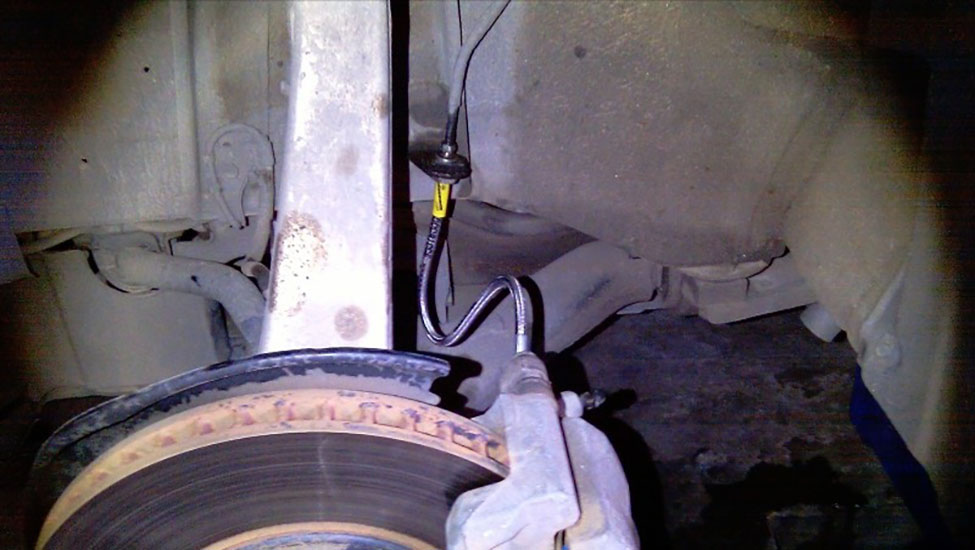
The hose must remain free during full handlebar movement and normal suspension travel. It should not become stretched, sharply bent or twisted.
Step 3: Choose the Correct Fittings
Thread Specification
Thread compatibility is essential. Confirm the thread type and size before ordering.
Banjo Angle
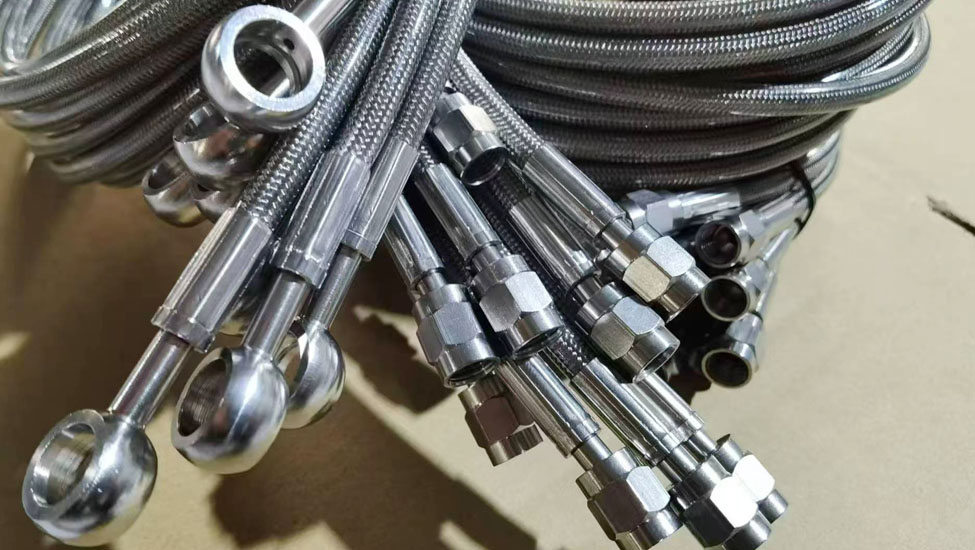
The correct banjo angle can reduce unnecessary bending and help maintain a clean routing path.
Fitting Orientation
Two hoses with the same length may not install in the same way if their fitting orientations are different.
Step 4: Select the Right Hose Construction
Stainless Steel Braided Brake Line
A stainless steel braided brake line is a common choice for motorcycle modification and performance applications because the reinforcement helps control hose expansion under pressure.
Teflon Brake Line and PTFE Construction
PTFE is commonly selected as an inner tube material for performance hydraulic applications because of its chemical resistance.
For customers looking for this type of construction, our Teflon Brake Line and PTFE Brake Line Assembly can be considered according to the required specifications.
Nylon Brake Line
Nylon brake hose products are another option for applications where the characteristics of a nylon tube are preferred.
Our Nylon Brake Line and Nylon Brake Line Assembly are available for different application requirements.
Rubber Brake Line Assembly
For conventional applications, a rubber construction may remain the preferred option because of its flexibility and familiar OE-style design.
Our Rubber Brake Line Assembly is another option within our brake hose product range.
What Should Motorcycle Modification Shops Pay Attention To?
Do Not Choose Only by Price
A lower unit price does not necessarily mean lower total cost. For distributors, inconsistent fitting dimensions or hose lengths can create installation problems, returns and additional labor.
Ask for Samples Before Bulk Production
For a new motorcycle application, sample approval is a practical way to confirm the hose length, fitting orientation and installation before ordering larger quantities.
Keep the Specification Consistent
Once a product specification has been approved, keep the drawing or sample as the production reference for repeat orders.
Daily Maintenance Checklist
Check the Hose Surface
- Look for severe abrasion.
- Check for cuts or damaged protective layers.
- Look for abnormal deformation.
- Make sure the hose is not rubbing against sharp components.
Check the Fittings
- Inspect for brake fluid leakage.
- Check for corrosion or visible damage.
- Check whether the fitting position has changed.
Check the Routing
Turn the handlebar from one side to the other and confirm that the hose does not become tight or interfere with other components.
Why Routing Matters
A technically high-quality brake line can still create problems if it is installed with excessive tension, sharp bends or incorrect routing.
When Should a Braided Brake Line Be Replaced?
There is no single replacement period that applies to every motorcycle brake hose.
Replacement should be considered when there is visible damage, leakage, severe abrasion, deformation, damaged fittings or other signs that the hose assembly is no longer in suitable condition.
Hose age and environmental conditions should also be considered during routine brake system inspection.
Does Upgrading a Brake Hose Really Improve Safety?
A quality stainless steel braided brake line can help reduce hose expansion and provide a more consistent brake lever feel. This can be useful for riders who frequently perform repeated or hard braking.
However, a brake hose upgrade should not be treated as an independent safety solution. Brake pads, discs, calipers, master cylinders, brake fluid, tires and installation quality all affect braking performance.
What Overseas Buyers Usually Care About
Motorcycle brake hose buyers in international markets often have several practical concerns before placing an order.
For Southeast Asian Markets
Motorcycle compatibility, price, customization, color options and supply stability are important considerations for many aftermarket distributors and workshops.
For Middle Eastern Markets
Heat, dust, long-distance riding and environmental exposure can make material selection, protective construction and proper maintenance particularly important.
For Japan and Korea
Fitment accuracy, manufacturing consistency, appearance and detailed technical specifications are often important when developing aftermarket motorcycle components.
Our Main Brake Hose Product Range
We provide brake hose products for motorcycle modification, replacement, aftermarket distribution and customized projects.
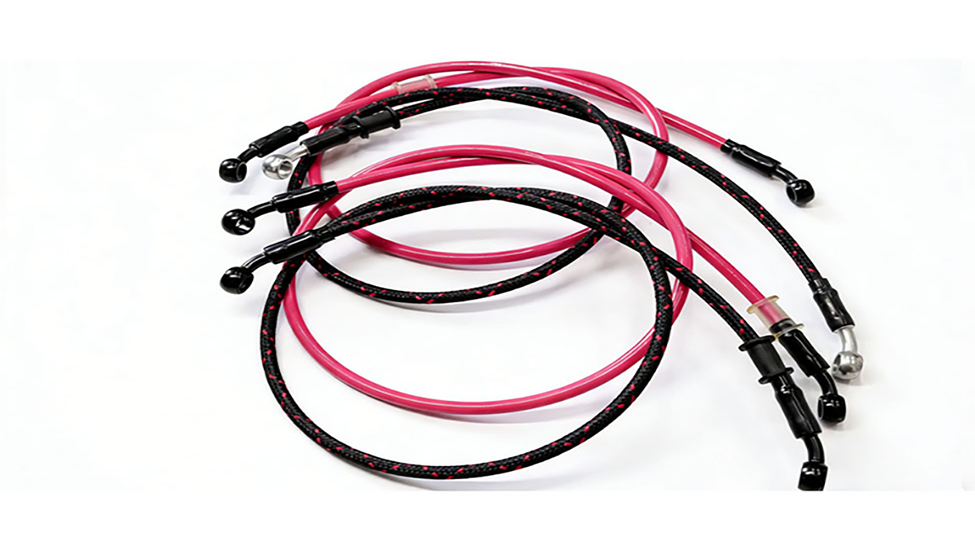
Our main range includes Teflon Brake Line, Nylon Brake Line, PTFE Brake Line Assembly, Nylon Brake Line Assembly, Rubber Brake Line Assembly and stainless steel Braided Brake lines.
We can discuss customized hose lengths, fitting types, banjo angles, assembly configurations and other technical requirements according to customer drawings or samples.
Motorcycle Brake Hose FAQ
How long should a stainless steel braided brake hose last?
Service life depends on the hose construction, installation, operating environment, temperature, abrasion and maintenance. Regular inspection is more useful than applying one fixed replacement period to every motorcycle.
How do I know if my brake hose needs replacement?
Look for leakage, cracking, severe abrasion, deformation, exposed reinforcement or damaged fittings. If any of these conditions are found, the braking system should be inspected before further use.
Is a braided brake line suitable for all motorcycles?
Not automatically. The correct brake line must match the motorcycle's hose length, fittings, thread, banjo angle, routing and ABS configuration.
Can you make a brake hose from our sample?
Yes. A physical sample is often the most useful reference for a custom brake hose project. Customers can also provide drawings or clear photos with accurate dimensions.
What information should I send for a quotation?
- Motorcycle model and year
- Required quantity
- Hose length
- Fitting specifications
- Banjo angle
- Thread size
- Hose construction
- Preferred appearance or color
- Drawing or sample if available
If you have an existing brake hose and want to develop a replacement or customized version, send us the drawing, sample or product photos. Contact us for technical support and quotation.
Final Recommendation
The best motorcycle brake line is the one that matches the actual brake system and application. Stainless steel braided brake lines can provide useful advantages in pressure control, abrasion resistance and customization, but correct dimensions and installation are equally important.
For motorcycle modification and aftermarket projects, start with the technical requirements first, then select the material, fittings and appearance. This approach gives both riders and distributors a more reliable product specification.