How Brake Hose Construction Affects Durability, Pressure Resistance and Service Life
Brake hose construction plays an important role in the reliability and performance of a hydraulic braking system. For motorcycle manufacturers, aftermarket brands, parts distributors, and OEM buyers, selecting the right brake line involves more than choosing a color or hose material. The inner liner, reinforcement layer, outer cover, end fittings, and assembly process must work together to meet the requirements of the intended application.
Understanding these components helps buyers compare Teflon Brake Line products, PTFE Brake Line Assembly options, Rubber Brake Hose Assembly designs, and stainless steel braided brake lines. It also provides a practical foundation for evaluating product durability, installation compatibility, and manufacturing quality.
1. What Is a Brake Hose Made Of?
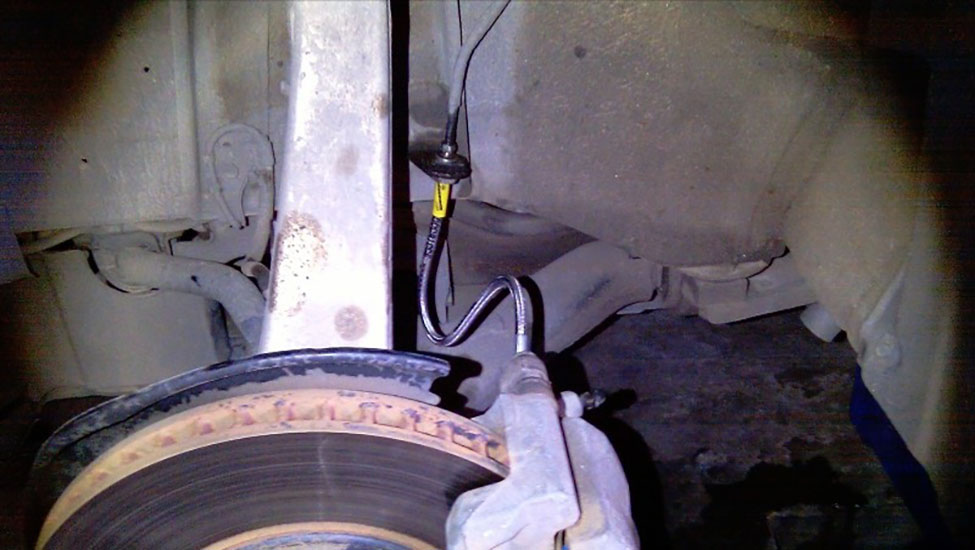
A hydraulic brake hose is a flexible connection that carries brake fluid between components of a braking system. Unlike a simple fluid transfer tube, a brake hose must be designed to withstand the pressure, temperature, fluid compatibility, movement, and environmental conditions associated with its intended application.
1.1 Inner Liner: Fluid Compatibility and Containment
The inner liner is the layer that comes into contact with brake fluid. Its material and construction must be compatible with the specified fluid and operating conditions. Depending on the design, brake hoses may use rubber-based compounds or a polytetrafluoroethylene (PTFE) liner.
PTFE and Rubber Liner Considerations
A PTFE liner is commonly used in certain performance-oriented brake line designs because of its chemical resistance and suitability for specified operating conditions. A rubber liner may be appropriate for other applications when the complete hose construction meets the required performance specifications.
Neither material should be selected based on its name alone. Buyers should confirm the hose manufacturer's specifications, intended brake fluid compatibility, temperature limits, and pressure requirements for the complete assembly.
1.2 Reinforcement Layer: Controlling Expansion Under Pressure
The reinforcement layer helps the hose maintain its structural integrity under hydraulic pressure. Its construction can influence expansion characteristics, flexibility, and durability. Depending on the design, reinforcement may use textile fibers, metallic braid, or other engineered structures.
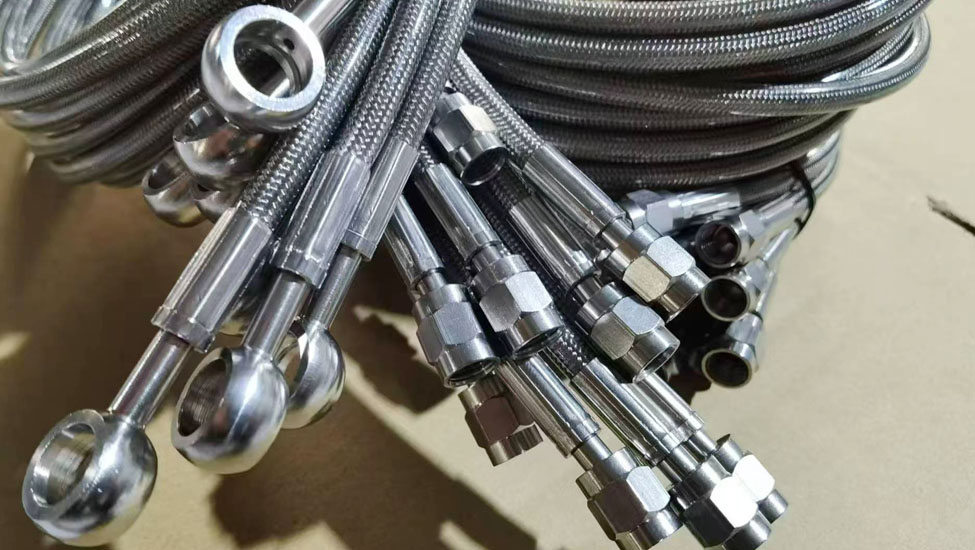
Stainlesssteelbraided Hose products use stainless steel reinforcement around an inner hose structure. When correctly engineered and assembled, this reinforcement can help control hose expansion under pressure. The actual performance depends on the braid design, liner, dimensions, end fittings, and manufacturing process.
1.3 Outer Cover: Environmental and Abrasion Protection
The outer cover helps protect the hose against environmental exposure and mechanical wear. Depending on the product design, it may provide resistance to abrasion, moisture, dirt, and contact with nearby components.
For motorcycles used in humid tropical climates, dusty environments, or areas with frequent rain, the suitability of the outer cover should be considered alongside routing, maintenance, and the overall durability requirements of the application.
2. Teflon Brake Line and PTFE Brake Line Assembly: What Buyers Should Know
Teflon Brake Line is a common commercial term for a brake line that uses a PTFE liner. A PTFE Brake Line Assembly includes the hose and compatible end fittings assembled according to a defined product specification.
2.1 Key Design Factors
- PTFE liner dimensions and material specification
- Reinforcement construction and intended pressure capability
- End-fitting type, thread specification, and orientation
- Assembly method and connection integrity
- Compatibility with the intended brake fluid and vehicle application
2.2 Why the Complete Assembly Matters
A PTFE liner alone does not determine the performance of a finished brake line. The reinforcement, fittings, sealing arrangement, and assembly process must be designed as a complete system. An unsuitable fitting or incorrectly assembled connection can compromise the reliability of the entire product.
For aftermarket buyers, confirming the full assembly specification is more useful than comparing products based only on the words Teflon or PTFE.
3. Stainless Steel Braided Hose and Braided Brake Lines
Stainless steel braided brake lines are widely used in motorcycle aftermarket and performance-oriented applications. Their metallic reinforcement can help limit hose expansion under pressure when the complete product is properly designed. This may contribute to a more consistent brake lever feel compared with a hose that expands more under equivalent conditions, although results depend on the complete braking system.
3.1 Potential Advantages of Braided Brake Lines
- Controlled expansion: Suitable reinforcement can help manage hose expansion under hydraulic pressure.
- Flexible product configurations: Different hose lengths and fitting arrangements can support various motorcycle applications.
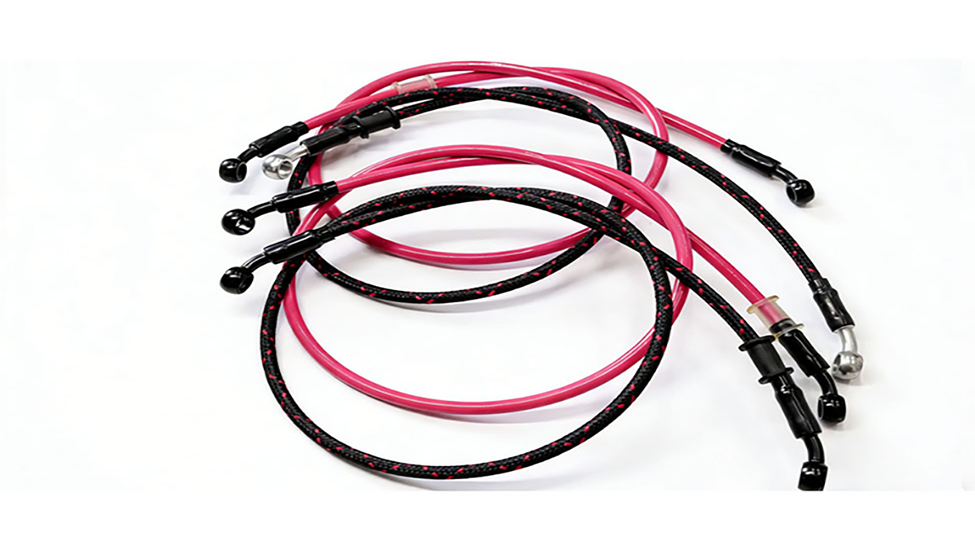
- Aftermarket customization: Some designs offer choices in external colors, protective coverings, and fitting finishes.
- Application-specific construction: The hose and fittings can be configured to meet defined installation and performance requirements.
3.2 What to Check Before Buying
Not all Braided Brake Lines have the same construction or performance. Buyers should confirm the inner liner, reinforcement specification, fitting compatibility, assembly quality, and applicable test results. A metallic braid does not automatically guarantee a higher pressure rating, longer service life, or improved braking performance.
Installation and Maintenance
Correct routing is essential. A braided brake line should not be twisted, stretched, sharply bent, or allowed to rub against moving or abrasive surfaces. Regular inspection should follow the vehicle manufacturer's service guidance and the hose manufacturer's instructions.
4. Rubber Brake Hose Assembly: A Practical Solution for Many Applications
A Rubber Brake Hose Assembly uses a hose construction based on suitable rubber compounds and reinforcement. Rubber brake hoses are used in many original equipment and replacement applications because the complete design can provide the flexibility and operating characteristics required by the intended vehicle.
4.1 Important Selection Criteria
- Specified hydraulic pressure capability
- Compatibility with the required brake fluid
- Operating temperature and environmental requirements
- Hose length, diameter, and fitting configuration
- Verified durability and quality inspection requirements
For OEM and wholesale purchasing, the correct choice depends on the vehicle design, required specifications, target price, and expected operating conditions. A rubber hose should not be considered inferior solely because it does not use metallic braid; suitability depends on the complete engineered product.
5. Nylon Brake Line and Nylon Brake Line Assembly: Check Application Suitability
Nylon is used in many automotive, industrial, pneumatic, and fluid-handling applications. However, general-purpose nylon tubing is not automatically suitable for hydraulic brake systems. Brake fluid compatibility, pressure capability, temperature resistance, permeability, connection design, and applicable validation requirements must all be considered.
5.1 When Evaluating Nylon-Based Products
When a supplier offers a Nylon Brake Line or Nylon Brake Line Assembly for a specific application, buyers should request clear technical specifications and confirmation that the complete assembly is designed and approved for that use.
Questions for the Manufacturer
- Is the complete product specifically designed for the intended braking application?
- What brake fluids and operating conditions are covered by the specification?
- What pressure, temperature, durability, and leakage tests have been performed?
- Are the fittings and connection methods validated for the selected hose?
Do not substitute general-purpose nylon tubing for a specified hydraulic brake hose without documented suitability and approval for the intended braking system.
6. How Manufacturing Quality Affects Brake Hose Durability
Even well-selected materials cannot compensate for poor manufacturing. Consistent production processes and appropriate quality checks are essential to the reliability of a finished brake hose assembly.
6.1 Material and Dimensional Control
Manufacturers should verify incoming hose materials, reinforcement, fittings, and relevant components against approved specifications. Dimensional checks help confirm hose size, fitting geometry, and other critical characteristics before assembly.
6.2 Braiding and Hose Construction
For braided hose products, the reinforcement process should follow controlled production requirements. Construction consistency can affect the finished hose's dimensions, flexibility, and ability to meet its specified performance criteria.
6.3 Crimping and End-Fitting Assembly
Crimping or other specified connection processes must be appropriate for the selected hose and fitting combination. Incorrect assembly parameters may compromise connection integrity. Production procedures should be validated, controlled, and checked according to the product design.
6.4 Final Inspection and Testing
Depending on the product and applicable requirements, quality checks may include visual inspection, dimensional verification, fitting inspection, leakage testing, pressure testing, and other validated procedures. Test methods and acceptance criteria should be defined for the actual product rather than assumed to be identical across all brake hose designs.
7. How to Select a Brake Hose Manufacturer for OEM and Wholesale Orders
For importers, distributors, motorcycle parts wholesalers, and aftermarket brands, choosing a brake hose manufacturer involves more than comparing unit prices. Product consistency, technical support, customization capability, and quality documentation can influence long-term purchasing results.
7.1 Confirm Customization Requirements
Prepare the required hose length, hose construction, fitting drawings or samples, connection specifications, target application, quantity, packaging requirements, and any relevant market requirements. Clear specifications help reduce misunderstandings during quotation and production.
7.2 Request Samples and Technical Documentation
For new product development, approved samples or drawings can help verify dimensions, fitting orientation, and installation compatibility before mass production. Ask for relevant technical information and test documentation for the exact product being supplied.
7.3 Evaluate Repeat-Order Consistency
OEM and wholesale buyers should consider whether the manufacturer can maintain approved specifications across repeat orders, communicate production schedules clearly, and provide suitable inspection records. These factors are important when supplying multiple motorcycle models or building a stable aftermarket product range.
8. Frequently Asked Questions About Brake Hose Construction
Does stainless steel braiding automatically improve braking performance?
No. Suitable stainless steel reinforcement can help control hose expansion, but actual braking performance depends on the complete hose assembly, brake components, installation, maintenance, and vehicle condition.
What is the difference between a Teflon Brake Line and a PTFE Brake Line Assembly?
Teflon Brake Line commonly describes a brake line with a PTFE liner. PTFE Brake Line Assembly emphasizes the complete assembled product, including the hose and compatible end fittings. Buyers should verify the complete specifications rather than relying on product names alone.
How can I compare two brake hose suppliers?
Compare documented product specifications, material construction, fitting compatibility, manufacturing controls, applicable test results, customization capabilities, and repeat-order consistency. Price should be assessed alongside these technical and supply considerations.
How often should motorcycle brake hoses be inspected?
Inspection intervals should follow the motorcycle manufacturer's maintenance schedule and the brake hose manufacturer's guidance. Hoses should also be checked for leakage, cracking, abrasion, swelling, corrosion around relevant components, or damaged fittings. Any suspected defect should be assessed promptly by a qualified technician.
Conclusion
Brake hose durability and pressure performance depend on the combined design of the inner liner, reinforcement layer, outer cover, end fittings, and manufacturing process. Understanding these factors helps OEM buyers and aftermarket distributors make more informed decisions when sourcing Teflon Brake Line products, PTFE Brake Line Assembly options, Rubber Brake Hose Assembly designs, and stainless steel Braided Brake Lines.
For customized motorcycle brake hose projects, buyers should prioritize verified application compatibility, clear technical specifications, appropriate testing, and consistent assembly quality. Selecting a suitable product based on documented requirements is more reliable than choosing by material name, appearance, or price alone.