From Drips to Failure: The Progressive Danger of Brake Line Leaks and Proactive Solutions
A small spot of brake fluid today can lead to a complete brake failure tomorrow. This technical analysis breaks down the progression of a hose leak, compares the failure modes of different hose types, and provides a framework for selecting the right replacement—crucial knowledge for workshop managers and savvy vehicle owners.
The Anatomy of a Leak: A Stage-by-Stage Breakdown
Stage 1: The Incipient Phase (Weeks to Months)
Symptoms: A slight, often undetectable drop in reservoir level. The outer jacket of a rubber hose develops micro-cracks. Internally, the rubber may begin to separate from its fabric reinforcement.
Risk: Low, but the failure process has started. Contaminants like road salt and moisture begin to penetrate the hose wall.
Stage 2: The Active Weep Phase (Days to Weeks)
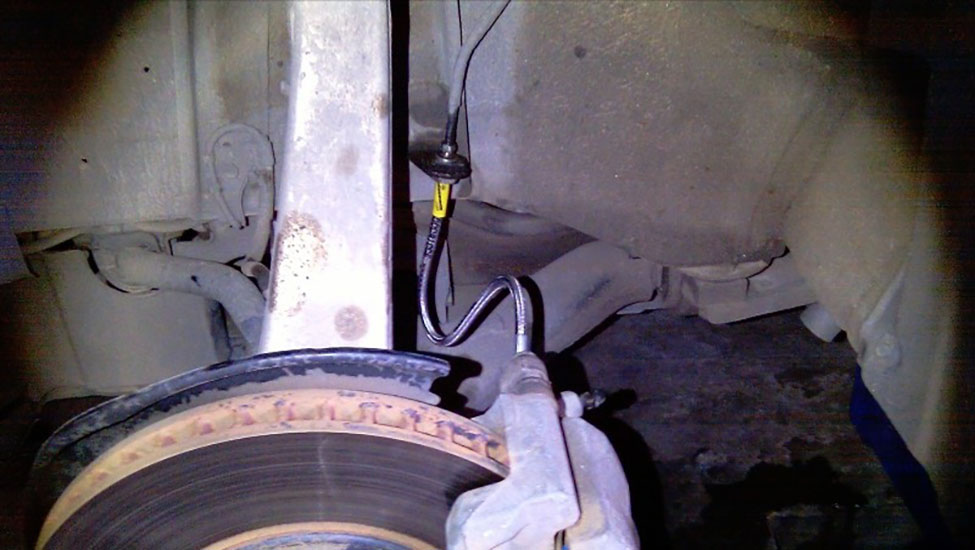
Symptoms: A visible film of fluid on the hose. The brake pedal may feel slightly less firm. Fluid spots may appear on the inside of the wheel or lower suspension components.
Risk: Moderate to High. The hydraulic seal is compromised. Air can now be drawn into the system during pedal release, leading to a spongy feel. Braking performance is degraded.
Stage 3: The Active Drip/Catastrophic Failure Phase (Immediate)
Symptoms: Obvious dripping fluid. A very soft or sinking pedal. Major loss of braking power, potentially limited to one axle (front or rear), causing severe pulling and loss of control.
Risk: Critical. The vehicle is unsafe to operate. A sudden rupture under hard braking can result in a total loss of hydraulic pressure on one circuit.
Material Comparison: Why Rubber Fails and What to Use Instead
Standard EPDM rubber hoses are the most common source of leaks. Their vulnerabilities are well-documented:
| Failure Cause | Effect on Standard Rubber Hose | How Performance Hoses Address It |
|---|---|---|
| Ozone & UV Degradation | Causes the outer cover to dry, crack, and become brittle, exposing the reinforcement to abrasion and moisture. | Stainless steel braided hoses or specially coated nylon lines are highly resistant to ozone and UV, preventing cover failure. |
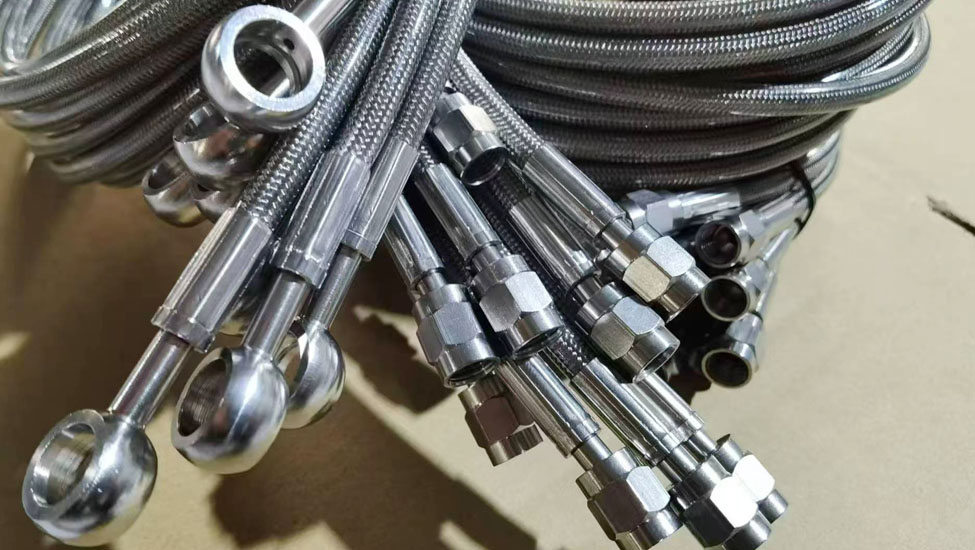
| Abrasion | Rubbing against chassis or suspension components wears through the outer cover, leading to a burst. | The steel braid in a Teflon/Steel Braided Hose provides a sacrificial, extremely tough outer layer. Abrasion destroys the braid long before it penetrates the inner PTFE tube. |
| Internal Electrochemical Degradation | Moisture in brake fluid promotes corrosion of the internal fabric or metal reinforcement from the inside out, leading to weak spots. | The PTFE (Teflon) inner liner is impervious to moisture and non-reactive with all standard brake fluids, eliminating internal corrosion entirely. |
Selecting the Correct Replacement: A Buyer's Checklist
When replacing a leaky hose, don't just match the old part. Consider an upgrade tailored to the vehicle's use.
- Identify the Vehicle's Primary Duty:
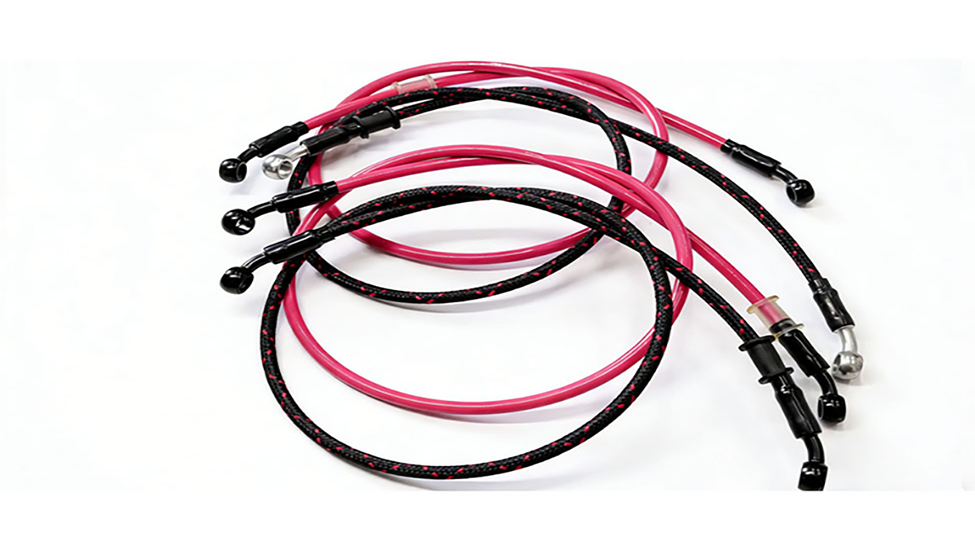
- Street Performance, Track, Towing: Mandatory upgrade to DOT-approved braided brake lines (PTFE core). The firm pedal and reliability are non-negotiable.
- Daily Driver / OEM-Plus Replacement: A high-quality, reinforced Rubber Brake Line Assembly is acceptable if the vehicle sees normal use.
- Off-Road, Construction, Harsh Environments: Prioritize abrasion resistance. A Teflon braided line with an additional PVC sleeve or a heavy-duty Nylon Brake Line is superior to rubber.
- Verify Quality Markings: Ensure the hose is certified for road use in your market (e.g., DOT FMVSS 106, ECE R90). Look for clear branding and a stated working pressure (typically >2500 psi for performance lines).
- Inspect the Fittings: Fittings should be cleanly machined, with clear threads. For corrosion-prone areas, nickel-plated or stainless steel fittings are better than plain zinc.
- Consider a Complete Set: If one hose is leaking from age, the others are likely in similar condition. Replacing all flexible hoses as a set, such as with a pre-packaged PTFE Brake Line Assembly kit, ensures uniform performance and safety.
Global Market Focus: What International Buyers Should Know
Supplying to diverse regions means understanding local challenges. Our product development addresses these directly:
- Southeast Asia & Middle East (High Heat/Humidity): Extreme heat accelerates rubber degradation. PTFE's high-temperature stability and the braid's protection make Teflon brake lines a durable, long-life solution, reducing warranty claims.
- Japan & South Korea (High Performance & OEM Standards): The market demands precision and certification. Our assemblies are engineered to meet or exceed JIS and other local standards, with a focus on perfect fitment for JDM and global platforms.
- All Regions (Salt/Corrosion): Coastal and winter road salt rapidly corrodes standard fittings. We offer options with superior corrosion-resistant finishes on our Nylon and PTFE assemblies.
Our Core Range for Export: We manufacture and stock a complete line to serve distributors worldwide: Premium Rubber Hose Assemblies, High-Performance Teflon/Stainless Steel Braided Lines, Durable Nylon Brake Lines for specialty applications, and Custom Kits for cars, trucks, and motorcycles.
Technical Support for Distributors & Workshops: We provide more than just parts. Contact our team for technical datasheets, application guides, and support with non-standard requests. Send us your drawings for a fast quote.