From decades of engineering practice and market feedback across Southeast Asia, Middle East, Japan and Korea, brake line rupture is a catastrophic failure that demands early identification. As a professional manufacturer of modified brake lines, we analyze hydraulic system principles and real failure cases to clarify typical symptoms, root causes and preventive solutions, helping workshops and end users avoid safety risks.
The most direct symptom: brake pedal sinks to the floor with no resistance, and braking force disappears instantly. Full rupture causes rapid fluid leakage, making hydraulic pressure transmission impossible—this is a life‑threatening failure requiring immediate stop.
Fresh, oily fluid stains appear near wheel hubs, suspension joints or chassis routes. Brake fluid is usually light yellow or clear, with a slippery texture. Even small leaks indicate structural damage that will quickly escalate to rupture.
Partial rupture or cracking on one wheel leads to unbalanced clamping force. The vehicle pulls sharply left or right during braking, especially unstable at high speed or on wet roads common in Southeast Asia.
Audible hissing occurs when pressing the pedal, accompanied by obvious vibration. This is caused by high‑pressure fluid spraying through cracks, a clear precursor to complete rupture.
Standard rubber hoses degrade under high temperature, ozone and fluid corrosion. Inner layers delaminate, outer layers harden and crack, leading to burst under pressure. This is the top cause in vehicles over 3 years old.
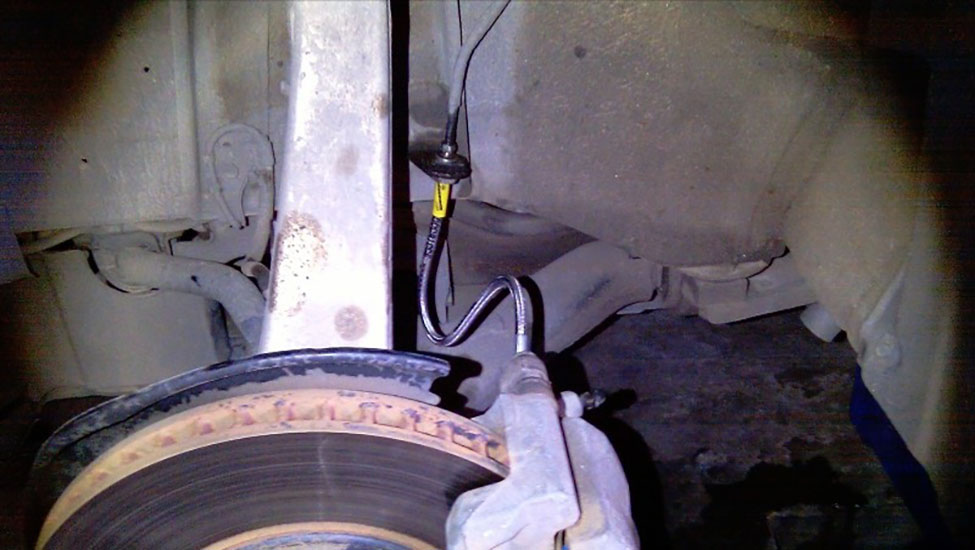
Improper routing causes friction with suspension, exhaust or chassis. Road debris and stones hit exposed lines, thinning the wall until rupture. Common in off‑road and high‑frequency driving scenarios.
Heavy braking generates extreme pressure; low‑quality hoses expand excessively and cannot withstand load. Modified vehicles with upgraded calipers and pads need higher‑strength lines to match system pressure.
Coastal salt spray (Middle East/Southeast Asia) and high humidity accelerate fitting and line corrosion. Rust weakens the structure, creating crack points that burst under daily use.
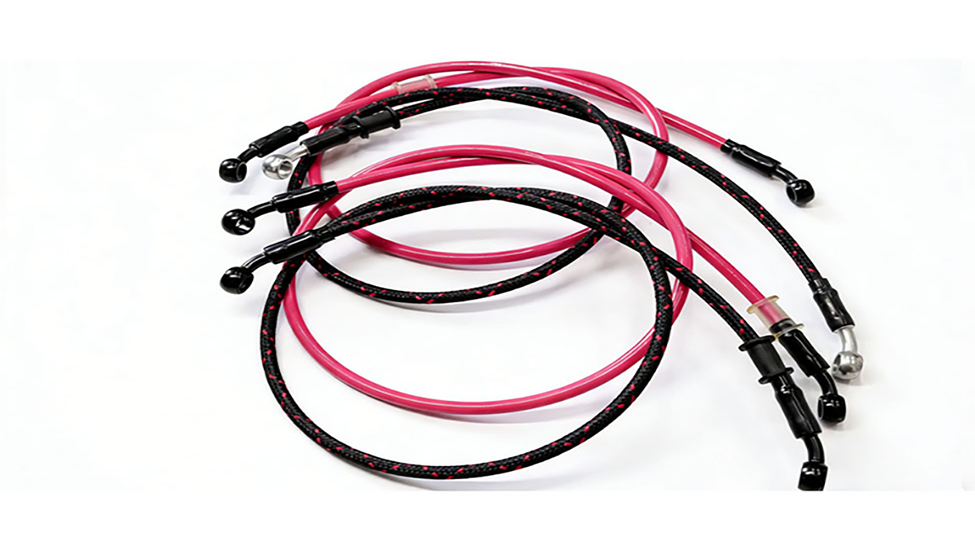
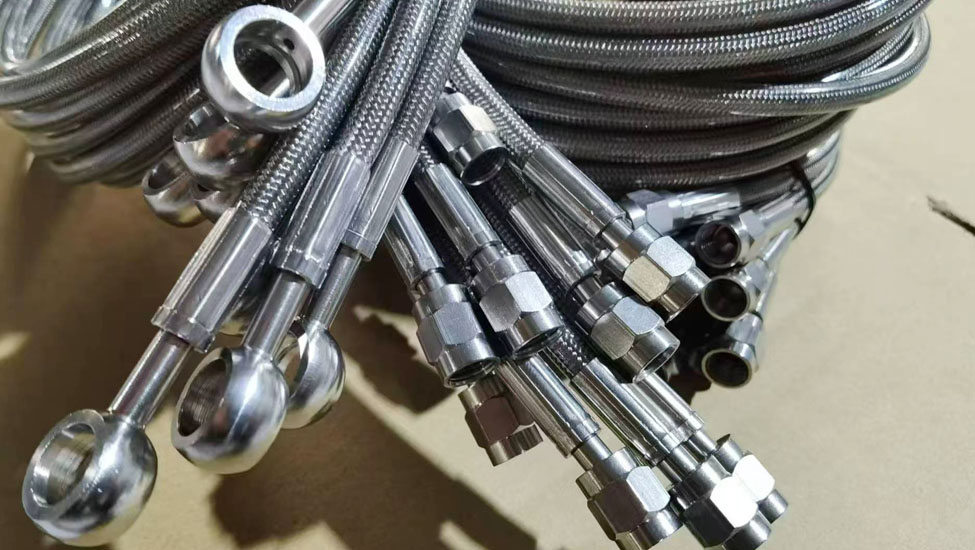
We provide high‑strength, anti‑rupture solutions engineered for global markets. Recommended products:
If you need help with failure diagnosis, model matching, length customization, fitting selection or drawing‑based development, send us your drawings, samples or vehicle parameters. Our engineering team provides professional OEM/ODM solutions for global buyers.
Contact Us Now for quotation and fitment confirmation.
International buyers prioritize burst pressure ≥ 2000 PSI, compliant with SAE J1401 and DOT standards—critical for market access and safety.
Coastal regions: salt‑spray resistance; high‑temperature areas: thermal stability; modified cars: low expansion rate.
Precision crimping, no gaps, 100% pressure testing. Loose or inferior crimping is a leading rupture cause in aftermarket products.
Inspect lines every 6 months for cracks, abrasion and leakage. Replace brake fluid every 2 years. Avoid sharp bends and friction during installation. Use modified reinforced lines to extend service life by 2–3 times.
Standard rubber hoses: 3–5 years or 60,000 km. Upgraded modified lines: 5–8 years with regular inspection.
Yes. Modified lines use high‑strength materials and reinforcement, effectively preventing aging, abrasion and rupture, ensuring stable braking under extreme conditions.
We provide custom solutions for cars, motorcycles, SUVs and modified vehicles. Contact us with your model for proper fitment.