Brake Fluid Leaks: A Silent Threat to Your Safety - Causes, Symptoms, and Modern Solutions
As a brake system specialist with experience serving clients across Southeast Asia, the Middle East, and Japan, I've seen firsthand how a single brake line leak can escalate from a minor inconvenience to a complete system failure. Unlike sudden hose bursts, leaks often develop gradually, creating a false sense of security. This guide will help you identify the root causes, recognize the warning signs, and understand why modern brake line technology is the most reliable defense.
The Mechanics of a Leak: Where and Why Brake Lines Fail
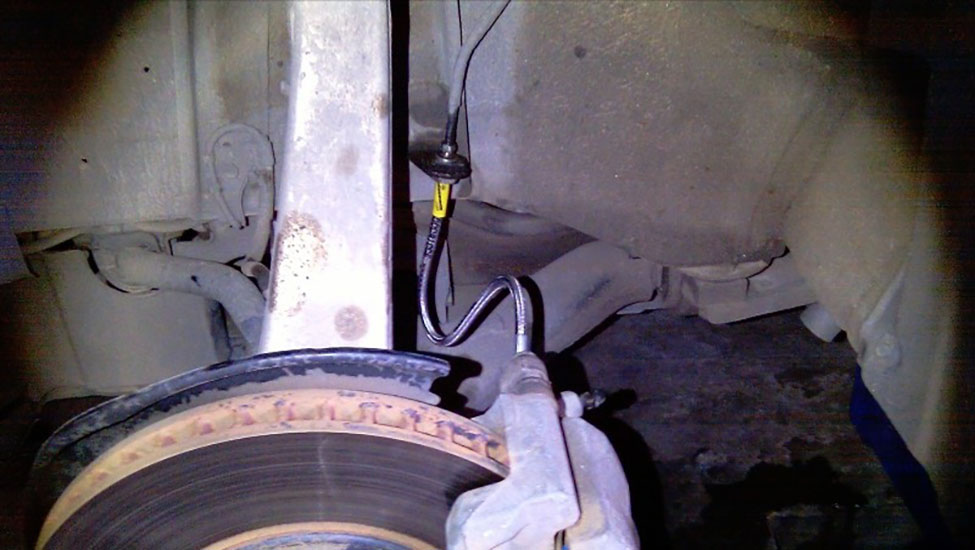
Brake fluid leaks don't just happen. They are the end result of material failure, physical damage, or assembly error. Understanding the failure points is the first step to prevention.
1. Failure at the Hose-to-Fitting Interface (The Most Common Leak Point)
This is where the flexible hose connects to the rigid metal fitting. Leaks here are often caused by:
- Improper Crimping: In cheap assemblies, the metal ferrule is not crimped with enough force or precision, leaving a microscopic gap.
- Material Incompatibility: Standard EPDM rubber can swell or shrink with temperature and fluid changes, breaking the seal against the fitting. In contrast, the dimensional stability of a Teflon Brake Line core prevents this.
- Vibration Fatigue: Constant engine and suspension vibration can work loose a marginally tight connection over time.
2. Failure Along the Hose Body (External Damage)
The outer cover is the first line of defense. In regions with harsh environments, damage is common:
- Abrasion: Rubbing against chassis components, especially during off-road use in the Middle East or on poorly maintained roads.
- Chemical/Oil Degradation: Engine oil, coolant, or road salt can degrade standard rubber covers, leading to cracks and porosity.
- Heat Aging: Proximity to exhaust manifolds or brakes in hot climates bakes and cracks the rubber, a key reason to upgrade to heat-resistant Stainless Steel Braided Hose.
3. Failure at the Fitting Threads (Connection to Caliper or Hard Line)
This is often an installation error or corrosion issue:
- Cross-threading: Damaging the soft threads on an aluminum caliper during installation.
- Incorrect Flare Angle: Using a fitting with a 45-degree flare (common) on a vehicle that requires a 37-degree flare (common in Japanese and some European cars).
- Galvanic Corrosion: In coastal areas (Southeast Asia, Japan), dissimilar metals (e.g., steel fitting, aluminum caliper) in a salty, humid environment corrode and lose sealing pressure.
Symptom Recognition: Don't Wait for the Puddle
Waiting to see a puddle of brake fluid is waiting for disaster. Watch for these earlier signs:
- A Gradual Drop in the Brake Fluid Reservoir Level: Check the reservoir monthly. A consistent drop, even if small, indicates a slow leak. Top-ups are not a fix.
- A "Soft" or "Spongy" Pedal That Sinks to the Floor: Air entering the system through a leak compresses, while fluid does not. This is the most dangerous symptom, indicating a significant loss of hydraulic pressure.
- Illuminated Brake Warning Light: Modern vehicles have a fluid level sensor in the reservoir. A lit warning light is an immediate command to stop driving.
- Visible Wetness or Streaking: Look for oily, greasy streaks around hose ends, fittings, or along the hose body. Brake fluid is hygroscopic and attracts dust, so leaks often appear as a dark, dirty patch.
- Uneven Braking or Pulling: A leak affecting only one wheel's circuit will cause that corner to brake less effectively, pulling the vehicle to the opposite side during application.
The Proactive Solution: Engineered Brake Lines for Leak Prevention
Upgrading to performance brake lines directly addresses the root causes of leaks through superior materials and construction. Here’s how:
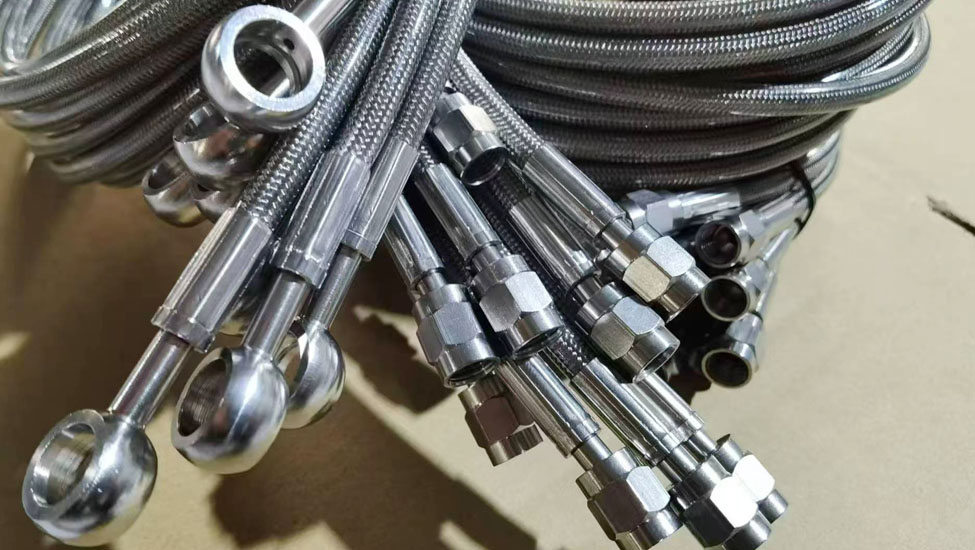
- Superior Fitting Integrity: Our PTFE Brake Line Assembly kits use CNC-machined fittings from solid billet aluminum or steel. The precision threads and sealing surfaces are designed for a perfect, leak-free seal with the proper torque.
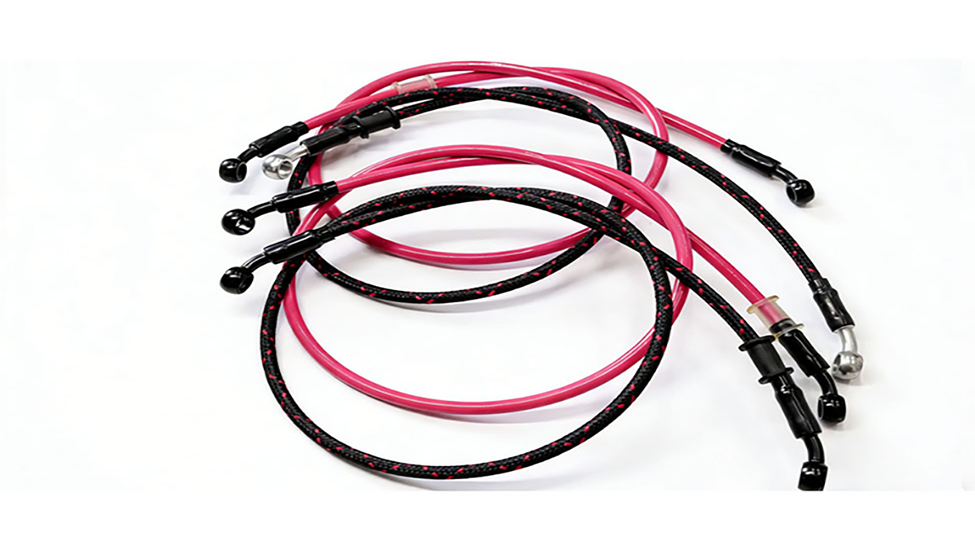
- Abrasion-Resistant Outer Sleeve: Every performance line is protected by a durable PVC or Nylon outer sleeve. This sleeve takes the abrasive punishment, shielding the critical stainless steel braid and inner core beneath. This is a non-negotiable feature for any Braided Brake Lines meant for real-world use.
- Chemically Inert Core: A Teflon (PTFE) core does not react with any DOT-approved brake fluid. It will not swell, soften, or degrade internally, eliminating the most common cause of seal failure at the fittings.
- Factory-Crimped Reliability: Unlike universal kits you crimp yourself, our Nylon Brake Line Assembly kits are pre-assembled and pressure-tested at the factory. The automated crimping process applies perfect, consistent force, creating a permanent, leak-proof bond between hose and fitting.
Buyer's Guide: Selecting Leak-Proof Brake Lines for Your Market
For High-Humidity, Coastal Regions (SE Asia, Japan): Corrosion is the #1 enemy. Choose lines with 304 or 316 stainless steel braid and fittings with high-quality zinc or yellow chromate plating. A PTFE core is best as it is impervious to moisture absorption.
For High-Heat, Sandy Regions (Middle East): Heat resistance and abrasion protection are key. PTFE core lines are mandatory for their high-temperature rating. Ensure the outer sleeve is thick and robust. Avoid rubber lines entirely.
For Daily Drivers & Fleet Vehicles: A Nylon Brake Line assembly offers an excellent balance of leak resistance, durability, and value. The nylon core is stable and the pre-assembled nature ensures a proper seal.
For OEM-Style Replacement: When a direct, no-modification replacement is required, our Rubber Brake Line Assembly products are manufactured to exact OEM specifications to ensure a proper fit and seal.
FAQ: Addressing Critical Safety Questions
Q: How often should brake hoses be replaced to prevent leaks?
A: For rubber hoses, a visual and functional inspection is needed with every major service (e.g., when changing brake pads). Proactive replacement is recommended at 5 years or 100,000 km, whichever comes first, especially in harsh climates. Performance braided lines have a vastly longer service life, but the fittings and outer sleeve should be inspected annually.
Q: Do改装软管 really improve safety against leaks?
A: Absolutely, and in multiple ways. First, the materials (PTFE, stainless steel) are inherently more resistant to the causes of leaks (heat, chemicals, abrasion). Second, the factory crimping is far more reliable than field-assembled options. Third, the consistent, high-pressure rating provides a large safety margin. It's an upgrade in reliability.
Q: Are your performance kits suitable for all vehicle models?
A> Yes. We offer direct-fit kits for a vast range of vehicles popular in your target markets. The kit includes the correct length hoses and the proper fittings for your vehicle's make, model, and year, ensuring a direct, leak-free installation. For vehicles not in our catalog, or for custom applications, we offer a manufacturing service. You can provide a sample, diagram, or specifications, and we will produce a custom set. Contact us here to start a custom inquiry.