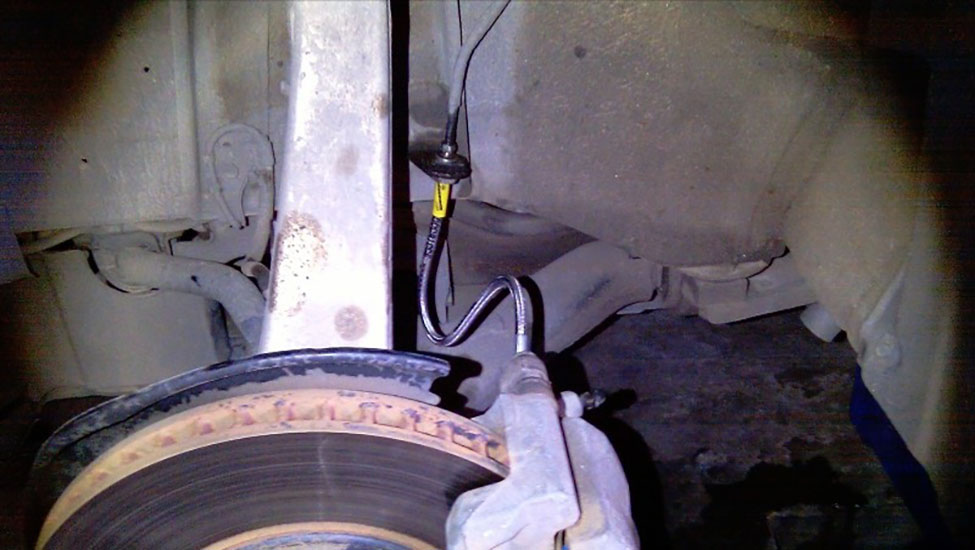
For tuners and serious drivers in performance-focused markets like Japan and the Middle East, not all brake fluid leaks are catastrophic bursts. A more subtle failure is "weeping" – a slow seepage of fluid through the hose wall. This article delves into this covert issue, its impact on brake feel and safety, and explains why high-integrity braided brake lines are the definitive engineering solution.
Unlike a sudden rupture, weeping occurs when the inner tube of a standard rubber brake hose becomes permeable. Microscopic cracks allow fluid to slowly permeate the hose wall, often appearing as a persistent, damp, oily film on the hose exterior.
These signs are subtler but equally dangerous over time.
OEM rubber hoses are a composite. The inner tube, typically made from EPDM or similar rubber, is designed to be a fluid barrier. However, it is permeable over time.
In a braided brake line or a performance nylon line, the inner core is non-porous. In a standard hose, once the inner tube starts to weep, fluid reaches the textile braiding layer underneath. This layer is not a fluid barrier; it soaks up the fluid, leading to the swollen appearance and a dangerous loss of structural integrity.
The solution is to replace the permeable rubber inner tube with a material that is fundamentally impervious to brake fluid and heat.
Polytetrafluoroethylene is nearly chemically inert. It does not absorb fluid, swell, or become permeable. A Teflon inner core completely eliminates the weeping failure mode. This is the core technology in our highest-performance PTFE Brake Line Assemblies.
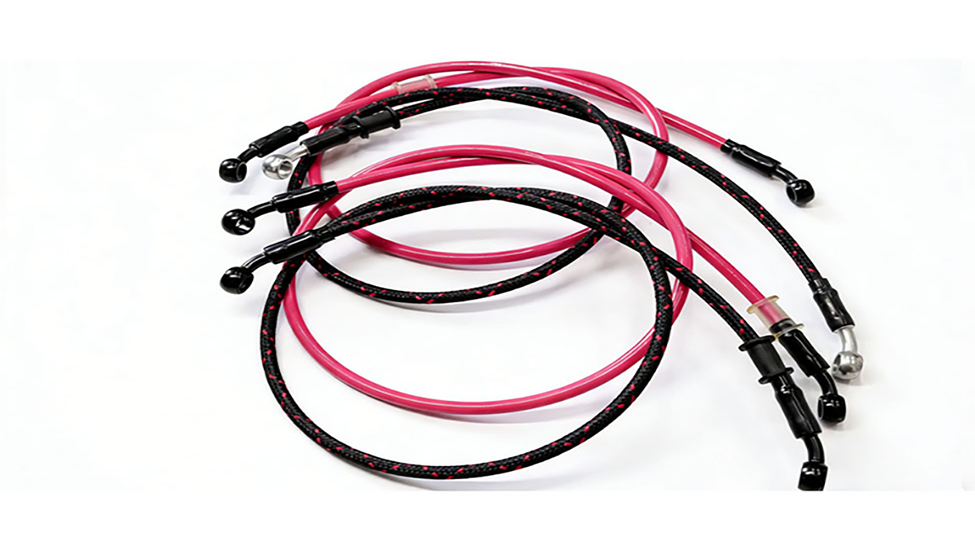
Modern engineering-grade nylon used in brake lines has an extremely low permeability rate. A properly formulated Nylon Brake Line Assembly offers excellent long-term fluid compatibility and resistance to weeping, providing a major upgrade over rubber at a accessible price point.
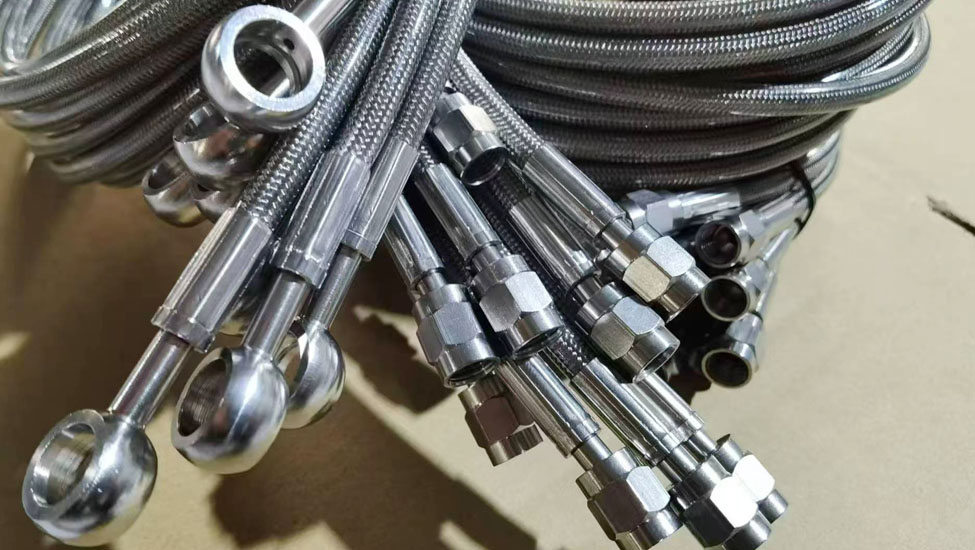
The stainless steel braid in a performance line serves two key functions regarding leaks:
Even the best hose can leak if installed incorrectly.
After installation, thoroughly bleed the brake system to remove all air. Once bled, clean the new lines and fittings with brake cleaner. Then, with the vehicle on stands and wheels off, have an assistant apply firm, sustained pressure to the brake pedal for 30 seconds while you inspect every fitting and along the entire length of each new Stainlesssteelbraided Hose for any sign of moisture. A dry inspection confirms a successful install.
A: Yes, treat it as urgent. Weeping is a sign of advanced internal degradation. The structural integrity of the hose is compromised, and a sudden rupture under heavy braking is a real risk. Replacement with a performance line is strongly recommended immediately.
A: A full PTFE Stainless Braided Line Kit is the only appropriate choice. PTFE has the highest temperature rating, and the braid protects from external radiant heat. The combination ensures no fluid loss or pedal fade even under extreme, repeated use.
A: Our PTFE and nylon lines are compatible with all common brake fluids (DOT 3, 4, 5.1, and LHM). Always confirm the fluid manufacturer's compatibility guidelines. For our Rubber Brake Line Assemblies, use only glycol-based fluids (DOT 3, 4, 5.1) as specified.
Proactive Replacement Cycle: For high-performance vehicles, consider brake lines a wear item. Inspect them at the start of every season. For serious track use, replacing standard rubber lines with a braided kit before the first event is a wise safety investment.
Need a custom kit for your project? Send us your vehicle details or a sample of your current lines. Our technical team provides fast support for custom configurations, ensuring you get a leak-free, high-performance braking system.