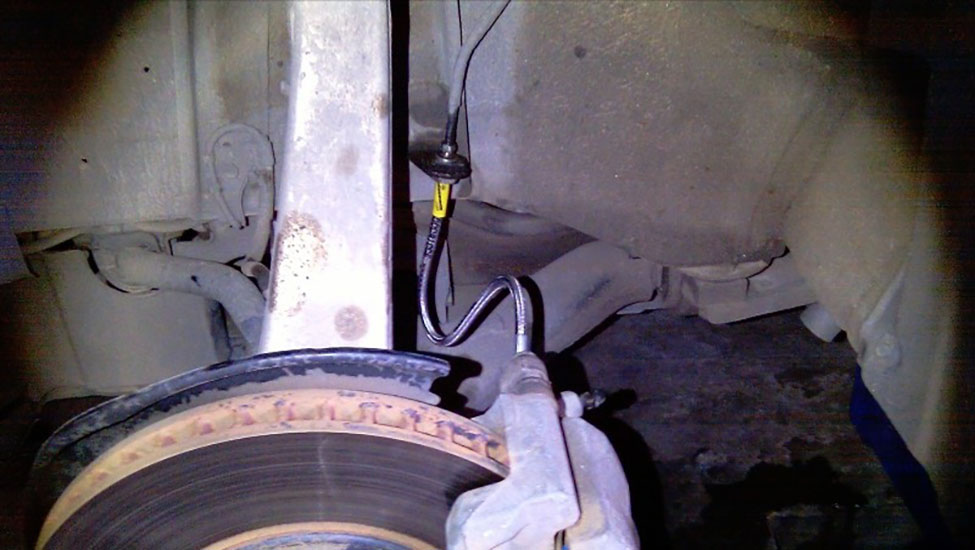
Many drivers believe brake hoses last the life of the vehicle. This is a dangerous misconception. From our factory laboratory, we see that brake hose failure is a predictable process governed by chemistry and physics, not luck. This article explains the scientific reasons behind the recommended 5-7 year replacement interval, moving beyond simple inspection tips to the core material science.
Standard rubber brake hoses are a composite of synthetic rubber, fabric or steel reinforcement, and bonding agents. Each element has a specific vulnerability.
Brake fluid (DOT 3, 4, 5.1) is hygroscopic—it absorbs water from the air. Over years, this moisture permeates the microscopic pores of the rubber hose.
Every brake application and under-hood exposure subjects the hose to heat. Oxygen (and ozone) in the air reacts with the rubber polymers.
Every time you press the brake pedal, a pressure spike (often over 1,000 PSI) travels through the hose. Over hundreds of thousands of cycles, this flexes the hose microscopically, leading to material fatigue at its weakest points—typically the hose-to-fitting crimps.
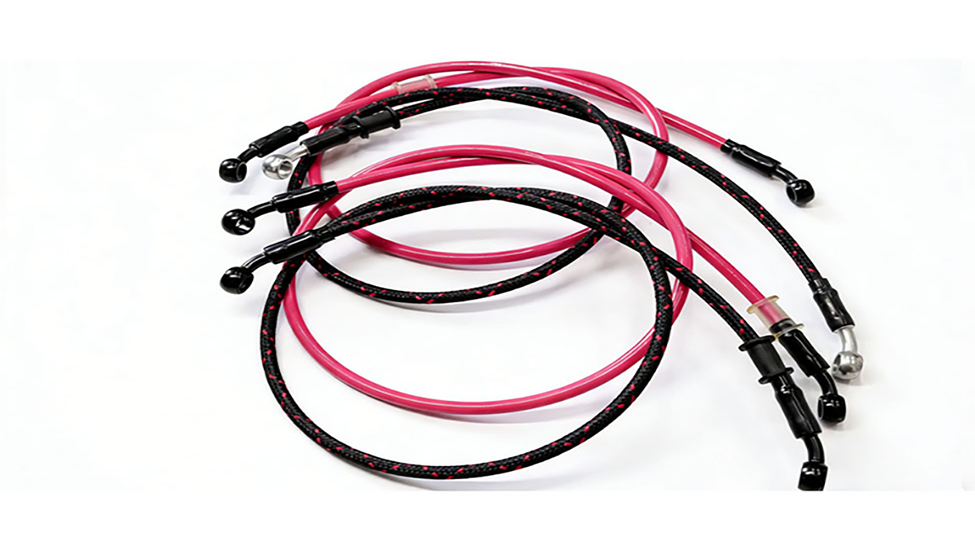
Upgrading your brake lines isn't just about looks; it's about selecting materials that are inherently resistant to these failure mechanisms.
| Material | Resistance to Hydrolysis | Resistance to Heat/Ozone | Resulting Lifespan | Typical Application |
|---|---|---|---|---|
| Standard Rubber | Poor (Permeable) | Poor (Cracks/Brittles) | 5-7 years (Wear Item) | OEM Replacement |
| Reinforced Nylon | Good (Low Permeability) | Very Good | 10+ years | Performance/Daily Upgrade |
| PTFE (Teflon) | Excellent (Impermeable) | Excellent (High Temp.) | 15+ years / Vehicle Life | Ultimate Performance & Safety |
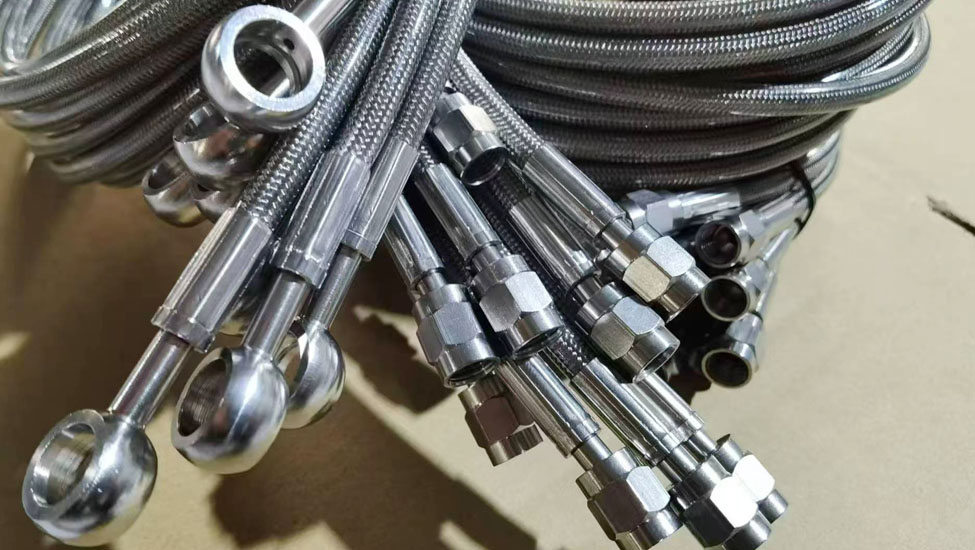
We provide a full spectrum of solutions:
Q: My car is 10 years old with low mileage. Are the hoses still bad?
A: Yes. Degradation is time and heat-cycle dependent. A car that sits often has worse hose condition due to a lack of beneficial flexing and potential fluid stratification.
Q: Do braided lines really improve safety, or just pedal feel?
A: They significantly improve both. The safety gain comes from eliminating the risk of sudden rubber hose rupture and internal degradation that can cause brake drag or failure. The consistent, firm pedal is a beneficial result that improves driver control and modulation.
Q: Are performance brake line kits universal?
A: No, and this is critical. For safety and performance, you must use a vehicle-specific kit. Our PTFE and Nylon Assembly kits are pre-made to exact OEM length and fitting specifications for a direct, safe bolt-on replacement.
Understanding the material science behind hose failure empowers you to make the right choice. Don't just replace a failed part; upgrade to a system designed to last. Contact our technical team to discuss the best solution for your vehicle and driving conditions.