Advantages of Stainless Steel Braided PTFE Brake Hoses in Modern Brake Systems
Brake hose construction has a direct influence on how consistently hydraulic pressure is transferred from the master cylinder to the caliper. As motorcycles, performance cars and modified vehicles demand more precise braking control, stainless steel braided PTFE brake hoses have become a popular upgrade for both aftermarket applications and professional brake system builds.
A stainless steel braided PTFE brake hose combines a low-expansion PTFE inner tube with a stainless steel reinforcement layer. Compared with conventional rubber hose construction, this design provides different pressure characteristics, chemical resistance and long-term durability when the hose is correctly specified and installed.
What Is a Stainless Steel Braided PTFE Brake Hose?
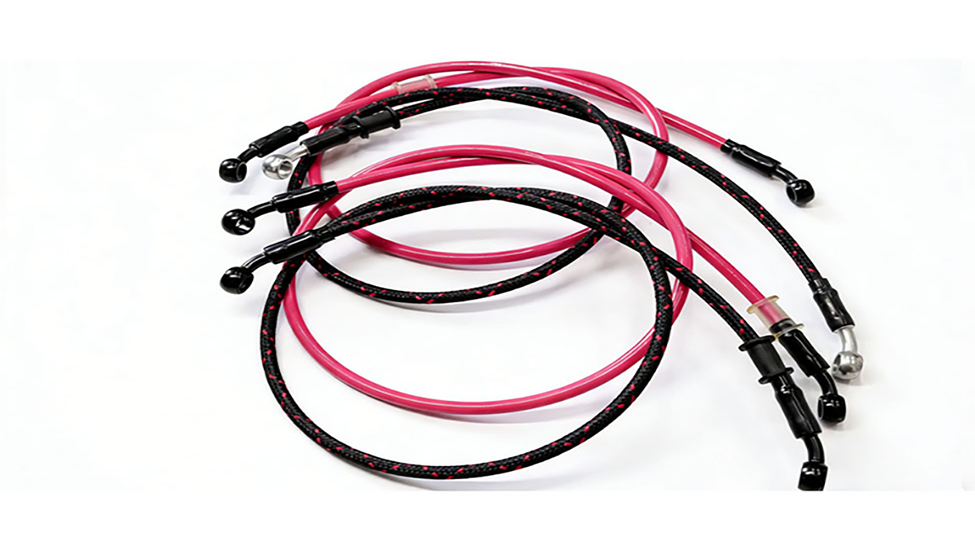
A typical PTFE brake hose uses PTFE as the inner tube and stainless steel wire as the external reinforcement. The PTFE tube provides compatibility with brake fluid, while the stainless steel braid helps control hose expansion when hydraulic pressure changes.
PTFE Inner Tube
PTFE is widely used in hydraulic applications because of its chemical resistance and stable performance over a broad operating temperature range. For brake hose applications, the inner tube must be manufactured and assembled according to the intended brake fluid, pressure and temperature requirements.
Stainless Steel Braided Reinforcement
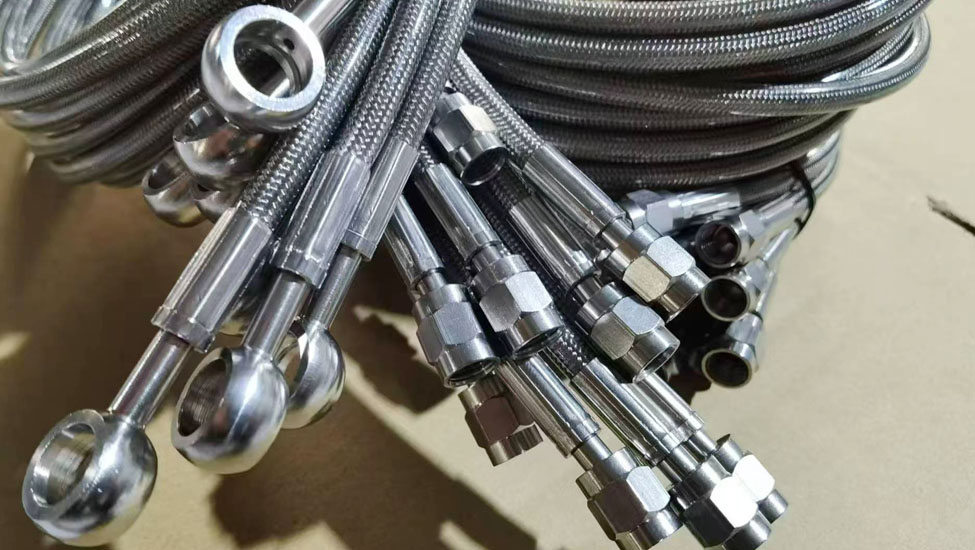
The stainless steel braid supports the inner tube and helps reduce radial expansion under pressure. This characteristic is one reason braided brake hoses are often selected for performance-oriented brake systems.
How Does a Braided PTFE Brake Hose Affect Brake Feel?
When the brake lever or pedal is operated, hydraulic pressure travels through the brake fluid and hose toward the caliper. Any expansion in the hose can influence how the system feels at the control lever.
A properly designed reinforced hose can help control this expansion compared with some conventional hose constructions. Riders may notice a firmer or more direct lever response, particularly when replacing an older or softer hose.
However, the brake hose is only one part of the braking system. Brake pad condition, caliper design, master cylinder ratio, brake fluid, bleeding quality and installation all affect the final braking feel.
Key Advantages of Stainless Steel Braided PTFE Brake Lines
1. Controlled Expansion Under Hydraulic Pressure
The stainless steel braid provides mechanical reinforcement around the PTFE tube. This helps maintain the hose shape when hydraulic pressure increases and can contribute to a more consistent brake lever or pedal response.
2. Excellent Chemical Resistance
PTFE has strong resistance to many automotive fluids and chemicals. This makes PTFE-based brake hose construction suitable for demanding hydraulic applications when the hose is correctly matched with the brake fluid and operating environment.
3. Good Temperature Stability
Brake systems can experience significant temperature changes during repeated braking. PTFE provides a stable inner tube material for applications where temperature resistance is an important consideration.
4. Suitable for Performance and Modified Vehicles
Stainless braided PTFE brake hoses are commonly considered when upgrading motorcycles, performance cars, racing vehicles and other modified brake systems.
5. Flexible Configuration for Custom Applications
For aftermarket and B2B applications, brake hoses may need different lengths, fitting angles, banjo configurations, thread specifications and routing requirements. A professional manufacturer can produce assemblies according to drawings, samples or detailed specifications.
PTFE Brake Hose vs Rubber Brake Hose
Rubber brake hose assemblies remain widely used in original equipment applications because they provide flexibility and are economical for high-volume vehicle production.
PTFE brake hoses are more often selected when customers require a reinforced construction, different pressure characteristics, chemical resistance or customized performance-oriented configurations.
For customers comparing different hose constructions, our Teflon Brake Line provides a PTFE-based solution for applications where a stable inner tube and reinforced construction are required.
For conventional applications where flexibility and cost are the primary considerations, a Rubber Brake Line Assembly may be more appropriate.
PTFE Brake Line Products for Different Applications
Brake hose requirements vary between motorcycles, passenger cars, performance vehicles and specialty applications. The correct product should be selected according to pressure, temperature, brake fluid, routing, fitting type and installation space.
Teflon Brake Line
Teflon Brake Line is suitable for customers looking for PTFE-based brake hose construction. It can be considered for aftermarket brake systems, motorcycle modifications and other hydraulic brake applications where the hose specification is properly matched to the vehicle.
PTFE Brake Line Assembly
For customers who need a finished hose rather than bulk tubing, the PTFE Brake Line Assembly can be configured with the required hose length and fitting arrangement. This is particularly useful for OEM replacement, aftermarket kits and wholesale brake hose programs.
Stainless Braided Hose Applications
Stainless braided construction can be used where customers require additional reinforcement around the PTFE inner tube. Correct braid density, fitting crimping, hose length and end configuration are important when developing a reliable finished assembly.
What Overseas Buyers Usually Check Before Ordering
Hose Construction
Buyers should confirm the inner tube material, reinforcement layer and outer protection before placing an order.
Fitting and Thread Specification
Brake hose fittings must match the vehicle or brake component. Thread type, pitch, banjo angle and sealing method should be confirmed before production.
Length and Routing
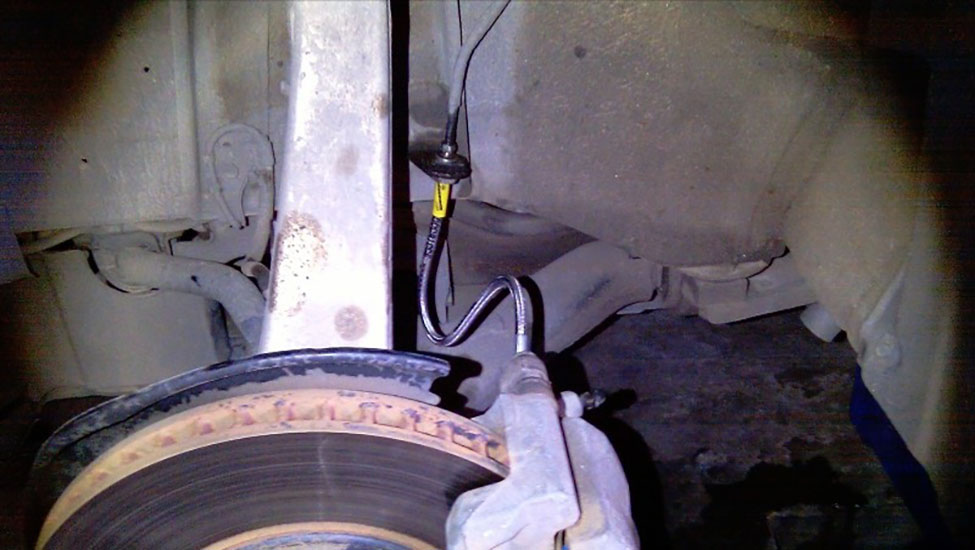
The hose should be long enough for full steering and suspension movement without being excessively long. Incorrect routing can cause rubbing, kinking or excessive bending.
Sample Approval
For customized projects, supplying a drawing, sample hose or clear photographs with dimensions can significantly reduce communication errors before mass production.
Maintenance Tips for Braided PTFE Brake Hoses
- Inspect the hose regularly for cuts, abrasion, corrosion or damaged fittings.
- Check that the hose is not twisted after installation.
- Make sure the hose does not rub against the wheel, fork, frame or other moving parts.
- Check fittings and sealing washers for correct installation.
- Replace the hose if serious external damage, leakage or deformation is found.
- Follow the vehicle or brake component manufacturer's recommendations for brake fluid and servicing.
FAQ About Stainless Steel Braided PTFE Brake Hoses
How often should a brake hose be replaced?
There is no universal replacement interval for every motorcycle or vehicle. Replacement should be based on hose condition, vehicle age, operating environment, installation condition and manufacturer recommendations. Cracks, leaks, severe abrasion, deformation or damaged fittings are reasons to inspect the system immediately.
Does a modified braided brake hose really improve safety?
A correctly specified and professionally installed reinforced brake hose can contribute to consistent hydraulic performance. However, it does not automatically make the entire braking system safer. Brake pads, calipers, master cylinders, fluid, installation and maintenance all affect braking performance.
Can PTFE brake hoses be used on every motorcycle?
No. The hose length, fitting type, thread specification, brake fluid compatibility, pressure rating and routing must match the application. Motorcycle brake hoses should not be selected only by appearance or hose diameter.
Can you produce customized brake hose assemblies?
Yes. For OEM and aftermarket projects, customers can provide drawings, samples, hose dimensions, fitting specifications or photographs. We can then discuss the suitable hose construction and assembly configuration.
Our Main Brake Hose Products
Our product range covers different materials and assembly configurations for OEM replacement, aftermarket modification and wholesale applications.
- Teflon Brake Line
- Nylon Brake Line
- PTFE Brake Line Assembly
- Nylon Brake Line Assembly
- Rubber Brake Line Assembly
- Stainlesssteelbraided Hose
- Braided Brake Lines
Request a Customized Brake Hose
If you are sourcing stainless steel braided PTFE brake hoses for motorcycles, cars, distributors or aftermarket brake kits, send us your drawing, sample, hose length, fitting specification or product photos. We can discuss construction, fittings, colors, packaging and production requirements for your application.