Antu Brake Hose Co., Ltd
Hebei China 053000
Tel: 86-18903185773
WhatsApp:8618903185773
Email: nina@brakelinefactory.com
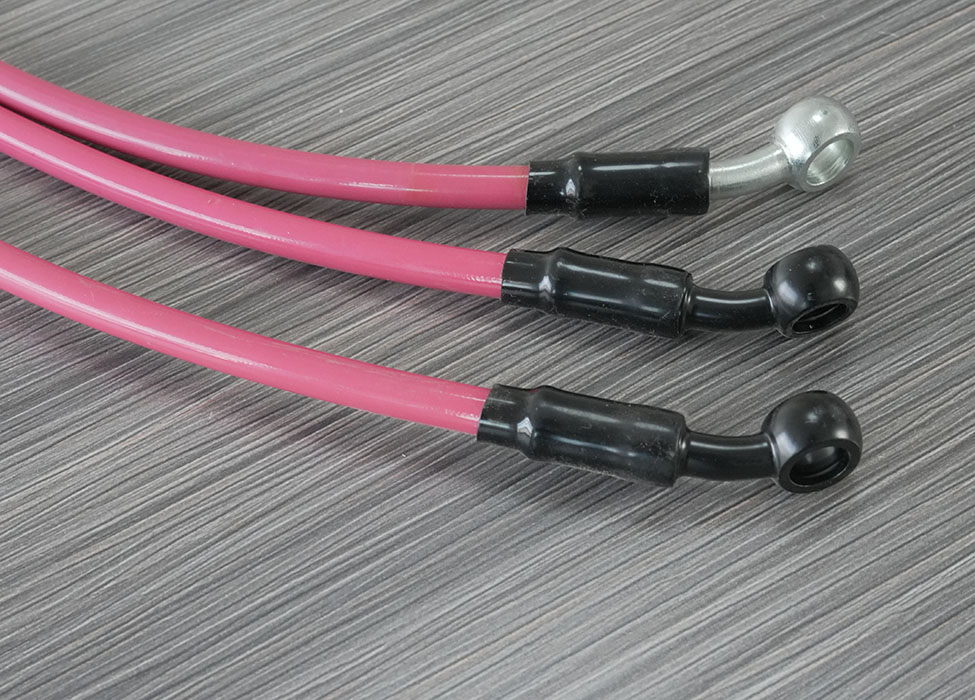
Brake hose material plays a critical role in hydraulic stability. Traditional rubber hoses have been widely used due to flexibility and low cost, but in demanding conditions, they tend to expand under pressure. PTFE (Teflon) brake hoses offer a more stable internal structure, reducing volumetric expansion and maintaining consistent brake response.
Rubber hoses are more prone to expansion during repeated braking cycles. This expansion can soften pedal feel and reduce braking precision. PTFE brake hoses, especially when reinforced, maintain dimensional stability under high pressure, resulting in firmer pedal feedback and more predictable braking performance.
In high-temperature environments such as Southeast Asia and the Middle East, rubber hoses may degrade faster due to heat exposure and brake fluid absorption. PTFE material has strong resistance to heat and chemical corrosion, which helps extend service life and reduce maintenance frequency.
From an engineering perspective, PTFE brake hoses provide longer service intervals compared to rubber hoses. Their resistance to aging, moisture, and internal degradation makes them suitable for export markets where environmental conditions are more demanding.
PTFE brake hoses are commonly used in performance vehicles, motorcycles, and aftermarket brake line assemblies. They are also suitable for OEM upgrades where durability and stability are key requirements.
Compared with rubber hoses, PTFE brake hoses offer improved pressure stability, longer service life, and better resistance to environmental factors. For distributors and buyers seeking reliable brake system components, PTFE hose is a practical upgrade.